New research from a metropolitan university’s urban research centre indicates that Toronto’s population growth has sharply declined, falling from the fastest‑growing metropolitan area in North America in 2024 to a rank of 443 out of 471 in the most recent year.
The analysis attributes the slowdown to both a reduction in international migration and a significant outflow of existing residents to other parts of Canada. Researchers highlight the city’s high cost of living and increasingly unaffordable housing as primary drivers of this domestic migration.
Net domestic migration in Toronto was negative, with the number of residents leaving slightly exceeding the combined total of births and new immigrants in 2025. Despite the overall decline, the city still recorded the fifth‑largest rate of international migration among large North American metros, trailing only New York, Miami, Houston and Dallas.

Political commentary aligns with the report’s findings, noting that rising taxes, congestion and living expenses are prompting families and workers to seek opportunities elsewhere. One leading mayoral candidate warned that Toronto is losing talent, investment and opportunity as the cost of living rises.
Data from national statistical agencies underpin the report, covering the twelve‑month period ending July 1, 2025. While Canada’s total immigration numbers fell that year, Toronto’s share of international arrivals remained relatively strong compared with other Canadian cities.
Other major Canadian metros experienced similar setbacks. Montreal dropped from fifth to 25th place, and Vancouver fell from sixth to 92nd in the growth rankings, suggesting broader challenges in attracting domestic migrants.
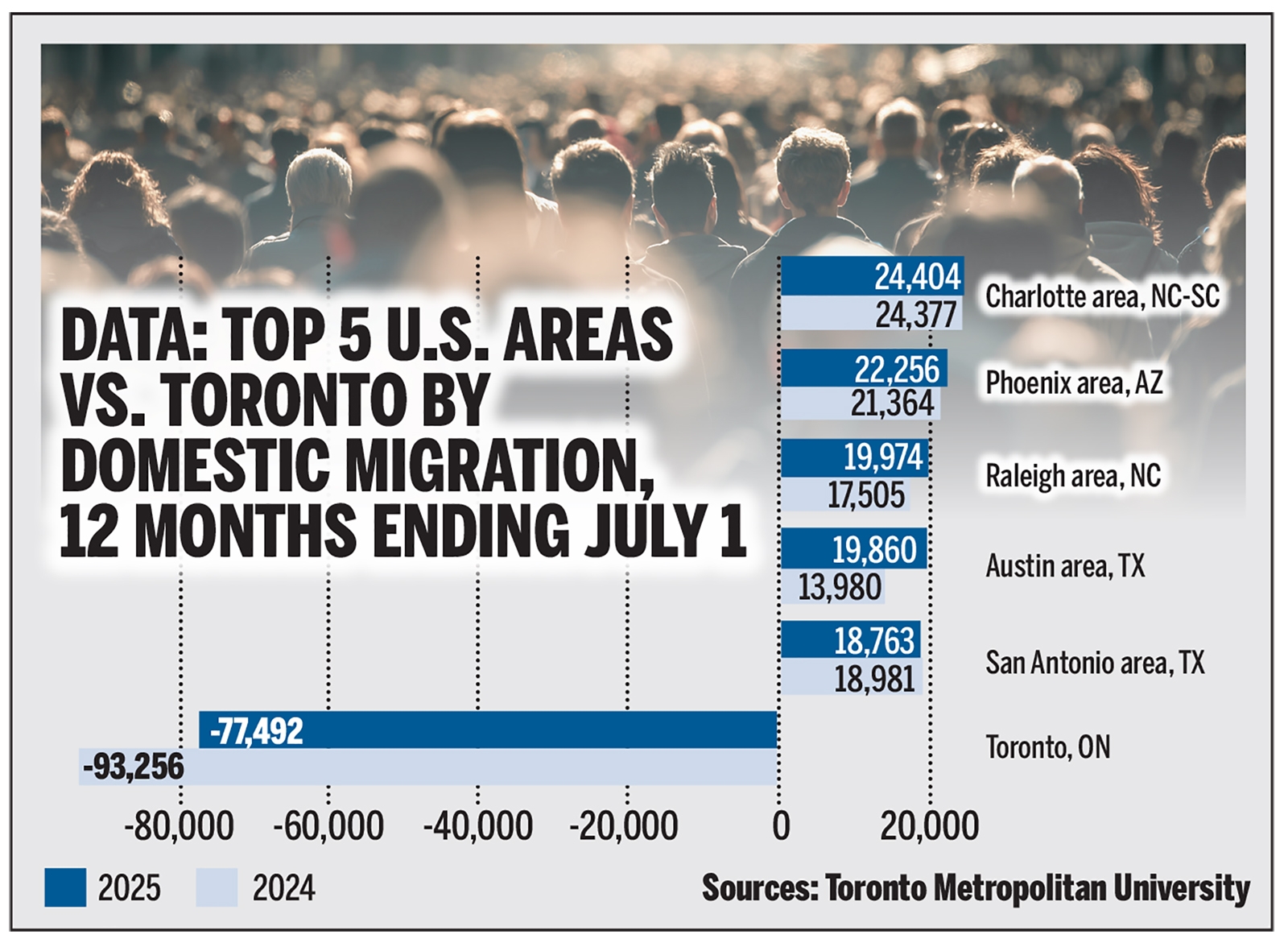
In contrast, U.S. metros, particularly those in Texas and Florida, dominate the growth tables. Houston, Dallas and Atlanta topped the list of fastest‑growing metros across the United States and Canada for 2025.
The report’s top ten for net domestic migration consists entirely of warm‑weather U.S. cities, with Charlotte, North Carolina, leading the list. No Canadian metropolitan area appears among the leaders in domestic inflow.