Apple is set to launch the iPhone 18 Pro and iPhone Ultra in September, powered by a new A-series processor that is expected to carry the brand’s highest performance designation.
The company will likely split the next‑generation chip into a Pro variant for flagship models and a lower‑tier version for more affordable devices, mirroring the approach taken with recent releases.
The Pro version, tentatively called the A20 Pro, is projected to be Apple’s first smartphone chip fabricated on a 2‑nanometer process, following the 3‑nanometer A19 Pro.
A 2‑nanometer fabrication platform can increase transistor density by roughly 15 percent, offering gains in both performance and power efficiency while staying within the strict thermal limits of a mobile device.
Higher density allows Apple to add more CPU cores, expand cache sizes, and design higher‑performance core variants without exceeding power budgets.
It is plausible that lower‑end iPhones will receive a slightly reduced version of the A20 chip, mirroring the approach used for the A19 Pro in the iPhone Air.
Apple is also expected to adopt wafer‑level multi‑chip module packaging, enabling the main processor and memory to sit side‑by‑side, which can improve cooling and reduce signal latency.
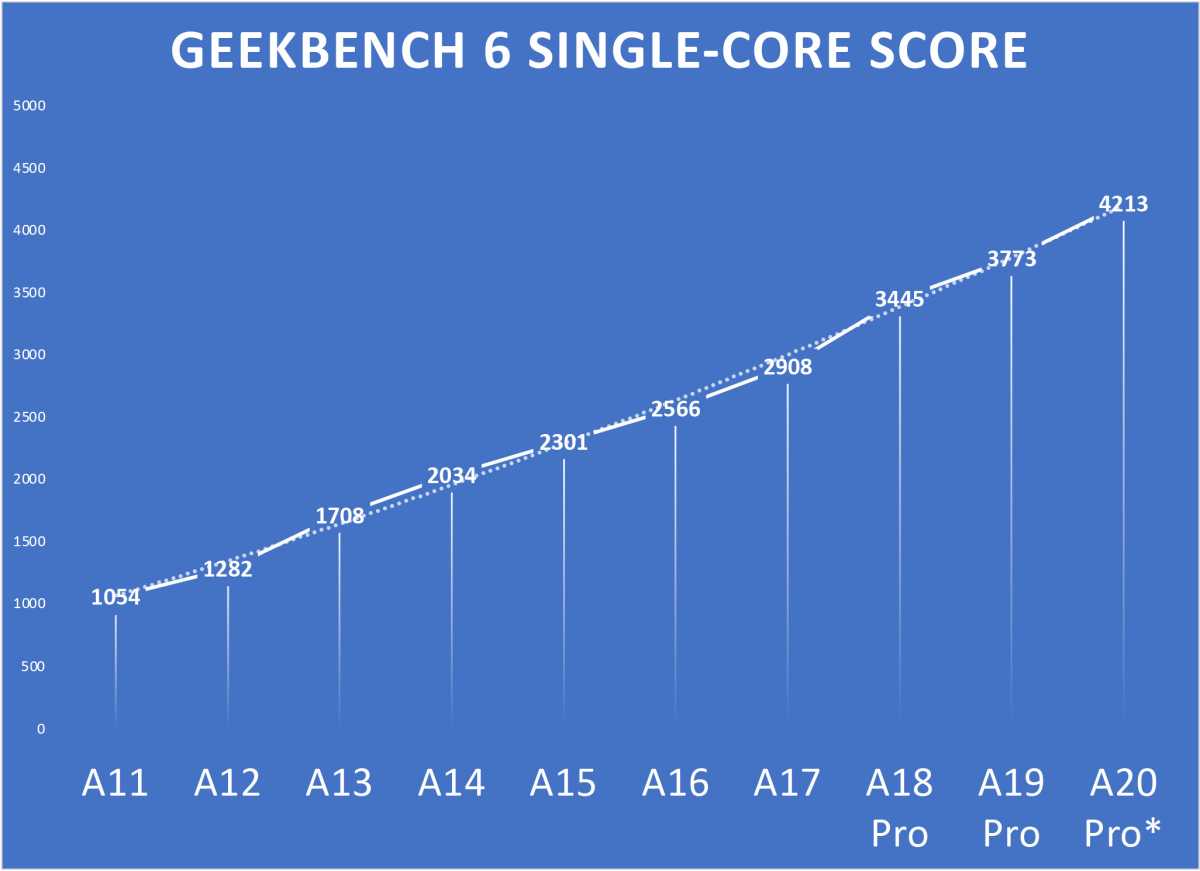
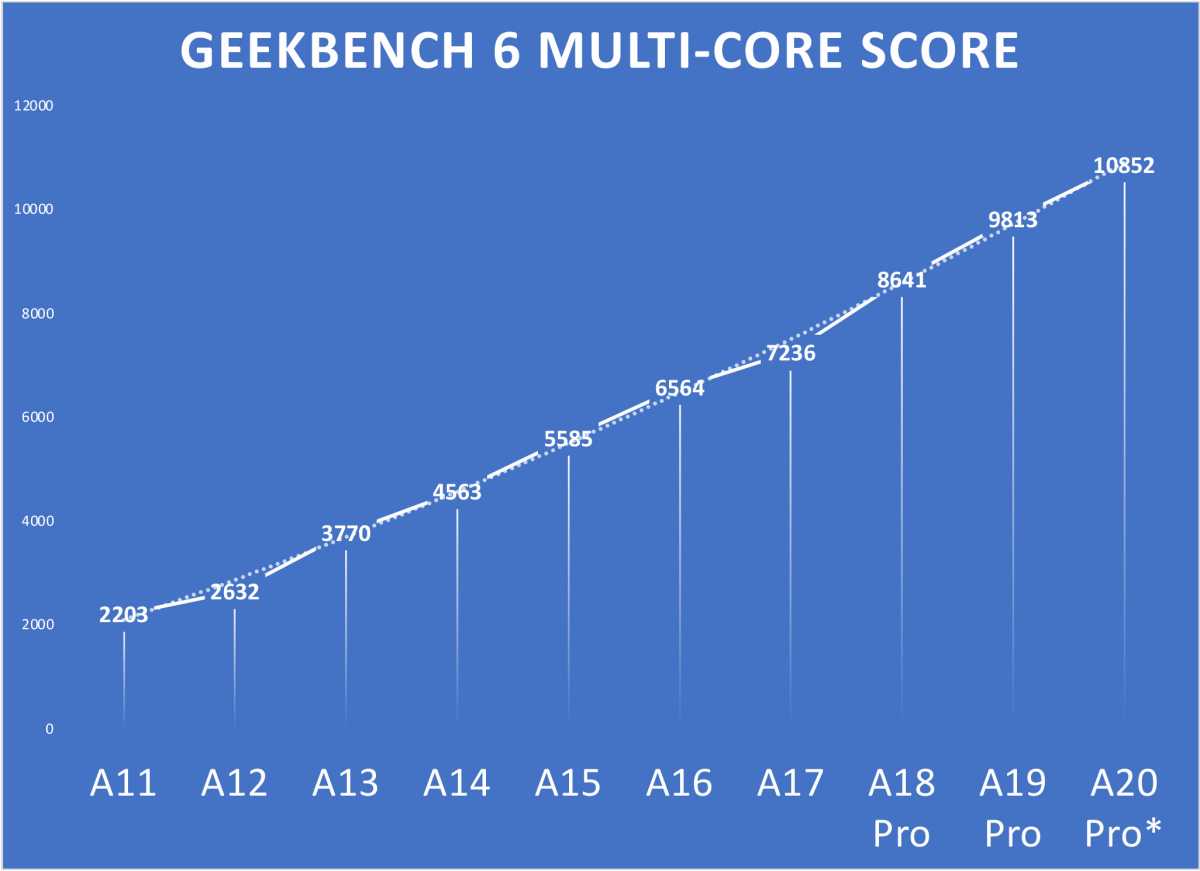
Apple’s CPU performance has shown a predictable, linear improvement each year, suggesting the A20 will feature a six‑core design with two high‑performance cores and four efficiency cores.
Single‑core benchmarks are expected to reach around 4,200 points, placing the A20 Pro in the same tier as Apple’s desktop M5 chip and well above competing mobile processors.
Multi‑core performance is likely to exceed 10,000 points, keeping the A20 Pro ahead of most Android smartphones and competitive with many laptop CPUs.
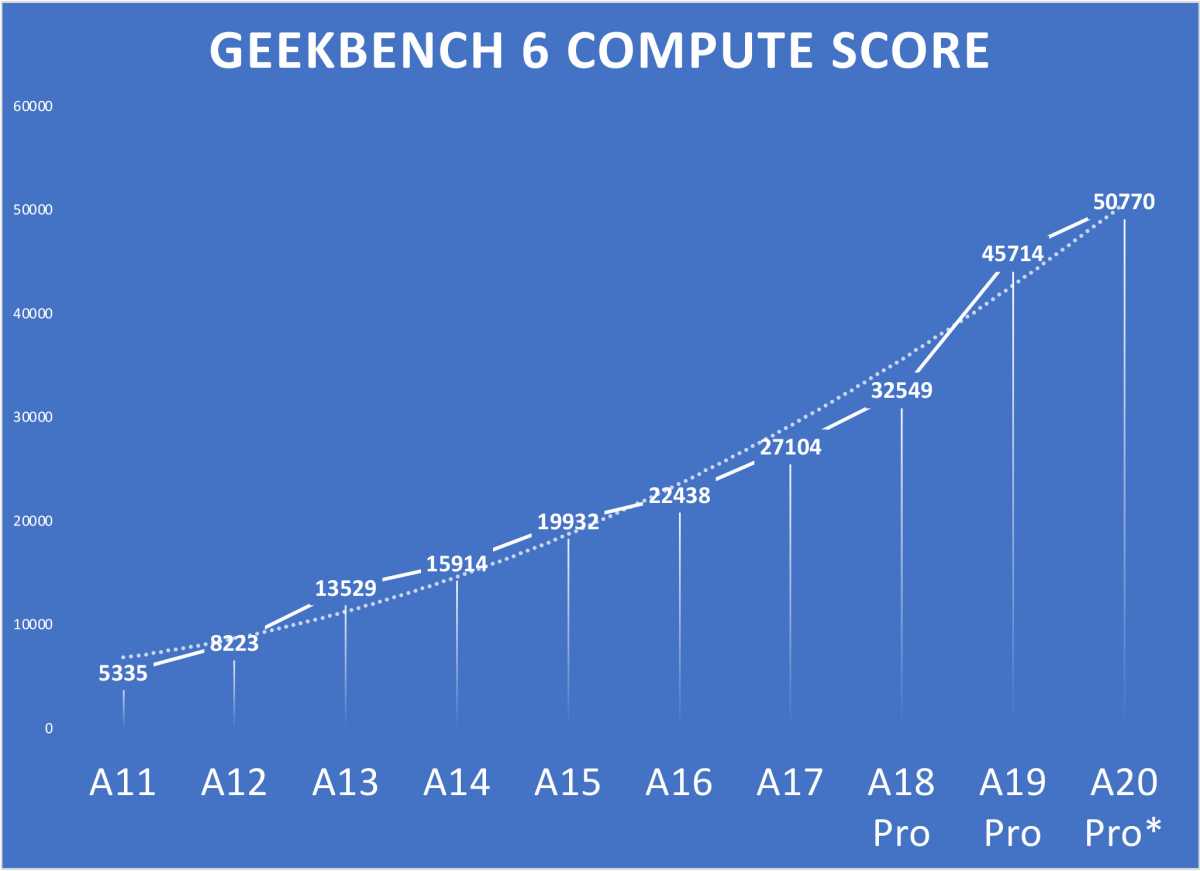
GPU performance improvements are less consistent, but the A19 Pro’s last‑year architecture upgrade suggests the A20 could see a boost of over 10 percent in compute capabilities.
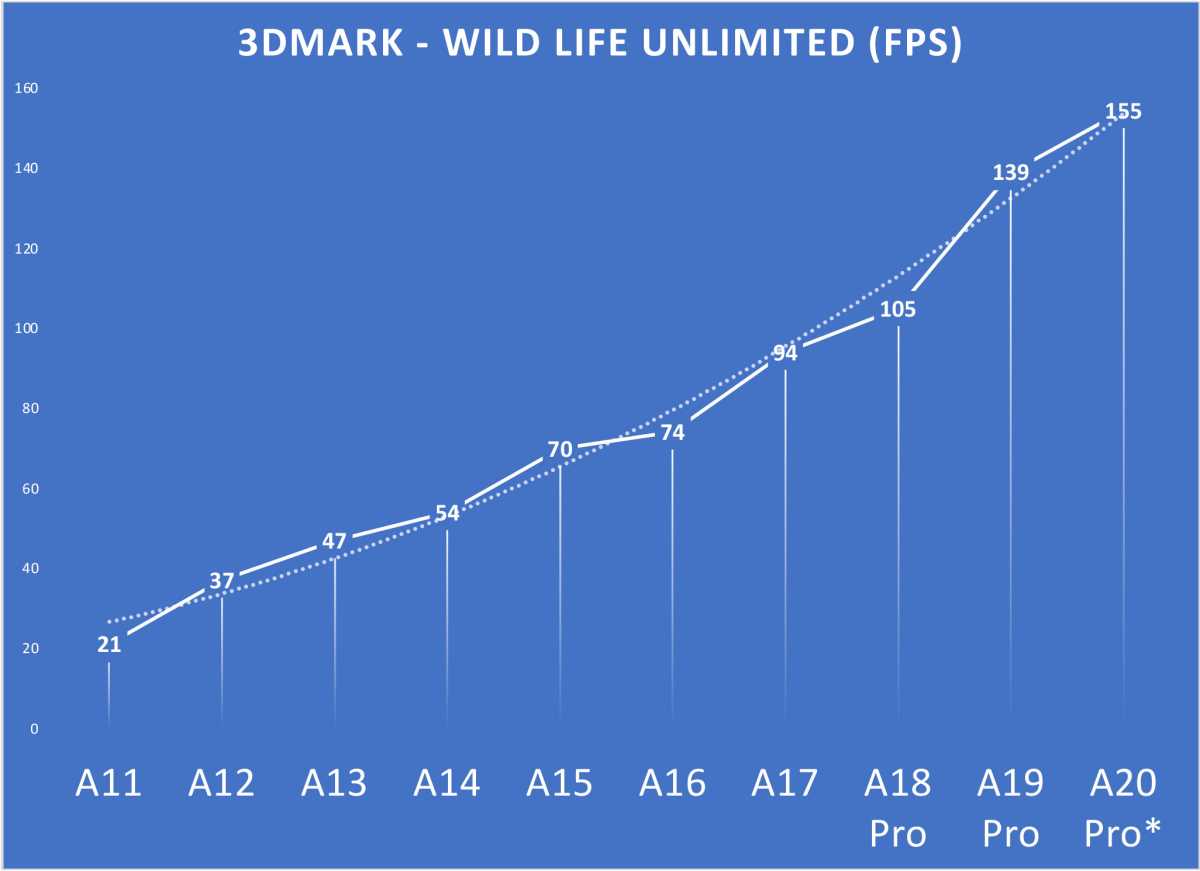
Graphics benchmarks such as 3DMark Solar Bay Unlimited could achieve scores above 50 frames per second, while Wild Life Unlimited might exceed 150 frames per second, indicating a 65 percent improvement over the past three years.
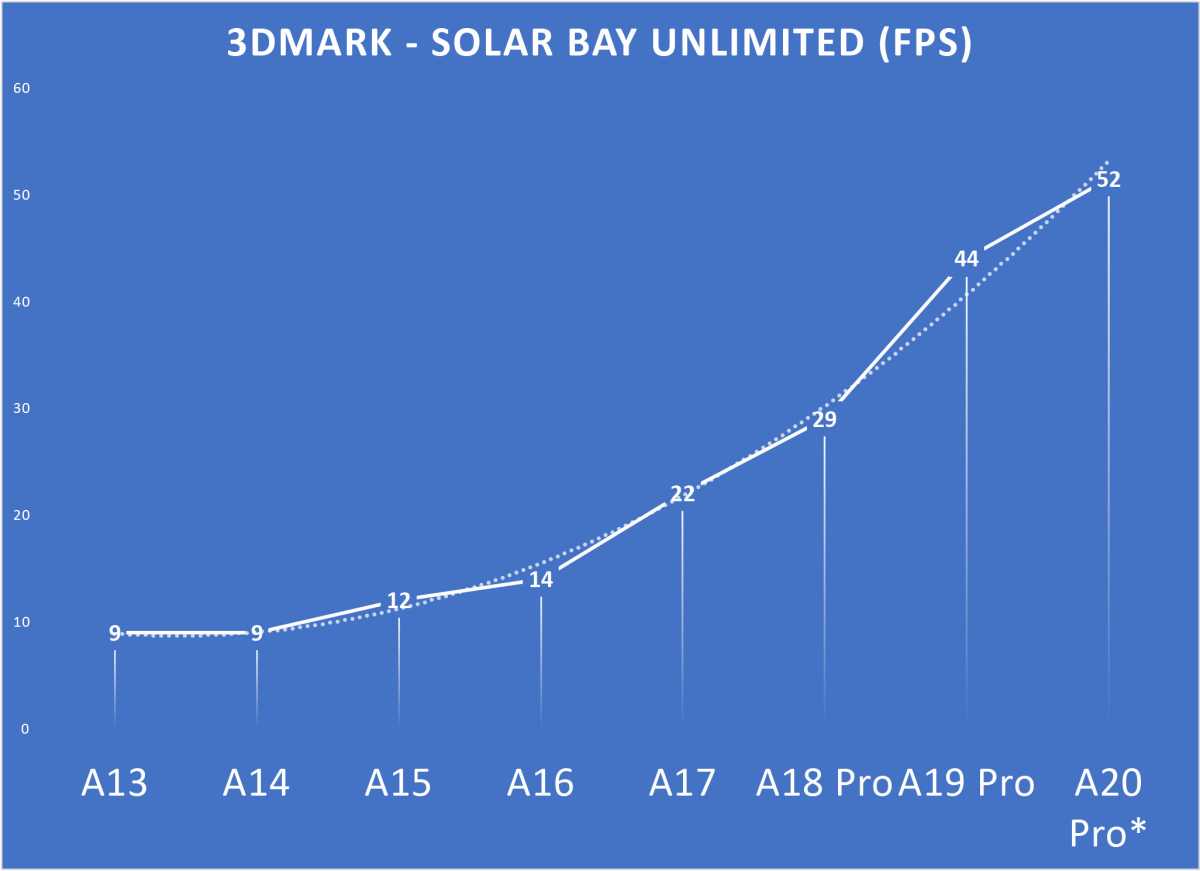
Apple’s focus on GPU enhancements reflects its importance for machine‑learning workloads, and the company may allocate more die area to the GPU in future iterations.
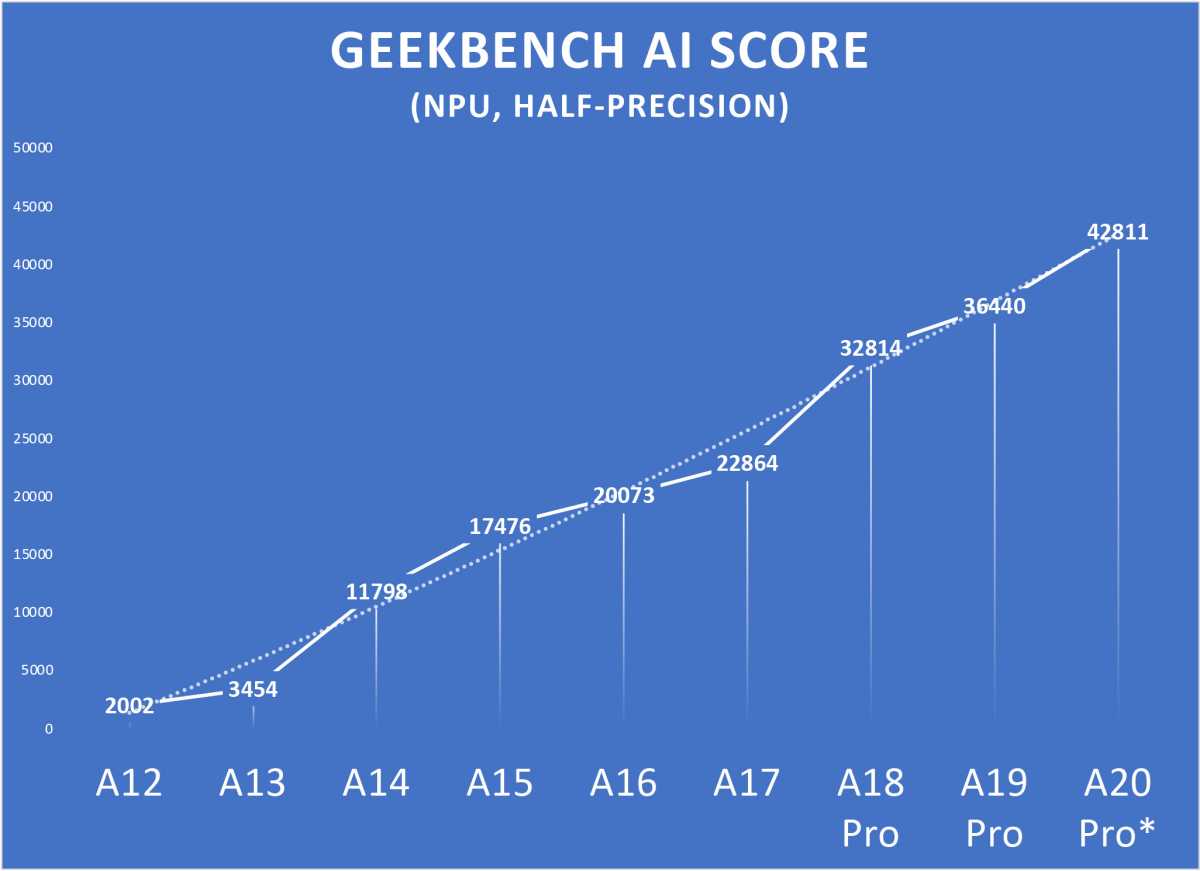
The Neural Engine has evolved from 600 billion operations per second in the A11 to over 35 trillion in the latest models, powering a wide range of on‑device AI tasks from photography to voice recognition.
Benchmarks that isolate NPU performance show near‑doubling over three years, and a larger on‑chip footprint could lead to another significant jump in future releases.
RAM is a critical component for AI and multitasking; the A20 Pro is likely to use LPDDR5x or early LPDDR6 memory, with 12 to 16 gigabytes of capacity to support large language models and advanced features.
Apple’s custom 5G modem, projected to be the C2 chip, is expected to add mmWave support and improved battery efficiency, while the existing N1 Wi‑Fi and Bluetooth module already supports Wi‑Fi 7 and Bluetooth 6.
Overall, the A20 Pro is poised to maintain Apple’s leadership in smartphone performance, offering significant gains in CPU, GPU, and AI processing while managing power and thermal constraints.