For more than five decades, federal governments have announced plans to build high‑speed rail links between Ontario and Quebec, yet the projects have repeatedly stalled.
Last week, the latest attempt—known as the Alto project—was brought into question when the Ontario premier threatened to withdraw provincial support. The dispute stemmed from the federal decision to halt expansion of Toronto’s Billy Bishop Airport, an initiative championed by the premier.
The premier had a private understanding with the federal leader: support for the airport would be exchanged for backing the Alto high‑speed rail plan. That agreement was made despite strong opposition to the rail route in several ridings controlled by the premier’s party, where concerns about property expropriation and environmental damage run high.

In addition, a federal report that the airport expansion could reduce airfares by an average of nine percent through increased competition was ignored.
The clash between the two leaders illustrates how political dynamics can derail large infrastructure projects.
The Alto proposal, announced in February, envisions a 1,000‑kilometre electric rail corridor linking Toronto, Peterborough, Kingston, Ottawa, Montreal, Laval, Trois‑Rivières and Quebec City. Trains would travel at 300 kilometres per hour, cutting travel time between Toronto and Quebec City by half.
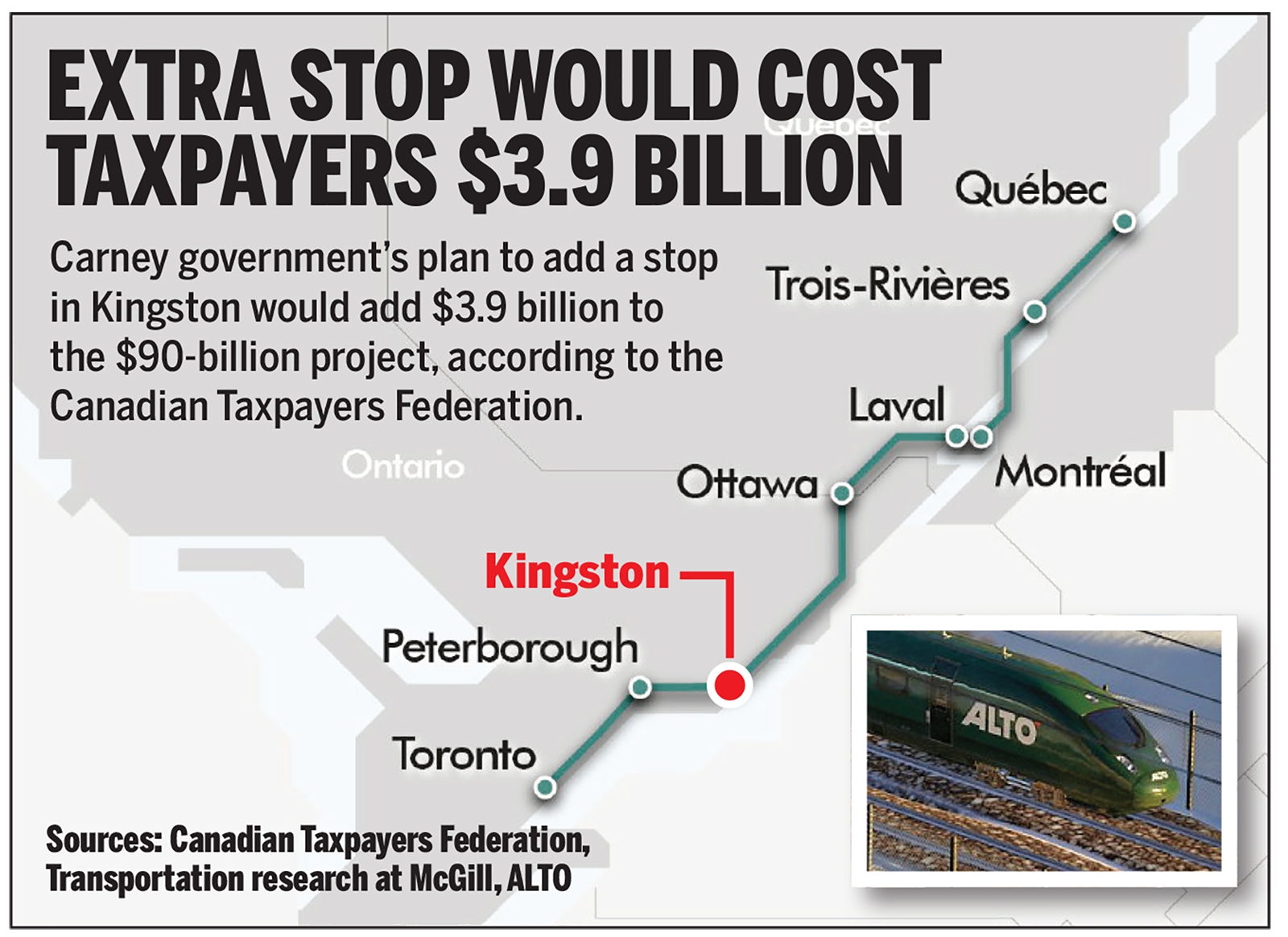
Estimated construction costs reach up to $90 billion, with work slated to begin in 2029 and complete 12 to 14 years later. The federal government has partnered with a consortium of six companies to manage the project.
Officials claim the construction phase will create more than 50,000 high‑paying jobs and could boost the national GDP by up to $35 billion annually.
Yet the corridor’s history of high‑speed rail attempts has been discouraging. The Turbo Train of the late 1960s could theoretically reach 270 kilometres per hour but was limited to 160 kilometres per hour by conventional tracks and suffered numerous mechanical problems.

In 1974, a new national rail operator was established, but its trains were also constrained by freight‑grade tracks, preventing higher speeds.
Further initiatives in 1981, 1984, 1998, 2002, 2008 and 2016 were abandoned due to escalating costs or shifting political priorities.
The current administration asserts that lessons from the past will guide a successful implementation of Alto, but the record of setbacks raises doubts about the project’s feasibility.
The debate over the Alto rail line and the airport expansion underscores the complex interplay of economic, environmental, and political factors that shape national infrastructure plans.