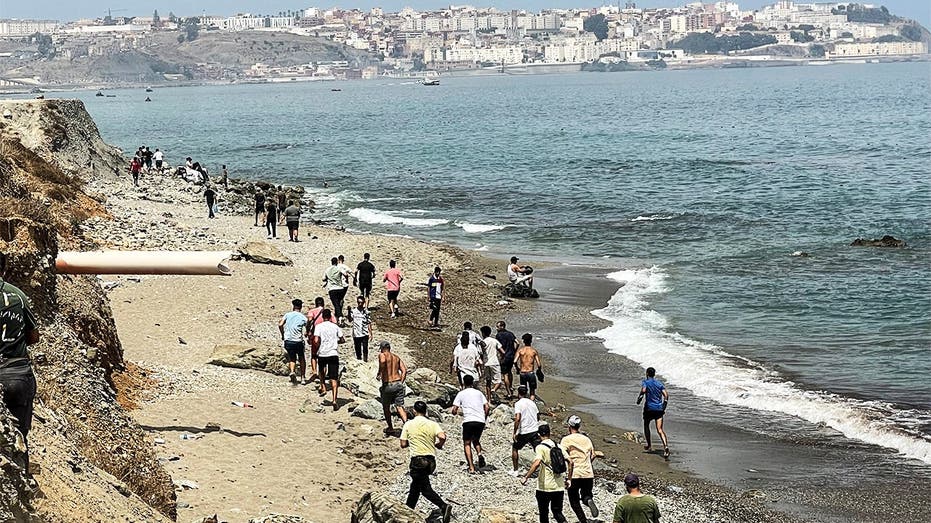
The recent surge of tens of thousands of migrants from Morocco to the Spanish border has sparked a heated debate among European leaders, with Spanish Prime Minister Pedro Sánchez criticizing his fellow leaders for their response to the crisis.
Sánchez appeared to take issue with Italy's decision to temporarily suspend Schengen Area free-travel arrangements with Spain, an agreement that abolishes passport controls and allows people to travel across European borders without providing documents.
"In the current international context, the European Union cannot afford this kind of selfish, polarising and unlawful reaction," Sánchez said in a letter to European leaders.
The letter also highlighted Spain's quick turnaround in expelling nearly all of the migrants who crossed the border back to Morocco, with 48,300 having returned by Friday evening and hundreds more going back by the hour.
Sánchez requested a formal meeting of the interior ministers of all 27 European Union countries in the letter, which was addressed to European leaders and aimed to address the crisis and strengthen external borders.
The crisis began as a mass stampede of migrants from Morocco into the Spanish enclave of Ceuta, which shares a land border with Morocco in North Africa, with approximately 50,000-60,000 people illegally rushing over the border into European territory.
The shocking footage of the flood of people prompted a worldwide response, including from world leaders, with some calling for stronger borders and others offering support to Spain.
A meeting of the EU's Justice and Home Affairs Council has been convened to respond to the crisis, with Ireland's Justice Minister Jim O'Callaghan playing a key role in the discussions.
The crisis has also led to a renewed focus on the need for stronger external borders, with some European leaders calling for joint action to combat irregular immigration and make returns more effective.