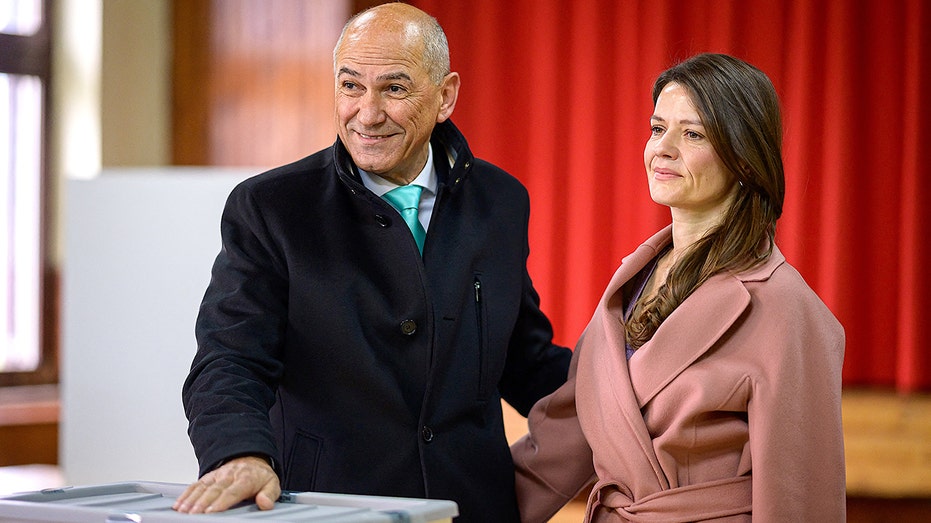
The Republic of Slovenia, a central European nation, is undergoing a significant shift in politics as the country comes to terms with its new prime minister. Prime Minister Janez Janša has formed a coalition that has led to the removal of the country's leftist leader, Robert Golob.
In his fourth term, Janša has begun implementing policies that many see as reminiscent of those of former US President Donald Trump. One of his first moves was to reverse Golob's anti-Israel policies, announcing plans to move the Slovenian embassy to Jerusalem and freezing recognition of a Palestinian state. Janša also expressed his intention to revoke a 2025 ban on military trade with Israel.
Domestically, Janša has promised to reverse what he calls the "inefficiency" of the previous government and turn Slovenia into "a country of opportunity, prosperity and justice." He plans to cut government red tape, support private education and healthcare, reform the pension system, decrease the size of government, and invest in infrastructure projects, including a plan to build a second reactor at Slovenia's Krško nuclear power plant.
Janša has expressed his support for Ukraine, traveling to Kyiv during his last term as prime minister in March 2022, and he has called for increased military aid to the country and increased sanctions against Russia. He also shares Trump's stance on immigration, praising Trump's policies and calling for a fundamental change in immigration policy in the EU.
Despite his efforts to form a coalition, Janša has faced criticism from many in the country. He has been accused of undermining the independence of the media and has had battles with the country's journalists. Janša has also served time in jail, having been convicted and imprisoned in a case he claimed was politically motivated.
Janša's path to becoming prime minister was unconventional. He lost the election that eventually put him back in office in June, but he was able to form a coalition and secure the necessary votes to become prime minister. Slovenes went to the polls on March 22 after a tumultuous four-year term for then-Prime Minister Robert Golob and his far-left coalition partners.
Janša is expected to come to the US to address the United Nations General Assembly in September, but it is unclear if he will meet with President Trump and the First Lady. With his policies and actions sparking both praise and criticism, Janša's term as prime minister will be closely watched by those interested in Slovenian politics and global affairs.