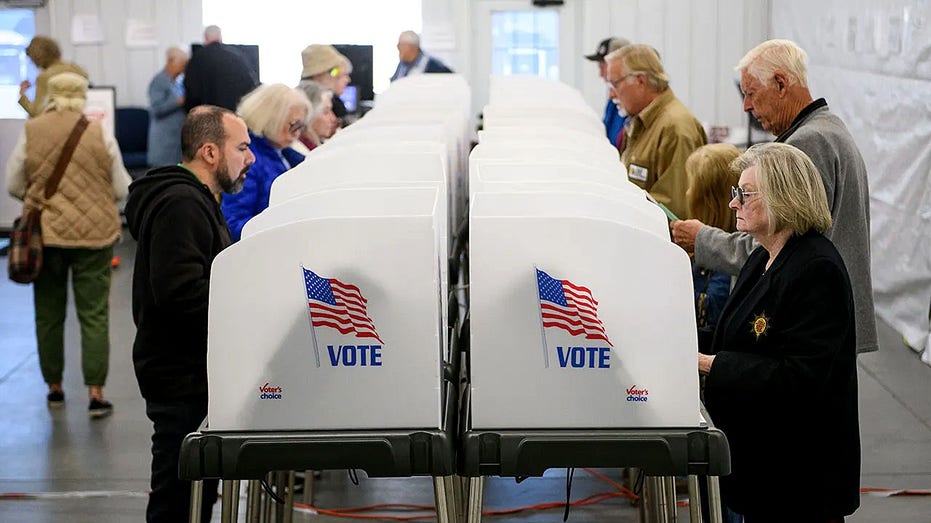
The Department of Homeland Security will withhold billions in preparedness grant funding from states that refuse to adopt new election security measures. These measures include voter citizenship verification, post-election audits, and expanded use of paper ballots. The move aims to enhance the integrity of the electoral process. The Department is taking a proactive approach to address potential vulnerabilities in the system.
The Federal Emergency Management Agency, a sub-agency of the Department of Homeland Security, is making over $1 billion in taxpayer funding available to states that participate in its Homeland Security Grant Program. However, to qualify for grants, states must submit plans to transition away from unsecure electronic voting systems. These systems employ QR codes or barcodes instead of hand-marked paper ballots, which can provide a paper trail to quickly assess any alleged irregularities.
States seeking preparedness grants must conduct a manual audit of at least 5% of all ballots cast after each federal election. This manual, random review will confirm voting-machine tabulations' synthesis with paper ballots and identify any manipulation. Additionally, states must match the number of voters who participated in the election with the number of ballots cast. They must also verify the citizenship of every listed voter in the state using the Systematic Alien Verification for Entitlements system within 120 days of any grant award.
The Department of Homeland Security has emphasized that threats to election systems continue to evolve. As a result, Secretary Markwayne Mullin has made critical infrastructure protection a top priority. Elections are considered part of this critical infrastructure and remain susceptible to foreign attacks. The Department is taking decisive action to protect election systems from threats like foreign interference, insider threats, and cyberattacks.
The new rules come amidst a broader debate over election security. A recent court case saw a federal judge side with the Commonwealth of Pennsylvania after the Justice Department sued multiple states seeking voter records. The judge's decision highlights the ongoing challenges in balancing election security with concerns over federal overreach. The Department of Homeland Security's new approach may face similar legal challenges in the future.
The Department's efforts to enhance election security are driven by a desire to preserve election integrity and ensure that Americans can trust the results. By implementing these new requirements for homeland security grant recipients, the Department aims to protect the electoral process from potential threats. The move is part of a broader effort to address the evolving landscape of election security and maintain public confidence in the system.