Quectel has released two new embedded modules that combine tri‑band Wi‑Fi 7 and Bluetooth 6.0, named the FCE870X and FME170X.
The modules are aimed at set‑top boxes, gaming devices, and other connected products where local wireless performance and peripheral connectivity are increasingly critical.
As devices shift more data handling to local networks and demand lower latency, selecting an embedded Wi‑Fi module has become a strategic design decision for original equipment manufacturers.
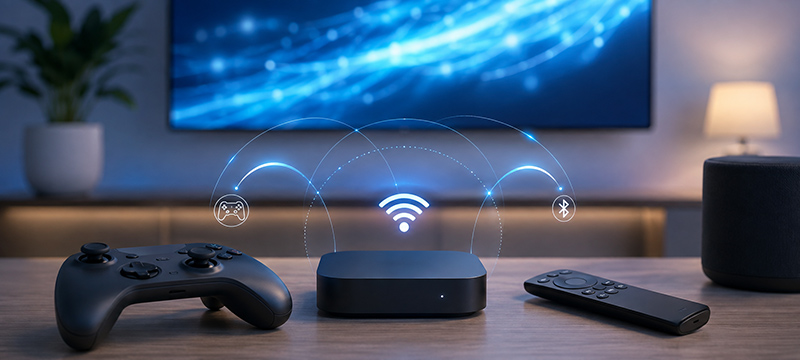
By integrating Wi‑Fi 7, tri‑band operation, and Bluetooth 6.0 into a single component, the modules offer a consolidated solution for high‑capacity networking and short‑range accessory communication.
Set‑top box manufacturers can use the module to support richer media streams and complex in‑home wireless environments without adding separate radio subsystems.
Gaming device makers benefit from the combined connectivity while staying within tight board, power, and certification constraints.
Specific throughput figures, interface details, and certification information have not yet been disclosed, so engineering teams must review the full technical documentation for a comprehensive evaluation.
Although RF design, antenna planning, and software integration remain necessary, consolidating the radios can reduce overall design complexity.
The announcement reflects a broader industry trend toward multi‑radio embedded devices, where Wi‑Fi, cellular, and Bluetooth are considered together during the design process.
Wi‑Fi 7’s entry into embedded categories indicates that local wireless performance will increasingly influence overall device responsiveness and cloud service quality.
While the primary focus is on consumer‑oriented markets, the trend may also impact industrial and enterprise products as newer Wi‑Fi generations become widely available.
The ultimate measure of the FCE870X and FME170X will be their adoption in finished products, but their launch signals a shift toward packaging Wi‑Fi 7 and Bluetooth 6.0 as core wireless features rather than add‑on components.


