A meteorite that struck a home in Hillsborough, New Jersey, in July 2024 has yielded amino acids and other prebiotic molecules, offering fresh insight into the origins of life on Earth.
The bright fireball was visible over New York City during daylight and produced a sonic boom that rattled the surrounding area. While most of the rock disintegrated in the atmosphere, a nearly one‑kilogram fragment survived and landed in a suburban house about 61 kilometers from Lower Manhattan.
Scientists have identified the fragment as a rare carbon‑rich chondrite, a type of meteorite prized for its complex organic chemistry. The sample is thought to have come from nearby asteroids that carry significant amounts of water and carbon compounds.
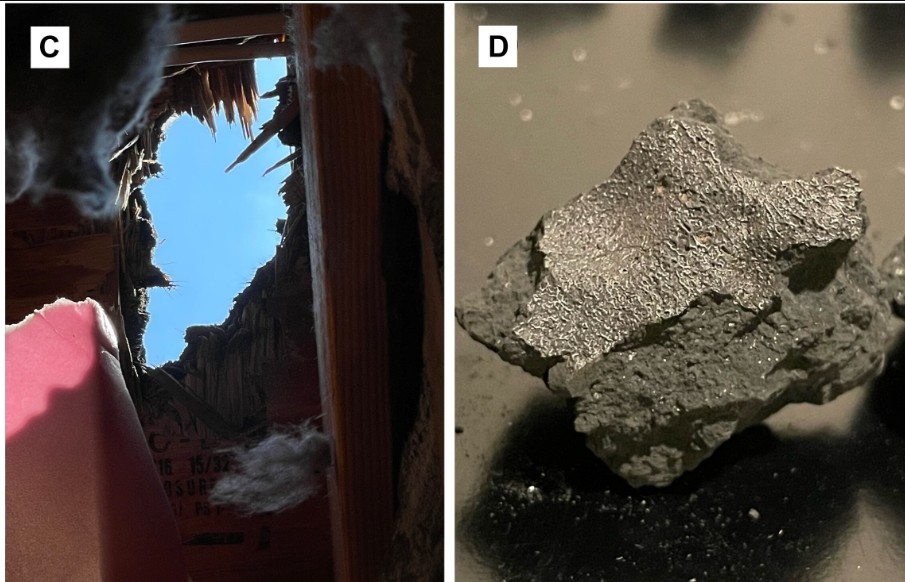
The homeowner, who noted a strong sulfur odor, collected the fragments in sealed jars to preserve their integrity for laboratory analysis.
Laboratory tests revealed a range of amino acids, the fundamental building blocks of proteins, within the salty fluids trapped inside the meteorite. These findings support the hypothesis that Earth received essential organic molecules from space billions of years ago.
Among the detected compounds are non‑protein amino acids such as α‑aminoisobutyric acid and racemic isovaline, which are uncommon on Earth but common in extraterrestrial material.
Researchers suggest that the delivery of amino acids, carboxylic acids, and other soluble organics by such meteorites could have played a crucial role in assembling the prebiotic inventory that eventually led to life.
Overall, the study underscores the importance of extraterrestrial bodies in supplying the raw ingredients necessary for biological complexity.