An expanding informal sector in the East African region could be keeping teeming masses of youth engaged. But that could be a long-term risk on economies by crippling government revenue collection, suppressing national productivity, and fuelling social instability.
A report by global rating agency Moody’s last week reveals that Sub-Saharan Africa has the largest informal workforce in the world, with nearly 88 percent of workers operating outside the formal economy.
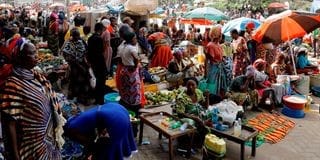
This means that nearly nine out of ten workers in Kenya, Uganda and Tanzania, and peers carry out their daily business without official registration, hawking, riding boda-bodas, running errands or as construction workers for daily pay. Politically, it keeps restive youth busy, saving governments from the trouble of misused young people.
Yet this widespread informality has a devastating effect on public finances. “Sub-Saharan Africa is the region with the largest informal economy across all most commonly used measures. Large informal economies constrain fiscal capacity, productivity growth, and policy effectiveness,” the report published last week on Tuesday said.
One of the most significant consequences of widespread informality is its impact on government revenue.
Because informal businesses and workers often operate outside official registration systems, much of their economic activity goes untaxed. They also may not get high credit rating to get better financial support from lenders.
This leaves governments relying on a relatively narrow pool of taxpayers while forcing them to depend heavily on indirect taxes and import duties.
Read:Growth without jobs: East Africa’s youth driven into the jua kali sector
Sub-Saharan African governments generate significantly less revenue than their counterparts elsewhere in the world, with median revenue-to-GDP ratios around eight percentage points below the global median.
According to Moody’s Ratings agency, informal employment in Sub-Saharan Africa accounts for a median 88 percent of total employment, compared with around 40 percent globally.
It is also estimated that the region’s informal economy represents about 36 percent of official GDP, significantly higher than the global average of roughly 25 percent.
According to the report’s findings, around 41 percent of potential VAT revenue goes uncollected across Africa, compared with 23 percent in Europe.
The findings echo repeated warnings from the African Tax Administration Forum (ATAF), which estimates that African countries lose billions of dollars annually through tax leakages, weak compliance systems, and illicit financial flows.
According to Moody’s Ratings, the trend is weakening government finances, limiting economic growth, and making it harder for countries to improve their creditworthiness. “While informal employment can provide a temporary safety valve during periods of economic hardship, it does not offset the broader costs associated with weaker productivity, lower incomes, and reduced investment,” Moody’s report reads.
The UN Economic Commission for Africa (ECA) is warning that if informality is not urgently addressed, African governments would face growing pressure to raise domestic revenue amid rising debt-servicing costs, shrinking development aid budgets, and increasing demands for spending on infrastructure, healthcare, and education. “Limited access to credit and investment remains one of the most significant barriers preventing young entrepreneurs from starting, growing and formalising businesses,” said Mr Claver Gatete, the Executive Secretary of ECA, during a side event on the margins of the 2026 High-level Political Forum on Sustainable Development (HLPF) held on July 15, in New York. “Strengthening financial inclusion and entrepreneurship support is critical for productive employment and sustainable economic transformation.”
In Kenya, the National Bureau of Statistics (KNBS)Economic Survey 2026shows that the informal sector is dwarfing the formal sector, which employs just 3.5 million workers.
Every year, between 800,000 and 1 million youth enter the labour market in Kenya, with the vast majority absorbed directly into informal enterprises such as market vendors, boda-boda riders, and street artisans.
About 700,000 Ugandans reach working age each year, according to the National Planning Authority (NPA), but the economy absorbs only about 200,000.
Read:Informal sector is the new economic reality in developing countries
That means only about one in three new entrants finds work—whether in the formal sector, the informal economy or self-employed farming, leaving Uganda's labour market under growing strain.
In Tanzania, the informal sector accounts for over 90 percent of non-agricultural employment and absorbs the vast majority of young Tanzanians entering the labour market each year.
Only about 7 percent of the total population is registered as formal taxpayers.
The growing influx of young workers is increasing pressure for long-term job creation in Kenya, Uganda and Tanzania.
The region’s massive informal workforce persists because rapid population growth and rural-to-urban migration have outpaced the creation of formal, wage-paying jobs. “It is important to harmonise and standardise education systems, professional qualifications and skills certification across Africa to facilitate labour mobility and enable young people to access employment opportunities beyond national borders,” said Gatete.
ECA emphasised greater regional integration of qualifications would help unlock the continent's human capital potential and support the aspirations of Agenda 2063.
They also highlighted the urgent need to expand young people's access to finance, business development services and entrepreneurial support ecosystems.
For governments across Africa, Moody’s report suggests that bringing more workers and businesses into the formal economy could become one of the continent’s most important economic reforms over the next decade.
Moody’s argues that countries that successfully reduce informality tend to strengthen tax collection, improve policy effectiveness, and ultimately build stronger sovereign credit profiles.