For many African countries, climate warnings are becoming more accurate, but the continent remains dangerously unprepared for the disasters that follow.
It is that growing gap between climate information and real-world action that Ishaam Abader, director of the Regional Coordination Office at the World Meteorological Organization (WMO), explained has become a central concern within the organisation.
Speaking toThe EastAfrican, Abader warned that Africa still lacks the systems, infrastructure and capacity needed to confront increasingly extreme weather patterns. “I think there’s a lot more that the continent can do to ensure that it is prepared.”
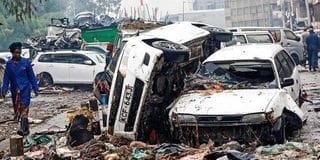
His remarks come as African countries experience a surge in climate-related disasters threatening food security, infrastructure and livelihoods: prolonged droughts in the Horn of Africa, devastating floods in Kenya, Nigeria, Libya and South Africa. Yet, despite contributing the least to global greenhouse gas emissions, the continent continues to bear some of the harshest consequences.
According to WMO, weather, climate and water-related hazards accounted for more than 90 per cent of recorded disasters globally over the past five decades, causing more than two million deaths and economic losses exceeding $4 trillion. “We contribute the least to the climate crisis, yet Africa continues to pay one of the highest prices through devastating floods, droughts and food insecurity.”
One of the core problems is the uneven state of weather and climate monitoring systems across the continent. The result is a fragmented climate preparedness system across the continent.
Yet experts say disasters are not determined by the intensity of a storm alone but by how prepared countries are before it arrives.
Read:East Africa's devastating floods linked to climate change and urban growth
As governments invest in forecasting systems and expand access to climate information, attention is increasingly shifting to whether those warnings are translated into decisions that reduce losses.
Acting Director of the Kenya Meteorological Service Authority David Muriuki acknowledged the floods forced policymakers into uncomfortable territory. “We give the warnings, but what happened?” He asked. “What really happened that we ended up where we are? Is it planning? What is it? I think this conversation is ongoing.”
Experts say this disconnect between science and decision-making is one of the biggest obstacles to climate resilience on the continent. Even where forecasts exist, warnings are often ignored, poorly communicated or disconnected from policy implementation. However, forecasting improvements alone will not be enough.
In many African cities, drainage systems remain inadequate, urban planning regulations are poorly enforced and emergency response structures are underfunded. “Preparedness also depends on governance, planning, investment and public awareness,” Muriuki said.
To address those weaknesses, the WMO has been running programmes to improve Africa’s climate observation infrastructure, including the Systematic Observing Financing Facility, which helps countries assess gaps in their observation networks before supporting implementation and connectivity.
WMO is also backing the Climate Risk and Early Warning Systems initiative and the Weather and Climate Information Services for Africa programme, known as WISER. “The goal is to strengthen climate forecasting, disaster preparedness and adaptation efforts across vulnerable regions,” Abader said.