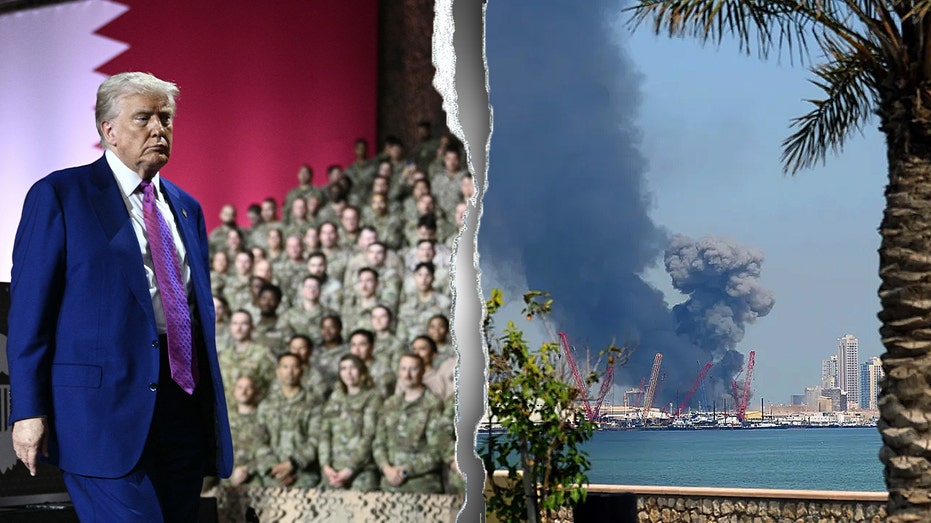
The Pentagon is reevaluating its decades-long strategy of relying on large, permanent military bases in the Gulf region due to the increasing threat from Iranian missiles and drones.
Defense officials are considering dispersing some capabilities and reassessing parts of the U.S. regional base posture, which is how the U.S. responds quickly to Iran, protects shipping lanes, reassures Arab partners, and keeps pressure on ISIS and al Qaeda.
The Gulf base network has been a cornerstone of U.S. military operations in the region for decades, but Operation Epic Fury, which saw Iran launch repeated missile and drone attacks against major U.S. installations, has reignited a long-running debate over whether concentrating aircraft, ships, and troops at a handful of large Gulf bases has become an increasingly dangerous liability.
Retired Navy Rear Adm. Mark Montgomery said the military has already started relying more heavily on alternate command-and-control locations and rotating forces rather than concentrating capabilities at a handful of installations close to Iran.
"We're not relying on them in the same way that we did before the war," Montgomery said. "I think we are going to reposition these forces."
The Pentagon's regional basing model has been tested by Operation Epic Fury, with Iran directly targeting multiple major air and naval hubs that underpin U.S. military operations across the Gulf.
U.S. forces in the Middle East have endured rocket and drone attacks for years, many carried out by Iranian-backed proxy groups against individual outposts in Iraq and Syria.
Since the conflict began, 13 U.S. service members have been killed and 400 wounded, with most wounded returning to duty.
Navy Capt. Tim Hawkins, Central Command spokesperson, said the U.S. military prioritized the protection of people over buildings and that its strategy of protecting people worked, despite Iran launching over 8,000 missiles and drones.
Defense officials are weighing whether to disperse military capabilities across a broader network of facilities, move some bases or functions further west, and relocate certain operations to Israel.
The military is also considering moving some command structures underground or forgoing rebuilding damaged structures.
"We do not have any force posture changes to announce or anything to provide at this time," a War Department official said.
The bases that came under attack form the backbone of America's military presence in the Gulf, with the U.S. typically maintaining about 40,000 troops across the Middle East, anchored by a network of major bases built up during the post-9/11 wars.
Al Udeid Air Base in Qatar, home to the forward headquarters of U.S. Central Command and the largest U.S. military installation in the region, alone hosts about 10,000 American personnel.
Other major hubs include Naval Support Activity Bahrain, home to the U.S. Fifth Fleet, Camp Arifjan and Ali Al Salem Air Base in Kuwait, and Al Dhafra Air Base in the United Arab Emirates.