The Pentagon released a fourth batch of declassified files on Unidentified Anomalous Phenomena (UAP) on Friday, including 40 new documents. These files are the latest in a series of disclosures aimed at increasing transparency on the topic.
The latest batch of files details a range of bizarre sightings, including one where a US military aviator described seeing an object "unlike anything I had seen" in 28 years of Air Force and Navy service.
The sighting, which occurred in 2019 over the Eastern United States, was documented in a Range Fouler Debrief, a standardized reporting form used by the US Navy to record unauthorized intrusions into controlled airspace.

The aviator described the object as "a small object with flight characteristics unlike anything I had seen," which appeared to be traveling in a straight line opposite their direction at high speed. The object was tracked for around 10-15 seconds before the aviator was unable to reacquire it.
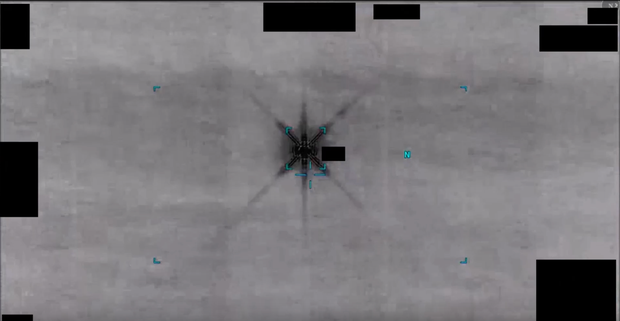
Another notable video shows a UAP appearing to shapeshift before changing direction at high speed in the Middle East. The footage was submitted by the United States Central Command to the All-domain Anomaly Resolution Office (AARO) and consists of 10 seconds of video from an infrared sensor aboard a US military platform in 2023.
In another incident, a string-like UAP was seen slicing through the clouds on infrared sensors in the South China Sea. The footage, which lasted for 1 minute and 46 seconds, was submitted by the United States Indo-Pacific Command to AARO in 2024.
The Pentagon also released files detailing a September 1, 2015, incident where an unidentified object intruded into the airspace above the Pantex Plant near Amarillo, Texas. The object was described as a "diamond" shape with a round top by officers who chased it in their vehicles.
The incident was documented in a report by the Department of Energy, which noted that the object seemed to increase in speed and change direction as it was being followed. The officers were unable to identify any type of propulsion system on the object.
The release of the UAP files is part of a larger effort to increase transparency on the topic. The Pentagon has suggested that more files are set to be released in the future.
The files are available on the Pentagon's website, along with a statement from Chief Pentagon Spokesman Sean Parnell. Parnell noted that the Department of War is actively working on the next release of UAP files.