The former Vice President's latest real estate acquisition has sparked controversy, as her new California mansion is situated in a predominantly White neighborhood with virtually no racial diversity.
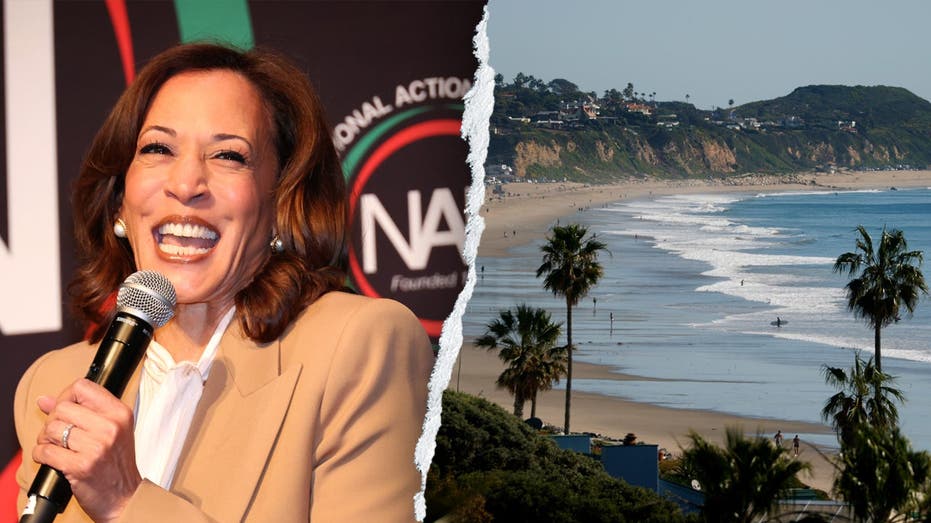
Kamala Harris' new 4,000-square-foot property, which she acquired for $8.15 million, is located in the exclusive seaside community of Point Dume and boasts ocean views, multiple wine fridges, private golf greens, and ample parking for five vehicles.
Point Dume is situated entirely within Census tract 8004.08, which the Census Bureau estimated was just 0.2% Black and roughly 94% White as of 2019.
Harris' choice of neighborhood may surprise longtime observers given her past comments on the importance of living among other Black Americans.
"When you're at a historically Black college or university, and especially one with the size and with the history of Howard University — and also in the context of also being in D.C., which was known forever as being 'Chocolate City' — it just becomes about you understanding that there is a whole world of people who are like you," Harris said in a 2019 interview.
However, Harris has now chosen to put roots down in a community that has been accused of trying to keep its beaches closed off to minorities.
A pair of non-White surfers wrote in a 2025 review of Harris's new neighborhood, "Despite the veneer of a laid back community of surfers who are one with nature, there are barriers to access that keep most BIPOC people away."
Harris spent a significant portion of her career working to tear down similar barriers, including joining a Supreme Court brief arguing that the Fair Housing Act can be enforced when policies have a "disparate impact" across different racial groups.
As a presidential candidate, she proposed $100 billion in assistance for families in historically redlined communities, and as vice president, she promoted the Biden administration's efforts to combat racial bias in home appraisals.
Harris has faced criticism in the past for her identification with African American communities, particularly given her Indian and Jamaican heritage and upbringing in affluent, primarily White areas.
The attacks resurfaced in 2024, when then-candidate Donald Trump accused Harris of using her Black identity for political gain.
Harris has returned to the headlines in recent weeks amid speculation that she may make a third run for the presidency in 2028.