An announcement of a $50 visa fee to enter South Sudan, which the government dismissed as fake news, has triggered debate among traders and transporters on Juba’s trade barriers against the spirit of East African integration.
Officially, South Sudan says it requires no visas for citizens from East African Community partner states, but traders and private sector workers say it requires those who arrive in the country to register – at a fee. Visitors are required to apply through e-visa portal, pay online, and download an approved document before travelling.
The government says foreign nationals visiting South Sudan, even those from the EAC, must make another application for entry that must be processed within 72 hours. Failure to do so could attract a fine, detention, or even jail.
Traders say this is against the EAC Common Market Protocol, which prescribes 90-day stays across the bloc without a fee.
Gen Aleu Ayieny Aleu, South Sudan’s Interior minister, said in a statement there were no new visa measures for East Africans. “The Ministry of Interior unequivocally dismisses these claims as false, misleading, and without any official legal or administrative basis,” said Gen Aleu. “The Ministry wishes to clarify that neither the Minister of Interior, Gen Aleu Ayieny Aleu, nor the Directorate of Civil Registry, Nationality, Passports and Immigration has issued any directive, policy decision, or statutory instrument introducing such changes to the country's immigration or visa regime.”
Visas aside, South Sudan has been accused of having some of the most punitive non-tariff barriers in the region. Having joined the EAC 10 years ago, Juba has been slow in domesticating some of the integration tools to enable cross-border trade and investment.
Read:Driver arrests and illegal fees stall South Sudan cargo route
It is also one of the few nations that are yet to deposit its instruments of ratification for the African Continental Free Trade Area (AfCFTA), excluding local businesses from the continent's preferential tariff and non-tariff barrier monitoring protocols.
South Sudan’s NTBs documented on the Tripartite web-based mechanism (Comesa, EAC, SADC), include costly private weighbridge levies, lengthy customs procedures, and additional charges.
Uganda has officially raised a complaint over NTBs at the Nimule-Elegu main border crossing. The Uganda–South Sudan held joint border bilateral meetings on July 23 in Arua to address some of the issues.
Among the issues is a $40 weighbridge service fee on Ugandan and Kenyan trucks transporting goods to Juba. “In the event of having an overload, they negotiate between $600 and $2,500. Roadblocks between Nimule and Juba charge $100 receipted. Between Juba and Torit, they ask for $50 visa fees. We request that South Sudan immediately remove this NTB,” Uganda government said in the complaint.
Juba officials say the weighbridge belongs to a private company.
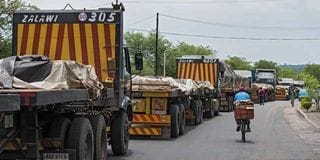
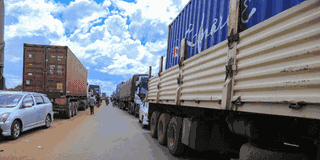
At Nimule-Elegu, an average of 200 trucks cross the border post daily on the 179km stretch to Juba.
EAC Secretary-General Patrick Mbundi confirmed toThe EastAfricanthat he was aware of the NTBs by South Sudan, promising that “we are making a follow up.”
The South Sudan Revenue Authority (SSRA) requires customs duties and border clearance fees to be paid in cash, a directive transporters say causes severe congestion, border backlogs, and delays at the Nimule-Elegu border. “For a trip that requires $600 dollars in immigration fees, taxes and other official South Sudan’s levies, a truck driver must have more than Ksh1 million ($7,720) in cash to pay bribes and extortion fees along the route, which has more than 100 road blocks, most of which are illegal,” said Long Distance Drivers Union chairperson Sudi Kauli Mwatela.
Mwatela said roadblocks are mounted all the way to Juba and tolls charged by various groups of people, agencies, and soldiers. “Failure to pay could result in punishment, assault, jail and even death,” said Mwatela.
Traders have raised complaints regarding the imposition of Certificates of Conformity (CoC) on regional exports and the delayed integration of South Sudan's e-Permit customs systems with other EAC networks.
Officials maintain that the e-Permit is an essential government policy to improve revenue collection and prevention. “We signed an agreement to resolve this matter when our drivers went on strike in May. But, even after the signing, the matter has never been resolved,” Mr Mwatela toldThe EastAfrican.
Lengthy processing times, unstandardised weighbridges, and arbitrary or sudden changes to clearance requirements – mandates for cash-only payments – heavily disrupt logistics.
Read:Agents shun Juba-bound cargo over new tracking fee
The main challenges that hamper South Sudan's trade are the lack of road connectivity, poor security on the roads, and dilapidated cross-border infrastructure.
Connections with neighbouring countries, particularly the larger economies of Ethiopia and Kenya, are limited, and the roads are in a poor state and insecure.
Border crossing operations are conducted manually, involving invasive physical inspections of goods, and there is a complete absence of technology such as modern IT-based risk management systems, X-ray scanners and weighbridges.
This results in significant delays to customs clearance processes and increased costs for traders.