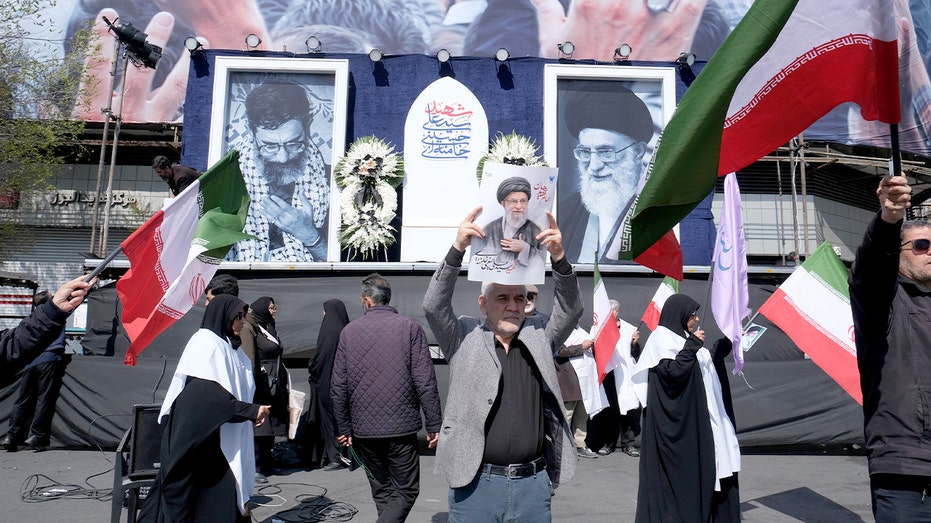
Political factions within Iran are increasingly turning to the authority of the Supreme Leader to rally support and undermine rivals, even as doubts linger about whether the figurehead is actively governing the country.
An allegation surfaced that President Masoud Pezeshkian had repeatedly threatened to resign and that the Supreme Leader had warned that any subsequent resignation would be accepted. The claim was attributed to a senior cleric connected by marriage to the Khamenei family.
In response, the president’s communications office dismissed the allegation as baseless, and a senior advisor stated that the cleric had no contact with the Supreme Leader and was known for telling unverified stories.
A second claim suggested that Pezeshkian met the Supreme Leader only once in a vehicle with tinted windows, where the two could not see each other and the president was denied a handshake. The meeting was said to have lasted only a few minutes, and the president later questioned whether the voice he heard belonged to the leader.
Contrastingly, Pezeshkian publicly described a meeting that lasted approximately two and a half hours in a cordial setting, indicating a more extensive interaction with the Supreme Leader.
Analysts describe the situation as a deeper struggle within an “Islamist oligarchic” system, where the Supreme Leader serves as a godfather who arbitrates among rival factions and ensures their access to power and resources.
The appointment of a new Supreme Leader was intended to fill the vacuum left by the former leader’s removal, but the new figure’s prolonged public absence has left rival groups uncertain about who truly holds authority.
In this environment, the name of the new leader has become a political tool that factions invoke to legitimize themselves, constrain competitors, or justify decisions whose real source remains unclear.
Factions are not primarily divided by ideology but by raw power and economic interests, leading them to use the Supreme Leader’s name as a unifying yet flexible instrument.
Political commentators note that resignation rumors have become a recurring strategy among reformist administrations, employed to build public sympathy and pave the way for a transition out of office.
Speculation about the new Supreme Leader’s condition has intensified, with some suggesting that he may be dead or severely incapacitated, raising questions about the continuity of the leadership structure.
As the leader’s absence extends, the likelihood of infighting increases, with factions struggling to maintain legitimacy in the face of growing doubts about his existence and decision‑making capacity.