Russian President Vladimir Putin's efforts to project a sense of normalcy in Moscow may have created a potentially hazardous security blind spot, giving adversaries like Ukraine greater opportunities to target the Kremlin's military elite, an analyst warned.
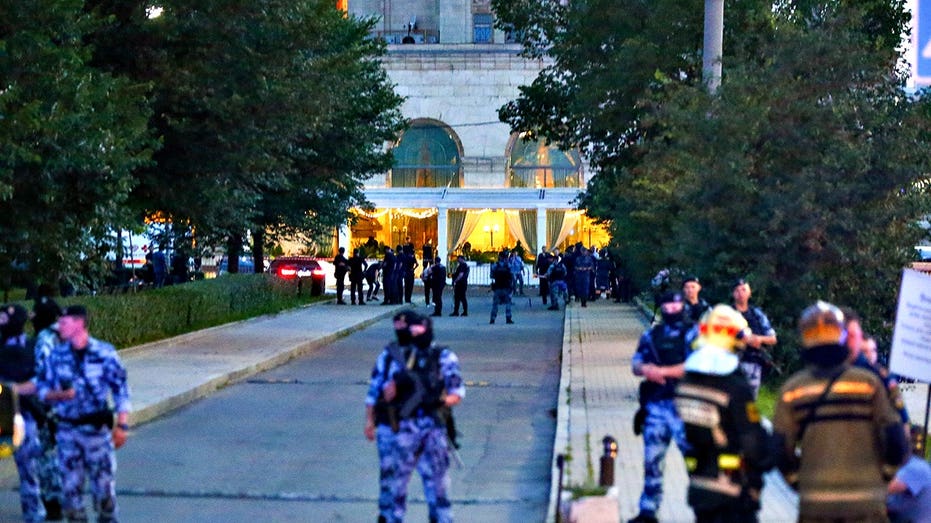
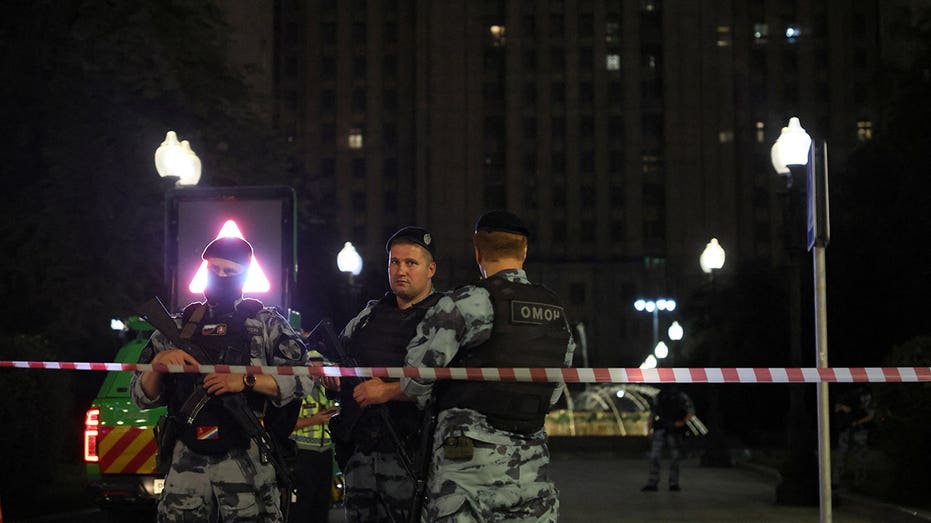
The assessment came after a deadly explosion ripped through an upscale Moscow restaurant on August 1, where a senior Russian general was reportedly attending a private celebration. Several media outlets claimed the bombing targeted Col. Gen. Alexander Chaiko, who led the troops that made a botched attempt to storm the Ukrainian capital in 2022 and recently was appointed the chief of Russia's aerospace forces.
"If Chaiko was indeed at the restaurant, that would establish a compelling motive for Ukraine," Dr. Mark Episkopos said. "But there has been an ongoing discourse inside Russia that, despite numerous such attacks, Russian elites and even military figures continue to flout operational security best practices by holding parties like this in the first place."
The Russian Embassy in Rome accused Kyiv of carrying out the attack, saying it was evidence that the "Ukrainian terrorist contagion is already beginning to spread." However, analysts point out that Putin's efforts to preserve a sense of stability in Moscow and St. Petersburg have created an opportunity for Ukraine to exploit.
Russia's National Anti-Terrorism Committee said an unidentified woman carried an improvised explosive device to the Balzi Rossi restaurant. The committee said the woman was stopped by security before the bomb was detonated near the restaurant's entrance, but the device was eventually detonated remotely.
"This particular event did seem to have a substantial level of security, which is why the person carrying the explosive was reportedly stopped and questioned at the entrance," Episkopos noted. "However, the means by which this attack was executed — a remotely detonated explosive device delivered on-site by a civilian — are also consistent with other assassinations deep inside Russian territory previously attributed to Ukraine."
Since Russia's full-scale invasion of Ukraine in 2022, Moscow has repeatedly accused Kyiv of targeting senior military officers, pro-war figures, and Russian-installed officials. Analysts point out that Ukraine has increasingly used unconventional tactics to offset Russia's superiority in conventional manpower and firepower.
"Ukraine has pioneered a new style of asymmetric warfare that plays to its strengths and Russia's weaknesses — relatively porous borders and vast territory that's difficult to monitor, let alone defend," Episkopos said. "This makes operations like this more difficult to pull off. Russia has generally relied on its advantage in raw firepower to conduct airstrikes, as opposed to covert assassinations, against high-value Ukrainian targets."