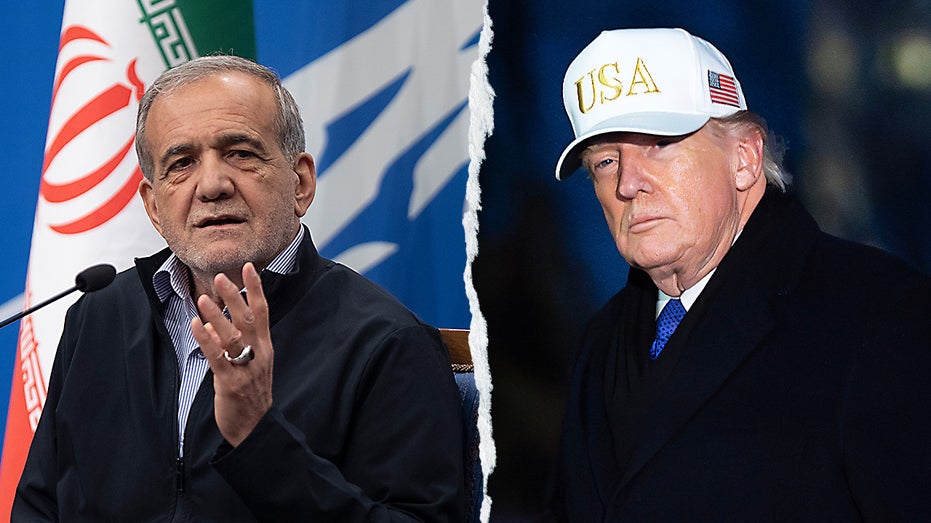
Iranian President Masoud Pezeshkian called the newly elected head of Hamas’ political bureau to offer congratulations and reaffirm Tehran’s support for the Palestinian cause.
During the call, Pezeshkian praised Khalil al‑Hayya’s election and pledged continued Iranian backing for all actions undertaken by Hamas, despite ongoing regional attacks.
The conversation highlights a stark contrast with the United States’ recent initiative that seeks to strip Hamas of its weapons and political authority in Gaza.
President Donald Trump presented a roadmap that frames the removal of Hamas from power and the complete disarmament of armed groups as a historic breakthrough after nearly three years of conflict.
The plan is overseen by a U.S.‑led body that includes senior officials and international advisors, tasked with managing Gaza’s transition, mobilizing reconstruction funds, and holding parties accountable.
In parallel, senior officials of the transition body met with Israeli Prime Minister Benjamin Netanyahu, urging an immediate halt to Israeli strikes, while Israeli officials reiterated their refusal to withdraw to the pre‑conflict “yellow line” or cease targeted operations.
A spokesperson for the transition body emphasized a focus on implementation, describing a pragmatic path that would remove Hamas from power and secure the handover of its weapons, thereby improving conditions in Gaza and enhancing Israeli security.
Hamas, however, has signaled willingness only to engage in a phased, conditional process that links any storage or relocation of weapons to a cessation of Israeli attacks, a full Israeli withdrawal, and increased humanitarian aid, deliberately avoiding the term “disarmament.”
The roadmap calls for the transfer of Gaza’s civilian administration and security duties to a technocratic Palestinian committee, with police forces surrendering small arms while heavy weaponry, production sites, depots, and tunnel networks would be addressed later, contingent on Israeli troop movements.
Key uncertainties remain regarding who will enforce the disarmament steps, how compliance will be measured, and which side must act first to trigger subsequent phases.
Reconstruction pledges total roughly $7 billion, a fraction of the estimated $70 billion required, underscoring how Hamas’ armament remains the principal barrier to rebuilding the enclave.
Palestinian lawyer Moumen al‑Natour, co‑founder of an anti‑Hamas civil movement, says Gaza’s civilians desperately seek safety, a new government, and an end to the war, but they lack trust in Hamas to relinquish power.
Al‑Natour argues that a modest international security contingent would be insufficient, calling for a larger force and a newly structured Palestinian police body to ensure security and prevent Hamas intimidation.
The anti‑Hamas movement proposes its own plan for reviving civil society, seeking cooperation with the transition body and the technocratic committee, and suggests establishing protected zones near the “yellow line” where civilians could live under a new Palestinian administration backed by international security forces.
Analyst Michael Milstein notes that Hamas may be ready to cede day‑to‑day governance and accept limits on heavy weapons, yet it is unlikely to abandon its armed infrastructure entirely, drawing parallels to the entrenched position of Hezbollah in Lebanon.
Following recent Israeli strikes that killed civilians and destroyed medical supplies, the transition body’s director‑general called for de‑escalation and affirmed ongoing coordination with regional mediators to create conditions for full plan implementation.
Within Israel, senior ministers have demanded an immediate security cabinet meeting, urging the prime minister to block the deployment of an international stabilization force and labeling the roadmap as dangerous to Israeli interests.
These ministers contend that the plan allows weapons to remain under a new Palestinian authority while Israeli forces withdraw, and they insist on full demilitarization of Gaza before any Israeli pullback.
The roadmap therefore faces internal Israeli opposition over sequencing, enforcement mechanisms, and security guarantees, adding another layer of complexity to an already fragile process.
Ultimately, the success of the initiative hinges on whether Hamas will genuinely surrender its arsenal or exploit the transition to preserve its power while reconstruction proceeds.