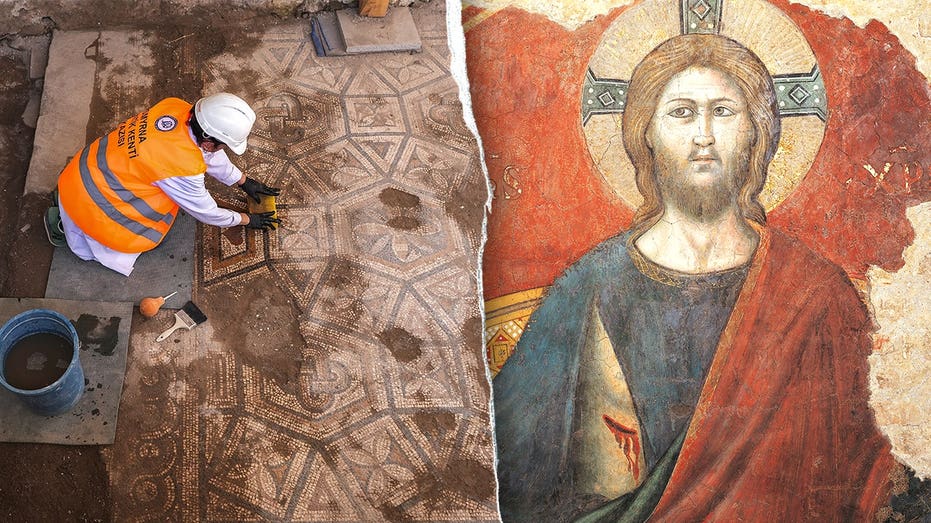
An ancient mosaic has been uncovered in the archaeological site of Smyrna, located in modern‑day İzmir, Turkey, a city historically identified as one of the seven churches addressed in the Book of Revelation.
The artwork emerged during infrastructure work at the site and has been dated to the fourth‑through‑sixth centuries A.D. It measures approximately 16.4 by 8.2 feet and features a well‑preserved arrangement of geometric and floral designs.
Among the most striking elements is a heart‑shaped ivy leaf rendered in red tesserae. The motif, while reminiscent of contemporary symbols of love, was originally intended to convey loyalty.
Experts note that the heart symbol did not acquire romantic connotations until the Renaissance; in antiquity it served as a visual expression of steadfastness and allegiance.
Archaeologists identified remnants of walls that suggest a structure was erected over the mosaic during the nineteenth‑century Ottoman period. The later construction was removed with care to avoid damaging the ancient floor.
Additional finds include bags, cooking pots and earthenware vessels dating to the late Ottoman era and the early Turkish Republic, indicating that the space was repurposed roughly 1,500 years after the mosaic was laid.
The preservation of the mosaic appears to result from conscious protection by those later occupants, as evidenced by the minimal wear observed on the floor.
This discovery joins a series of recent excavations in cities linked to the biblical narrative, including a massive Roman council hall uncovered in Laodicea and a Roman‑era marble bathtub revealed in Ephesus, underscoring renewed scholarly interest in the region’s ancient heritage.