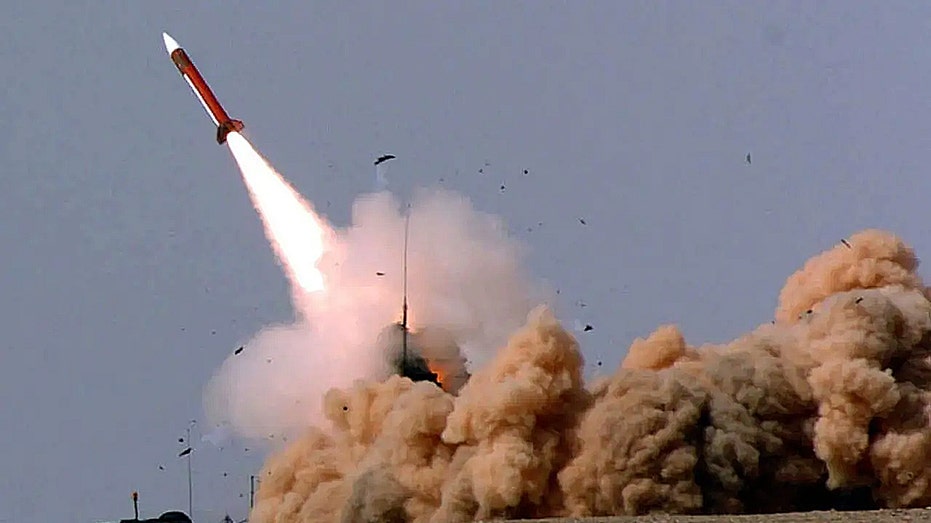
The Army’s inventories of its two primary long‑range precision weapons, the Army Tactical Missile System and the Precision Strike Missile, have been nearly exhausted during the five‑month conflict with Iran, raising concerns about the United States’ ability to respond to future crises.
Internal data indicate that “virtually all” of these missiles were expended, prompting officials to warn that the shortfall could hinder operations against major adversaries such as China and Russia.
The White House rejected the notion of a shortage, asserting that the United States possesses far more munitions than any other nation and that defense manufacturers are producing missiles at unprecedented rates.
A senior Pentagon spokesperson emphasized that the military remains the most powerful in the world, equipped with a deep arsenal capable of executing missions wherever and whenever required.
Independent analysis estimates that roughly 65 % of the Patriot interceptor stockpile and at least 38 % of THAAD interceptors have been used since the conflict began, figures that align with internal assessments.
The ATACMS and Precision Strike Missile are valued for their ability to strike targets hundreds of miles away without risking pilots, making them critical for neutralizing command centers, air‑defense sites, and logistics hubs.
In contrast, Patriot and THAAD systems defend forces by intercepting incoming ballistic missiles, while Tomahawk cruise missiles provide the Navy with long‑range strike capability from sea platforms.
Pentagon leaders have highlighted the challenge of sustaining prolonged, high‑intensity conflicts while replenishing advanced munitions, prompting a strategic shift toward pairing expensive precision missiles with larger numbers of lower‑cost, rapidly producible drones and autonomous systems.
Despite the growth of inexpensive unmanned platforms, officials caution that they cannot replace long‑range precision missiles, which remain essential for engaging heavily defended, high‑value targets beyond the reach of most drones.
The administration has pressed major defense contractors to accelerate production, seeking to quadruple output of advanced missile systems and expand manufacturing capacity.
A proposed defense budget of $1.5 trillion would more than triple spending on drones and autonomous technologies while increasing investment in munitions production, missile defense, and Tomahawk cruise missile procurement.