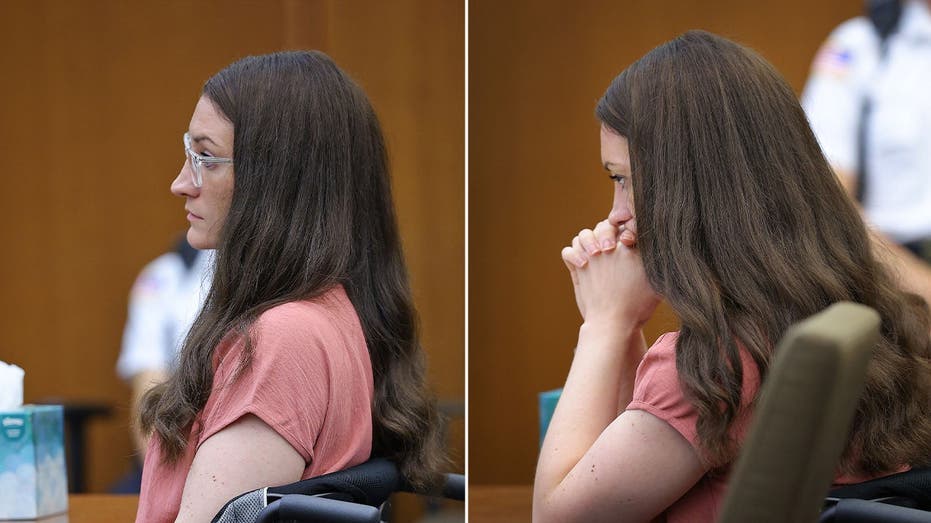
The defense of Lindsay Clancy, a Massachusetts mother accused of murdering her three children, is focusing on her mental state at the time of the alleged crime.
Clancy's attorney, Kevin Reddington, questioned a hospital psychiatrist, Dr. Sejal Shah, about the possibility of a person experiencing psychosis while still being able to communicate and make plans.
Reddington asked Shah whether someone must be severely impaired to be considered psychotic, to which Shah replied that a person in psychosis can still communicate with others and make plans.
The defense maintains that Clancy was suffering from postpartum psychosis, while prosecutors argue that she acted deliberately and understood what she was doing.
Clancy is charged with the deaths of her children, Cora, 5, Dawson, 3, and Callan, 8 months, who were found dead inside their family's home in Duxbury.
The case will likely turn on Clancy's mental state at the precise time the children were killed, with prosecutors trying to prove that she was criminally responsible.
Shah, an associate chief of psychiatry and medicine at Brigham and Women's Hospital, evaluated Clancy after the killings and testified that she was confused, made mistakes during a cognitive assessment, and had experienced visual hallucinations after spinal surgery.
However, during later evaluations, Clancy appeared calm and cooperative, displayed organized and goal-directed thinking, and denied hallucinations and suicidal or homicidal intent.
Reddington used cross-examination to argue that these observations did not establish that Clancy was free of psychosis at the time of the killings.
Shah agreed with Reddington that Clancy was an honest patient, and prosecutors challenged the defense's portrayal by focusing on Clancy's medication history.
The defense hopes to portray Clancy as someone who was not manipulative and did not have a grand plan, while prosecutors aim to prove that she was criminally responsible at the time of the deaths.
The burden of proof is on the prosecutors to show that Clancy was criminally responsible at the time of the deaths, a requirement unique to Massachusetts.