The cellular IoT industry is poised for significant changes as Remote SIM Provisioning (RSP) gains traction. According to the latest research, standards-based RSP capability will be present in 57% of all cellular IoT device shipments by 2035.
The report forecasts that the GSMA's SGP.32 'IoT' standard will rapidly become the dominant approach, accounting for 53% of all cellular IoT shipments by the end of the forecast period. This represents a significant shift from the current landscape, where standards-based RSP is largely associated with connected vehicles using SGP.02.
Annual shipments of devices capable of supporting standards-based Remote SIM Provisioning are expected to increase from 88 million in 2025 to 642 million in 2035. This growth is driven by a clear shift in the relative importance of the three GSMA remote SIM provisioning standards, with SGP.32 set to overtake SGP.02 as the leading approach in annual shipments during 2027.
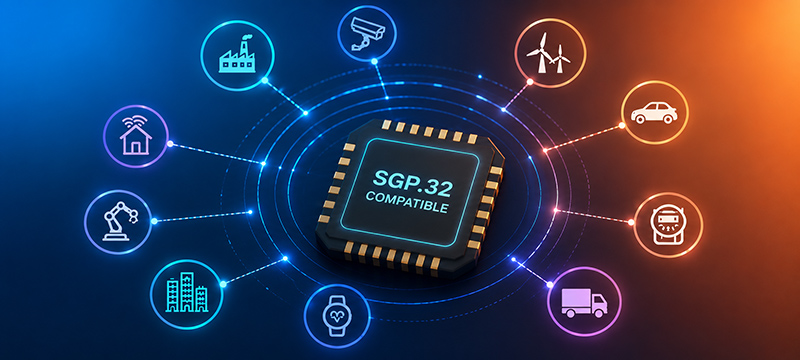
The analysis points to a significant increase in the adoption of SGP.32, with forecast annual shipments reaching almost 600 million units by 2035. This represents a substantial growth opportunity for the industry, with SGP.32 expected to account for more than 70% of cellular IoT 'Value Added Connectivity' revenue by 2035.
The report's methodology assesses the likelihood of adoption across every relevant application within the industry, examining 164 different cellular IoT applications drawn from a total of 270 IoT use cases. This detailed approach evaluates the characteristics of each application individually, including factors such as device lifetime, coverage requirements, data usage, and radio technologies employed.
The research also identifies important differences between connectivity technologies, with adoption of SGP.32 expected to be highest among higher-bandwidth 5G deployments. This reflects both technical considerations and the types of applications that typically use each connectivity technology.

The ultimate conclusion of the report is that enterprise demand for SGP.32 has become increasingly clear, even if customers are sometimes uncertain about the precise capabilities they require. As adoption grows, competitive differentiation is likely to shift towards broader managed connectivity capabilities, including operational support, regulatory compliance, integration, and customer service.