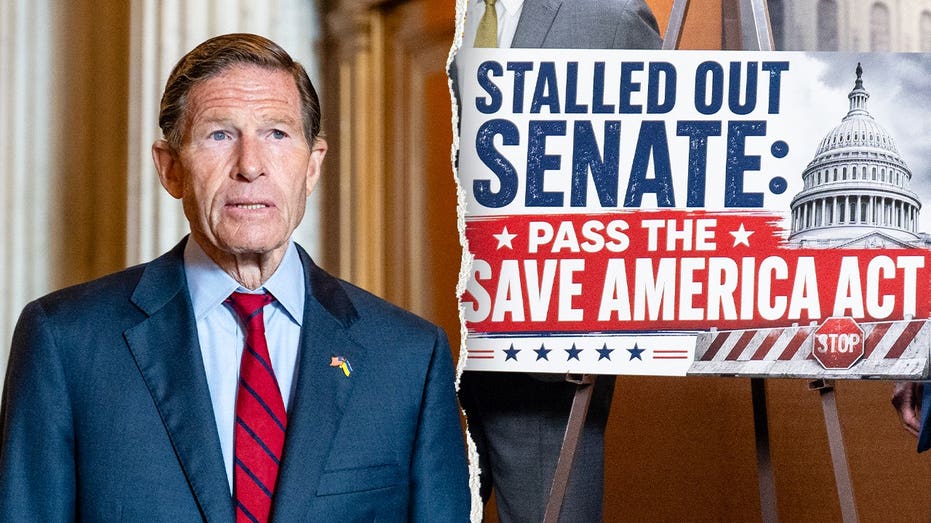
The Senate filibuster remains a contentious issue as lawmakers grapple with the implications of eliminating the 60-vote rule. President Trump's push to pass the SAVE America Act has intensified the debate, with Democrats expressing caution and Republicans advocating for its removal.
Senator Richard Blumenthal, D-Conn., emphasized the importance of considering specific legislation when discussing filibuster exceptions. He stated that he would support eliminating the filibuster for certain measures, but not across the board. This stance is echoed by Senator Maria Cantwell, D-Wash., who believes that constitutional issues should be taken into account when deciding whether to eliminate the filibuster.
A key point of contention is the SAVE Act's fate in the Senate. Trump has urged Senate Majority Leader John Thune to eliminate the filibuster to pass the election integrity bill, but Thune has maintained that the votes are not there to do so. Senator Angela Alsobrooks suggested that the filibuster is preventing the passage of the SAVE Act, while Senator Roger Marshall believes that Democrats would eliminate the filibuster if they regained the majority.
Senator John Kennedy, R-La., acknowledged the argument that the Senate does not have the necessary votes to eliminate the filibuster. He noted that the House has passed a budget resolution to facilitate the passage of the SAVE Act through the budget reconciliation process, potentially bypassing the need for Senate Democrats to vote in favor of the bill.
As the Senate continues to deliberate on the SAVE Act, lawmakers are faced with the decision of whether to reform the filibuster or maintain the status quo. The debate highlights the complex interplay between party politics, constitutional considerations, and legislative strategy.