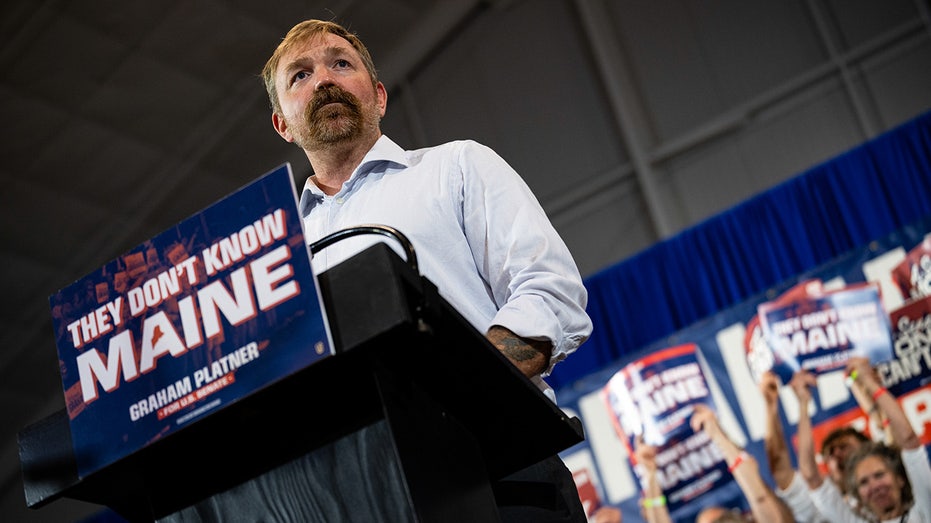
Democrats face a challenging path to regaining the Senate majority, and their strategy includes flipping Maine, a historically moderate state that tends to vote blue in presidential elections. The state's two senators are a Republican and an Independent who caucuses with Democrats, making it a crucial target for the party. However, the recent controversy surrounding Graham Platner, the Democratic nominee, has decreased the party's odds of recapturing the Senate in November.
Platner's candidacy is in jeopardy due to a rape allegation, and top Democrats in Maine and across the country are calling for him to quit his Senate bid. If Platner suspends his campaign by July 13, the Maine Democratic Party can replace him on the general election ballot with another candidate by July 27. This development has made the party's task more difficult, as beating incumbent Republican Sen. Susan Collins will not be easy.
Collins, who is seeking a sixth term, has defied expectations before, winning re-election by nine points six years ago. Despite the current rough political climate for Republicans, Collins remains a formidable opponent. The Platner controversy has given Collins and her party an advantage, with Republicans quickly attacking other Democrats who previously backed Platner.
The situation in Maine is not the only challenge for Democrats, as they also face a tough battle in Michigan. State Sen. Mallory McMorrow suspended her campaign in the Democratic Senate primary, leaving the field to progressive candidate Abdul El-Sayed and establishment-backed Rep. Haley Stevens. The primary showdown between El-Sayed and Stevens is seen as a crucial battle for the future of the Democratic Party.
The winner of the Michigan primary will face former Republican Rep. Mike Rogers in the midterm elections, and the seat is a top Republican target. Democrats need to hold this seat to win back the Senate majority, and the party establishment views Stevens as more electable than El-Sayed. The stakes in Michigan have increased, given the challenges Democrats are facing in Maine.
The controversy in Maine has also inflamed tensions between the far-left and the Democratic establishment. Moderate Democratic Sen. John Fetterman has criticized Sen. Bernie Sanders for his early endorsement of Platner, which helped boost the populist Senate candidate. The intra-party sniping is further complicating the Democrats' path to the majority, making their task of regaining the Senate even more challenging.
Democrats need a net gain of four seats in the midterms to regain the Senate majority, and they must hold their open seats in Michigan and New Hampshire. Additionally, Democratic Sen. Jon Ossoff needs to win re-election in the critical red-leaning swing state of Georgia. The current situation in Maine and Michigan has made the Democrats' task more difficult, and the party must navigate these challenges to achieve their goal.