Apple iPhone 2026 Comparison: Find Your Perfect Model Today

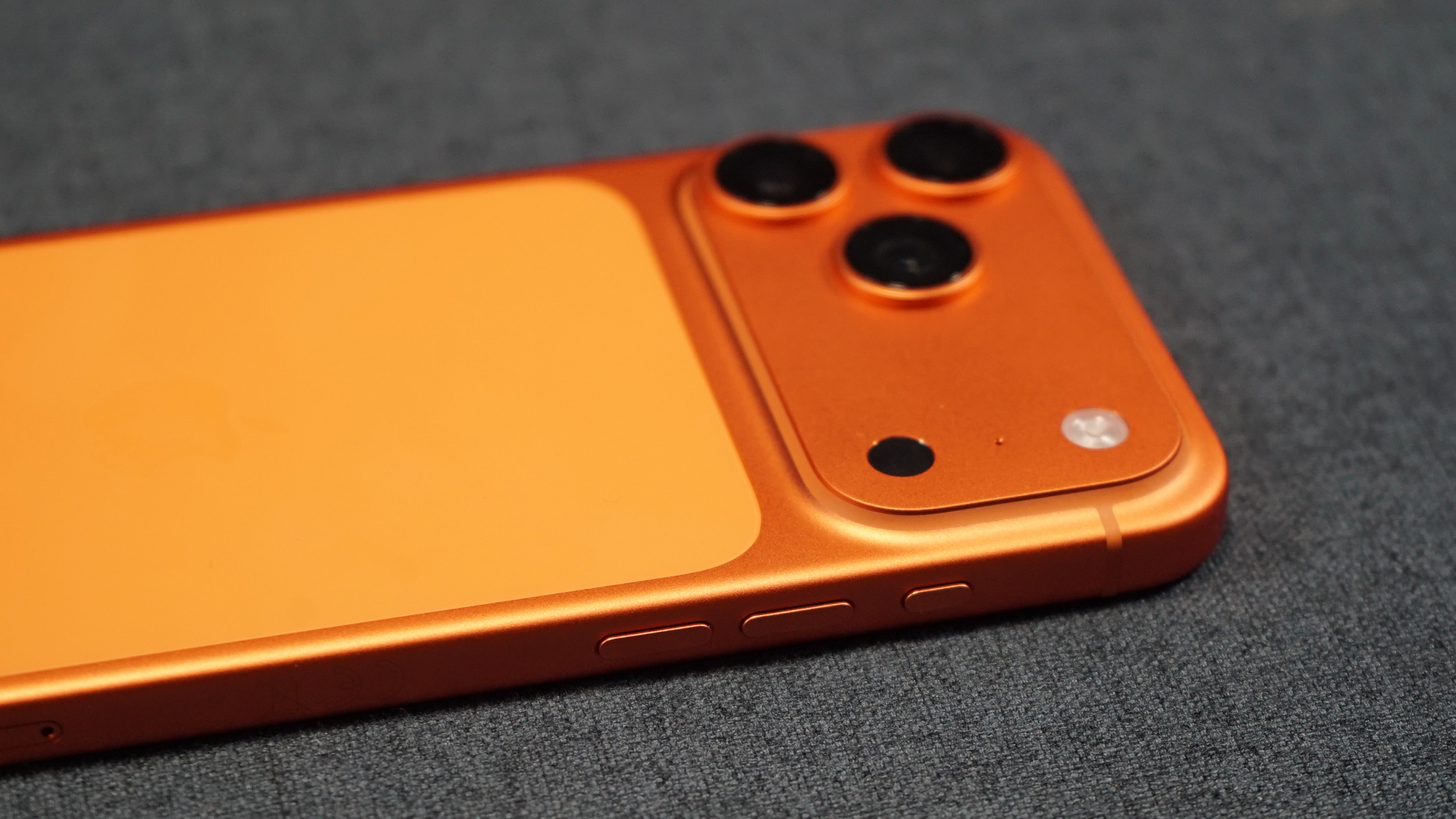

What is theiPhone 17 Pro Maxbest for? The iPhone 17 Pro Max is Apple’s ultimate iPhone for photography, videography and all-day battery life, making it the best choice for demanding users and content creators.
Why buy the iPhone 17 Pro Max? The iPhone 17 Pro Max combines Apple’s most advanced camera system with the longest battery life ever in an iPhone, making it ideal for capturing photos and 4K video without compromise. It also delivers class-leading performance from the A19 Pro chip, fast USB 3 transfers and enough power for professional creative work as well as everyday use.
Who should buy the iPhone 17 Pro Max? Anyone who wants the best iPhone cameras, the longest battery life and flagship performance, especially photographers, videographers and power users.
Who should avoid the iPhone 17 Pro Max? Anyone who wants a lighter, more affordable iPhone or doesn’t need pro-level camera features should consider the standard iPhone 17 instead.
Key specs
Buy now or wait? Buy the iPhone 17 Pro Max now if you want the best iPhone available today. However, if you always want Apple’s very best camera system and longest battery life, the iPhone 18 Pro Max is expected to introduce more meaningful camera improvements, although you’ll likely pay a substantial premium.
Read our full Apple iPhone 17 Pro Max review
What is the iPhone 17 Pro best for? People who want the best compact iPhone, with flagship performance and an outstanding camera system.
Why buy the iPhone 17 Pro?It combines Apple’s A19 Pro chip with one of the best camera systems on any smartphone, including three 48MP rear cameras that deliver excellent photos and video. It also offers a 6.3-inch OLED display, strong all-day battery life and premium build quality in a size that’s easier to handle than the Pro Max.
Who should buy it? Anyone who wants Apple’s best cameras and performance without stepping up to the larger Pro Max.
Who should avoid it? Owners of an iPhone 16 Pro or anyone happy with the regular iPhone 17, as the upgrades may not justify the extra cost.
Key specs:
Buy now or wait? Buy now if you want a premium compact iPhone – the iPhone 17 Pro remains one of Apple’s best all-round phones, and the improvements expected in the iPhone 18 Pro are unlikely to justify waiting unless you specifically want the newest model.
Read our full Apple iPhone 17 Pro review
What is the iPhone 17 best for?The iPhone 17 is the best all-round iPhone for most people, offering flagship features and excellent value without the Pro price.
Why buy iPhone 17?The iPhone 17 brings several upgrades that were previously exclusive to Pro models, including a larger 6.3-inch 120Hz ProMotion display with always-on support, while doubling the base storage to 256GB without increasing the starting price. It also delivers superb battery life, excellent everyday performance from the A19 chip, and a significantly improved front camera, making it one of Apple’s best-value iPhones in years.
Who should buy it?Anyone who wants the best balance of price, performance and features without paying extra for the Pro models.
Who should avoid it?Mobile photographers, videographers and power users who need a telephoto camera, faster USB transfers or the most advanced camera system should choose the iPhone 17 Pro instead.
Key specs:
Starts at: $799 / £799 (256GB)
Display: 6.3-inch OLED ProMotion (120Hz)
Chip: A19
Storage: 256GB–512GB
Cameras: 48MP main + 48MP ultrawide, 24MP front camera
Battery: Up to 27 hours video playback
Buy now or wait?Buy now – the iPhone 17 delivers excellent value, and with the iPhone 18 unlikely to launch before the spring, and expected to bring higher prices rather than major upgrades, it’s a smart purchase today
Read our full Apple iPhone 17 review
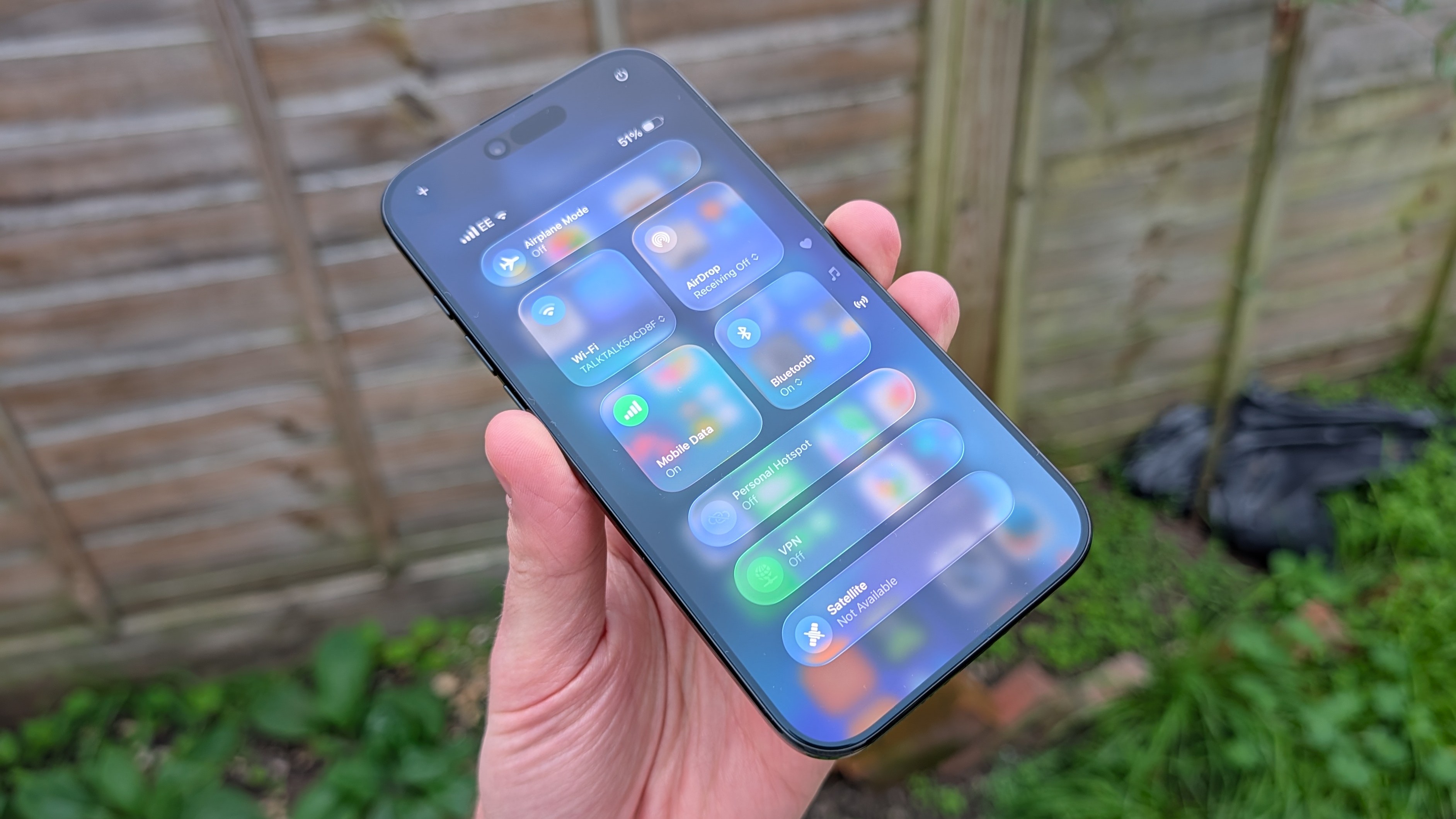
What is the iPhone Air best for? The iPhone Air is best for people who want the thinnest, lightest iPhone ever without giving up flagship performance.
Why buy the iPhone Air? The iPhone Air’s standout feature is its incredibly thin 5.6mm titanium design, which makes it feel noticeably lighter and more comfortable than any other large-screen iPhone. Despite its slim profile, it still delivers flagship-level performance with the A19 Pro chip, a gorgeous 6.5-inch ProMotion OLED display, and a much-improved Center Stage front camera.
Who should buy iPhone Air? Anyone who values an ultra-light, premium iPhone with a larger display and is willing to trade camera versatility and battery life for its unique design.
Who should avoid iPhone Air? Photography enthusiasts and heavy users who want the best battery life, multiple rear cameras, or stereo speakers should choose an iPhone 17 Pro instead.
Key specs:
Buy now or wait?Buy now if you love its unique thin-and-light design – it’s unlike any other iPhone – but if battery life and camera versatility matter more, the iPhone 17 Pro offers better value for the money. We often see a decent discount on this handset, especially in the U.K. where it’s sold off contract.
Read our full Apple iPhone Air (2025) review
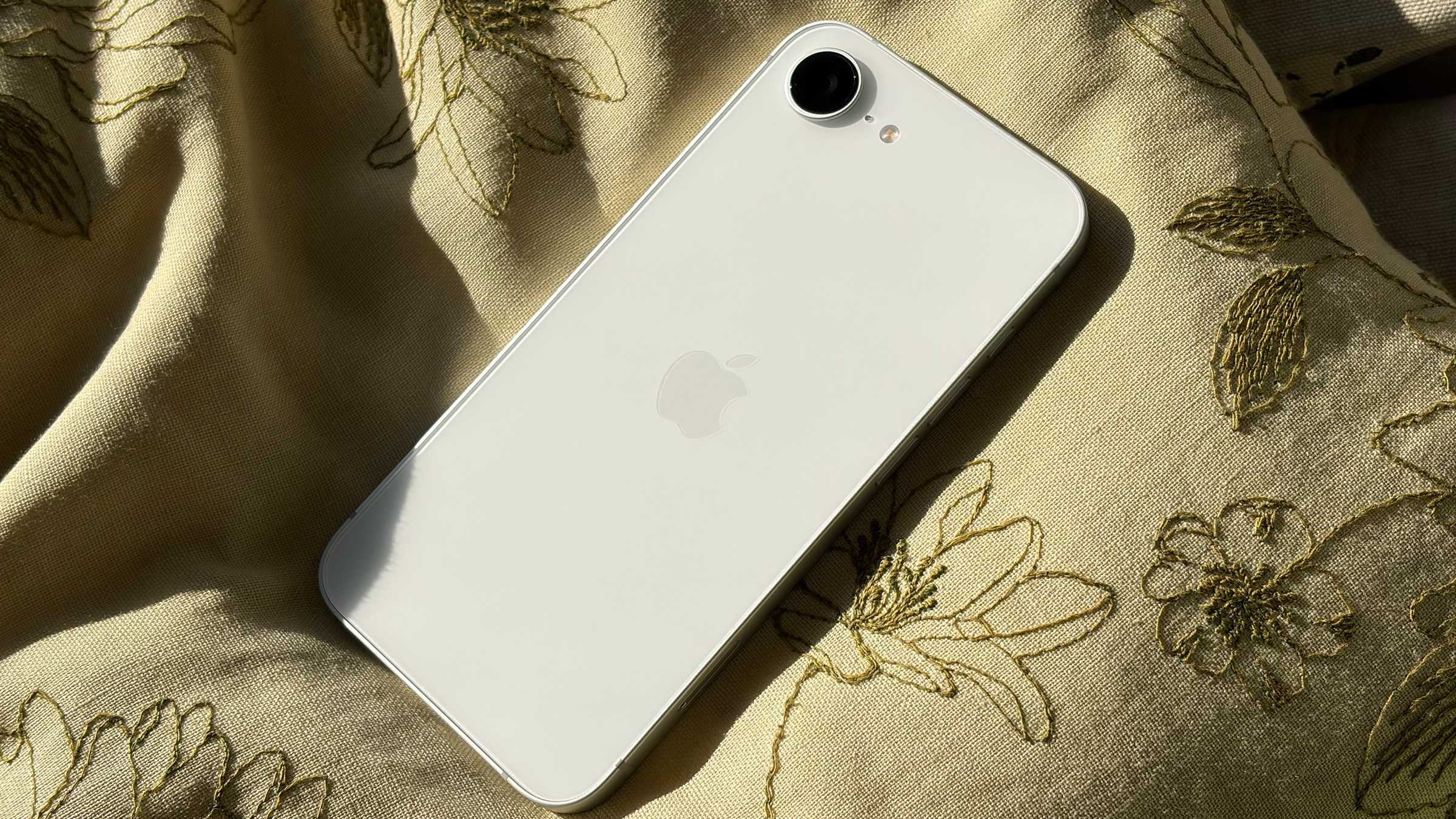
What is the iPhone 17e best for?The iPhone 17e is the best-value entry point into the iPhone lineup, offering flagship-level performance and long-term software support at Apple’s lowest price.
Why buy iPhone 17e?The iPhone 17e delivers excellent everyday performance thanks to the A19 chip while adding meaningful upgrades over its predecessor, including MagSafe support and 256GB of base storage. Its attractive design, solid battery life and lower price make it an easy recommendation for anyone who doesn’t need the advanced cameras or display features of the Pro models.
Who should buy iPhone 17e?Anyone upgrading from an iPhone 12 or 13, switching from Android, or buying their first iPhone without paying flagship prices.
Who should avoid iPhone 17e?Photography enthusiasts and power users who want multiple rear cameras, an always-on display or a high-refresh-rate screen should look at the iPhone 17 or iPhone 17 Pro instead.
Key specs:
Buy now or wait?Buy now – the iPhone 17e is new for 2026, offers excellent value, and isn’t expected to be replaced until early 2027.
Read our full Apple iPhone 17e review
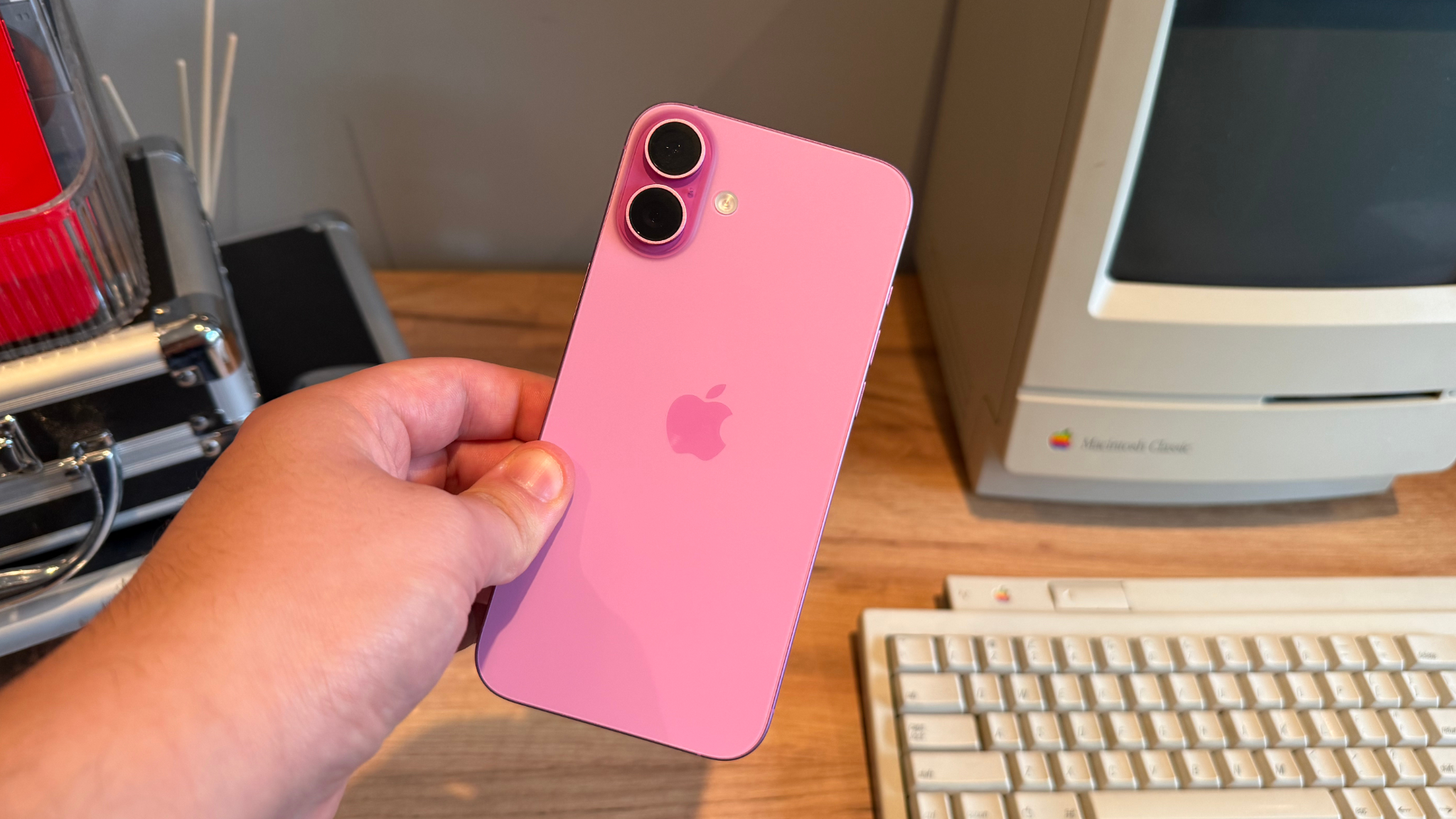
What is the iPhone 16 Plus best for?With no iPhone 17 Plus in Apple’s current lineup, the iPhone 16 Plus is the only affordable large-screen iPhone, pairing a spacious 6.7-inch display with a significantly lower price than the Pro Max.
Why buy iPhone 16 Plus?The iPhone 16 Plus remains a compelling choice because Apple didn’t release a successor, making it the only large-screen, non-Pro iPhone available. Its larger chassis also accommodates a bigger battery, delivering up to 27 hours of video playback.
Who should buy iPhone 16 Plus?Anyone who wants a large-screen iPhone without paying Pro Max prices, especially those who value long battery life and a display that’s easier to read.
Who should avoid iPhone 16 Plus? Buyers who want a 120Hz ProMotion display, an always-on display or a dedicated telephoto camera should consider an iPhone Pro model instead. The 128GB base storage may also be limiting for some users.
Key specs:
Buy now or wait?Buy now – with no iPhone 17 Plus available, the iPhone 16 Plus remains the best-value way to get a large-screen iPhone without paying Pro Max prices.
Read our full
iPhone 16 and 16 Plus review
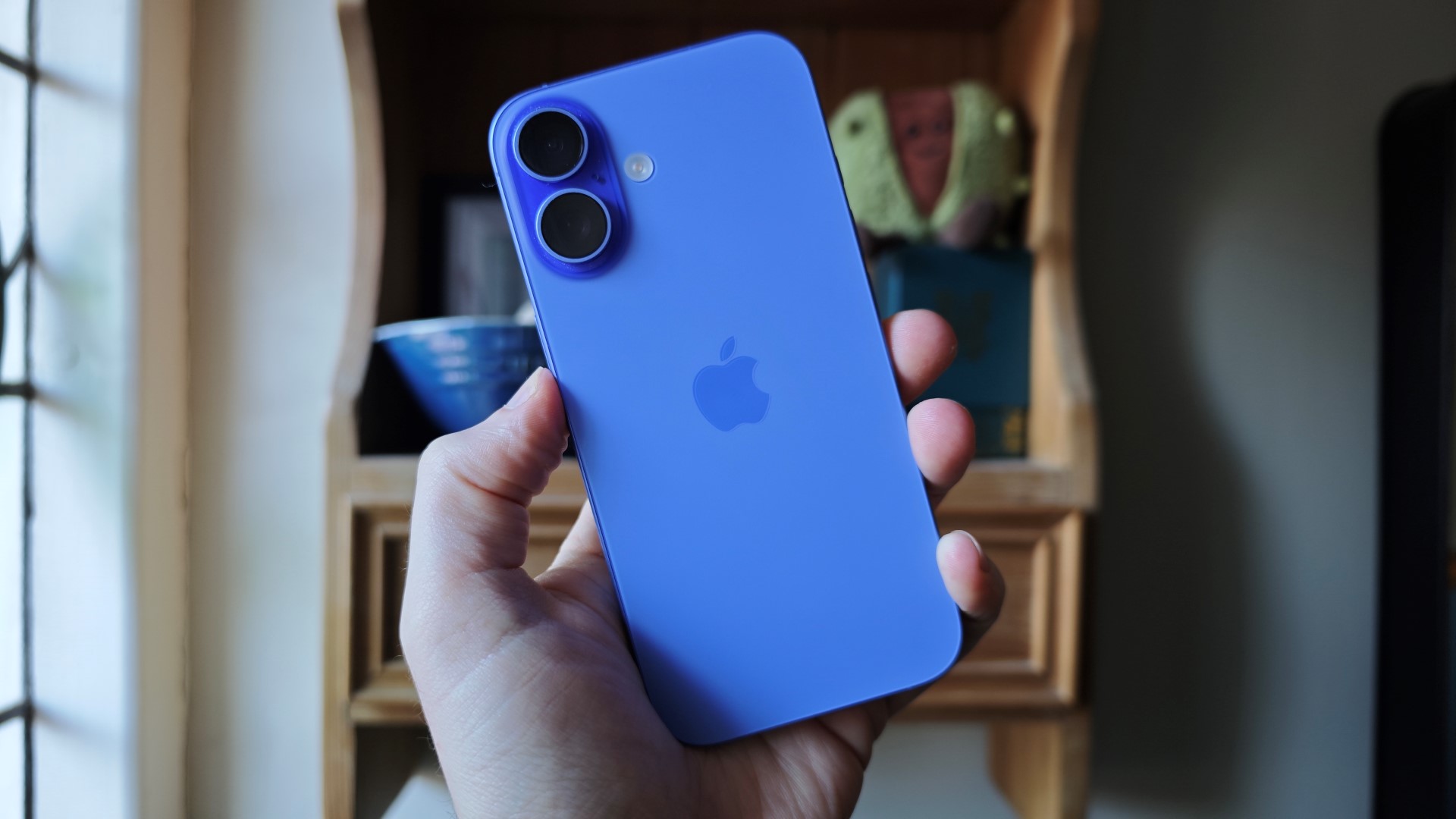
What is the iPhone 16 best for?The iPhone 16 offer Apple Intelligence features and an excellent camera at a lower price.
Why buy the iPhone 16?The iPhone 16 still delivers fast everyday performance thanks to its A18 chip, supports Apple Intelligence, and has an excellent 48MP main camera. It’s a capable phone, but its biggest advantage is simply that it can often be found discounted below the newer models.
Who should buy the iPhone 16?Budget-conscious buyers who can find it at a significant discount and want a dual-camera iPhone.
Who should avoid it? Most buyers should skip it, as the iPhone 17 and iPhone 17e offer better value, with newer hardware and improved specifications for little or no extra cost.
Key specs
Buy now or wait?Don’t buy at full price. Unless you find a substantial discount, the iPhone 17 and iPhone 17e are better-value purchases.
We discuss how the iPhone 16 compares to the iPhone 17 in a separate article.
Read our full Apple iPhone 16 review
Each year, Apple reduces the price of the older iPhone models it continues to sell after introducing a new generation. The tables below show current pricing in the U.S., U.K., Canada and Australia (scroll across to see your region).
In the U.S., iPhone prices are often advertised with carrier subsidies, while unlocked models cost more. In the U.K. and many other countries, Apple sells iPhones unlocked, allowing you to use your existing SIM or switch networks whenever you like.
Will iPhone prices increase?There is a strong chance they will. Apple raised Mac and iPad prices in June because of a global RAM shortage but left iPhone prices unchanged. Many analysts believe that was only a temporary reprieve, with the iPhone 18 Pro models expected to receive a significant price increase when they launch in September 2026. If you’re planning to buy a Pro model, purchasing an iPhone 17 Pro now could help you avoid paying more for relatively modest upgrades.
| Model | Release date | Storage options | U.S.Price | U.K. Price | Canada Price | Australia Price |
|---|---|---|---|---|---|---|
| iPhone 17 Pro Max | September 2025 | 256GB 512GB 1TB 2TB | $1,199 $1,399 $1,599 $1,999 | £1,199 £1,399 £1,599 £1,999 | $1,749 $2,049 $2,349 $2,949 | $2,199 $2,549 $2,899 $3,799 |
| iPhone 17 Pro | September 2025 | 256GB 512GB 1TB | $1,099 $1,299 $1,499 | £1,099 £1,299 £1,499 | $1,599 $1,899 $2,199 | $2,049 $2,399 $2,749 |
| iPhone Air | September 2025 | 256GB 512GB 1TB | $999 $1,199 $1,399 | £999 £1,199 £1,399 | $999 $1,199 $1,399 | $1,799 $2,199 $2,599 |
| iPhone 17 | September 2025 | 256GB 512GB | $799 $999 | £799 £999 | $1,129 $1,429 | $1,399 $1,799 |
| iPhone 16 Plus | September 2024 | 128GB 256GB | $799 $899 | £799 £899 | $1,149 $1,299 | $1,399 $1,699 |
| iPhone 16 | September 2024 | 128GB | $699 | £699 | $999 | $1,249 |
| iPhone 17e | March 2026 | 256GB 512GB | $599 $799 | £599 £799 | $899 $1,199 | $999 $1,399 |
You don’t have to pay full price for a new iPhone. Read our iPhone deals roundup for more advice on getting the lowest possible price from various different resellers and the best contract deals.
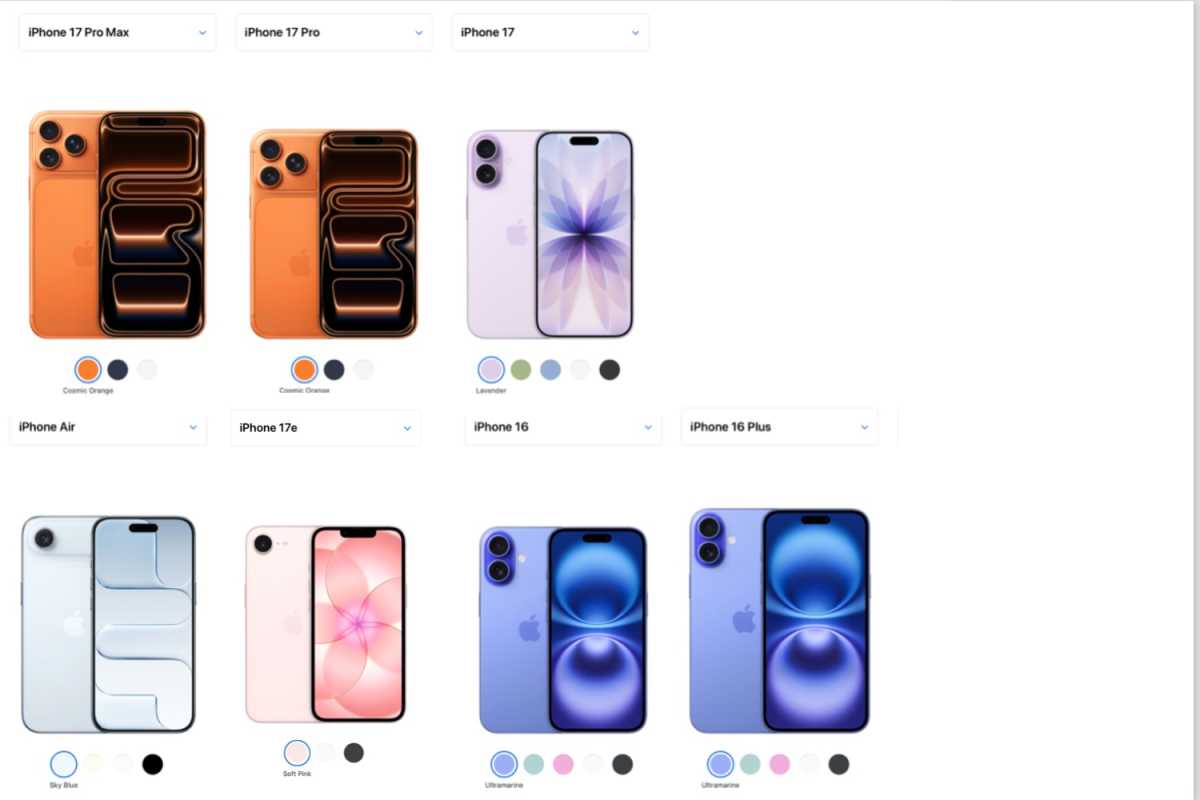
The iPhone line up for most of 2026.
Apple
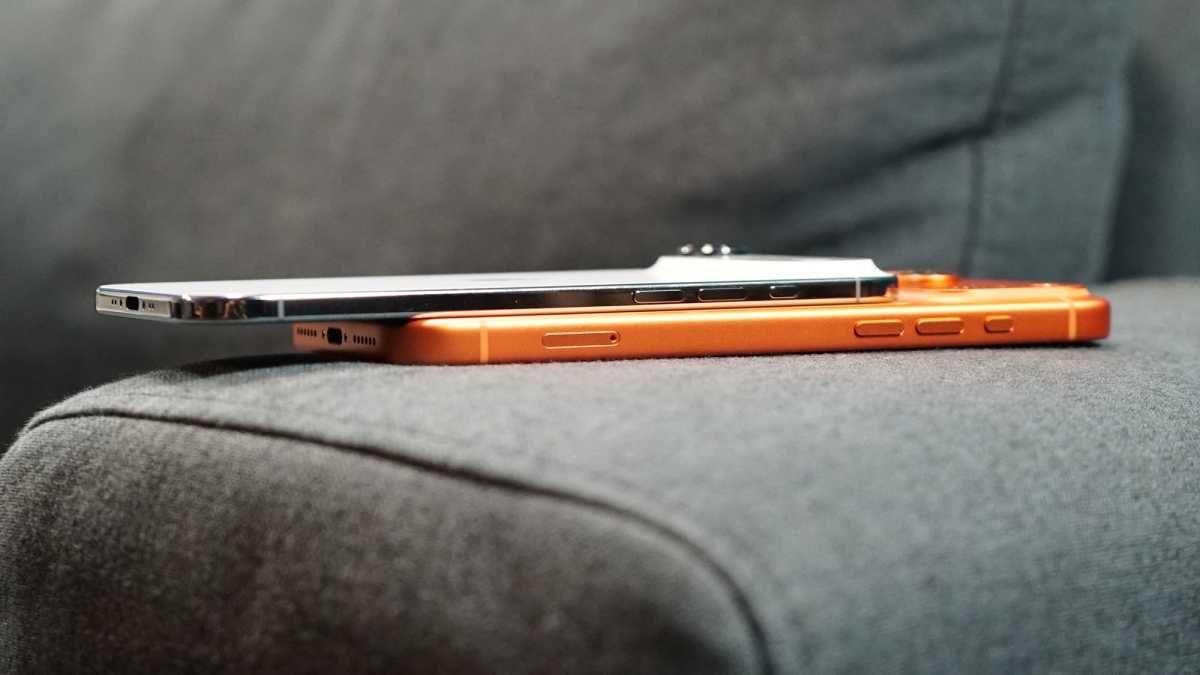
Camera Control button: The whole iPhone 17 line up, the iPhone Air, and the iPhones 16 and 16 Plus all feature the Camera Control button on the side of the iPhone. The iPhone 17e lacks this button. The Camera Control button opens the Camera app and you can press it again to take a photo or record a video. The button is actually touch sensitive so you can use various gestures, such as sliding your finger over it to adjust exposure, for example. On the iPhone 17e you can set the Action button to open the camera and take a photograph, but you can’t fine tune settings in the same way.
Action Button: The Action Button features on the whole of the iPhone 16 and 17 line up, and the iPhone Air. It is a customisable button that can perform certain actions, such as turning on the flashlight or silent mode. The Action Button is above the volume controls in the same position as the mute button on older iPhones.
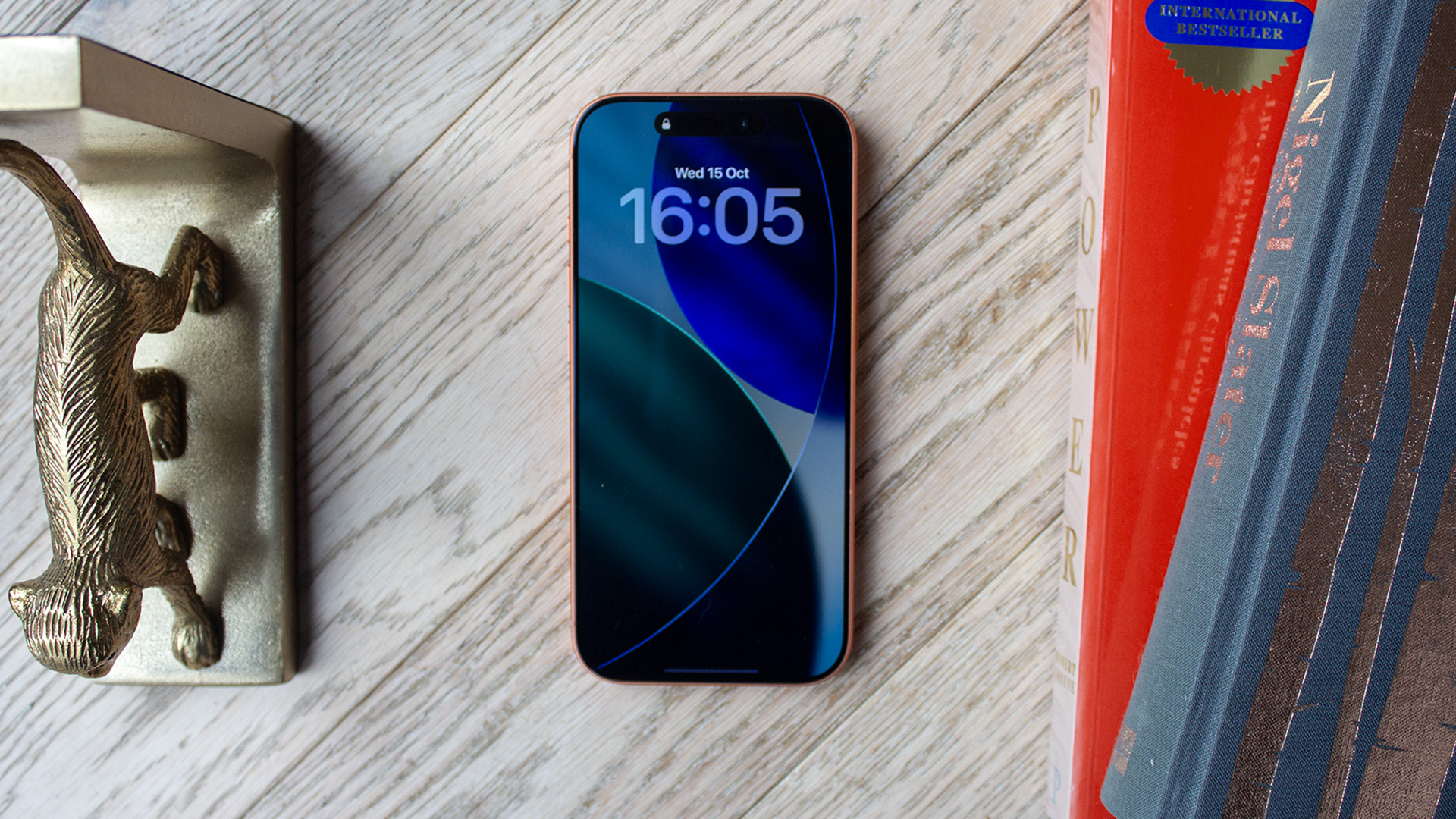
Dynamic Island: From the front all the iPhones are visually similar. Each iPhone has an area at the top of the screen that conceals the front camera and Face ID technology. On the iPhone 16e this is referred to as the notch. On the iPhone 17 series, iPhone Air and the iPhone 16 and 16 Push this is a smaller pill shaped adaptive area called the Dynamic Island that can display Live Activities and other software elements in a way that makes the notch a little more useful.
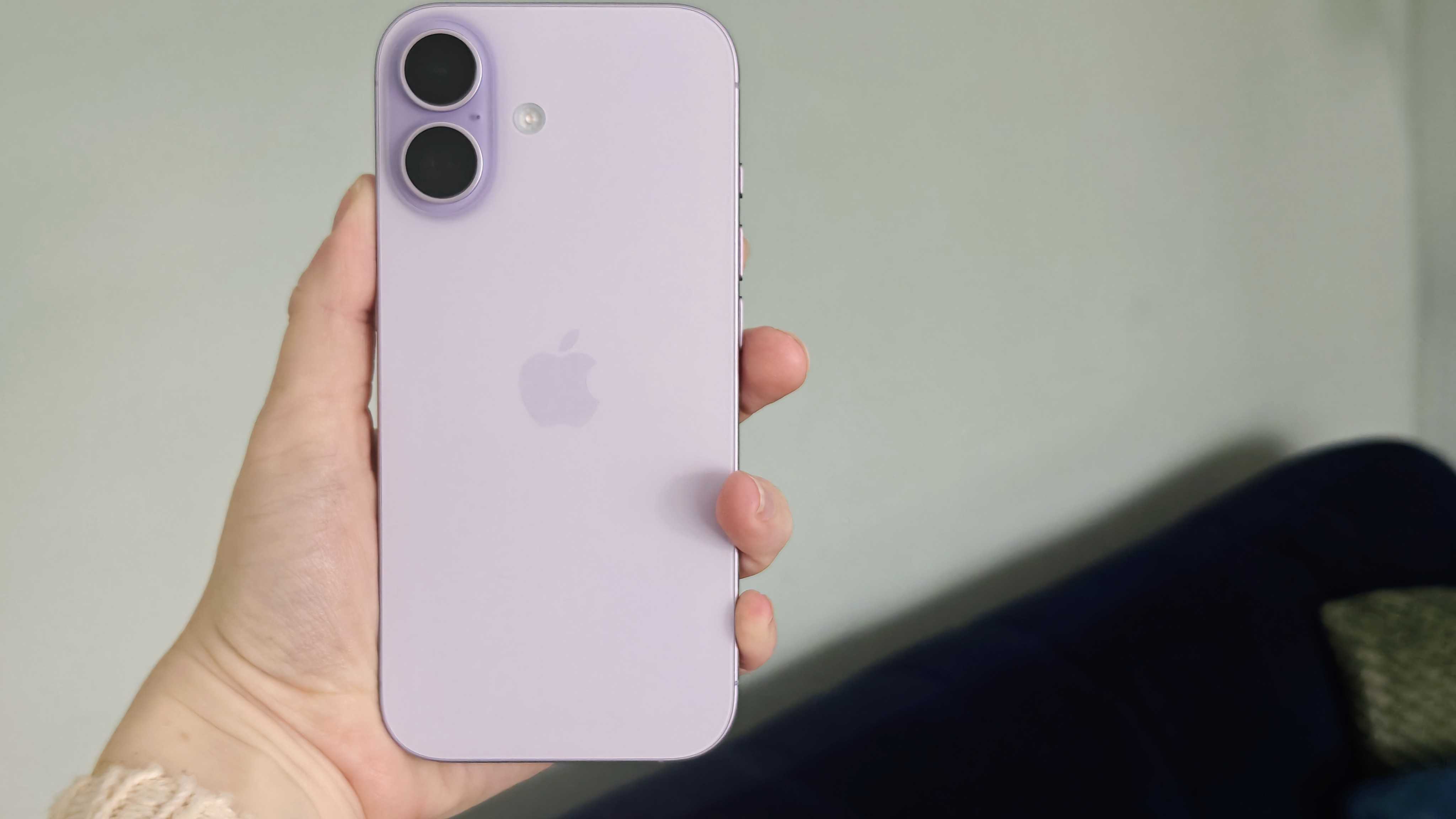
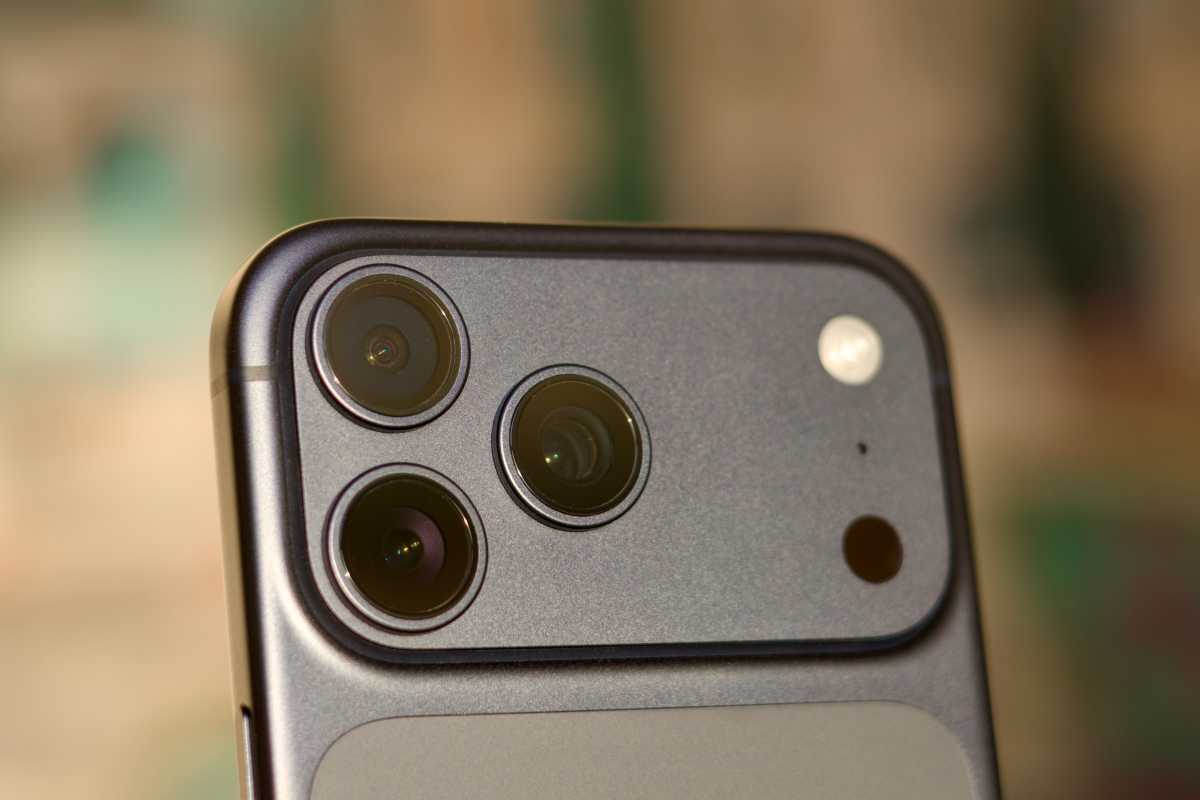
Camera layout: Turn the iPhones over and the differences become much clearer. As you can see from the image above, the iPhone 17 Pro and Pro Max have three lenses laid out in a triangle formation. For these models the flash and LiDAR scanner have been moved to the other side of what Apple is calling the Camera Plateau, where in older models they were closer to the lenses. The iPhone 16 has two lenses, one above the other, and the iPhone Air has a single lens on it’s own Camera Plateau that stretches the width of the iPhone, unlike the single lens of the iPhone 17e.
DimensionsThe most obvious difference is the dimensions and weight of each phone. We’ve detailed these in the chart below.
Colors: While it’s very likely that you will put your iPhone in a case and never look at the color on the back again, the color choices available for each iPhone model is another area where there is a lot of difference. You can see the different colors on offer in the chart below.
Here’s how the dimensions and colors compare:
| iPhone | Dimensions | Weight | Colors |
|---|---|---|---|
| iPhone 17 Pro Max | 6.43 inches (163.4 mm) x 3.07 inches (78 mm) x 0.34 inch (8.75 mm) | 8.15 ounces (231 grams) | Cosmic Orange, Deep Blue, Silver |
| iPhone 17 Pro | 5.91 inches (150 mm) x 2.83 inches (71.9 mm) x 0.34 inches (8.75 mm) | 7.20 ounces (204 grams) | Cosmic Orange, Deep Blue, Silver |
| iPhone 17 | 5.89 inches (149 mm) x 2.81 inches (71.5 mm) x 0.31 inches (7.95 mm) | 6.24 ounces (177 grams) | Lavender, Sage, Mist Blue, White, Black |
| iPhone Air | 6.15 inches (156.2 mm) x 2.94 inches (74.7 mm) x 0.22 inches (5.82 mm) | 6.24 ounces (177 grams) | Sky Blue, Light Gold, Cloud White, Space Black |
| iPhone 16 Plus | 6.33 inches (160.9 mm) x 3.06 inches (77.8 mm) x 0.31 inch (7.80 mm) | 7.03 ounces (199 grams) | Ultramarine, Teal, Pink, White, Black |
| iPhone 16 | 5.81 inches (147.6 mm) x 2.82 inches (71.6 mm) x 0.31 inch (7.80 mm) | 6.00 ounces (170 grams) | Ultramarine, Teal, Pink, White, Black |
| iPhone 17e | 5.78 inches (146.7 mm) x 2.82 inches (71.5 mm) x 0.31 inch (7.80 mm) | 5.88 ounces (167 grams) | Black, White, Soft Pink |
The Pro and Pro Max iPhones used to be the only iPhones to offer ProMotion, which allows for an adaptive refresh rates, with the refresh rate going as high as 120Hz for really smooth scrolling and as low as 1Hz. This is no longer the case: the iPhone 17 and iPhone Air also feature ProMotion screens. And is doesn’t stop there: the iPhone 17 and iPhone Air also feature Always-On displays, which was another feature previously reserved for the Pro models. As a result the iPhone 17, 17 Pro, 17 Pro Max and iPhone Air all have identical screens.
The iPhone 16, 16 Plus and 16e lack the ProMotion and Always-On displays, the peak outdoor brightness is higher on the newer iPhones as well, with the 17-series offering 3,000 nits peak, compared to 2,000 on the iPhone 16 and 16 Plus. The peak brightness on the iPhone 16e is 1,200 nits. The ability for the screen to get very very dim (down to 1 nit) while still remaining usable is also key as it’s great for use in dark rooms. The iPhone 16e is the only iPhone in the current line up that lacks this dimming feature.
The Always-On screen, on all the iPhones except the 16e, means the iPhone can always display elements such as the time and date, notifications and Lock Screen widgets without it being necessary to wake the iPhone. The screen dims to minimize onscreen power usage to preserve battery life and it will turn off should you place it face down or walk away while wearing an Apple Watch.
The screen size may be the most important factor in your decision. If you prefer a larger screen, you’ll want the “Pro Max” version. The iPhone 17 Pro Max has a screen size of 6.9 inches diagonally. The next largest screen is on the iPhone 16 Plus at 6.7-inches, and then the iPhone Air at 6.5-inches. But even the iPhone 17 and 17 Pro have a 6.3-inch display which is by no means diminutive. The iPhone 16 and 17e have the smallest screens: both are 6.1-inches.
Foundry
For many it’s the capabilities of the cameras that sell the iPhones, so it’s no wonder that every year Apple improves the camera on its iPhones, sometimes improving the tech, sometimes the software. The iPhone 17 still features a dual-camera array with wide and ultra-wide lenses, while only the Pro and Pro Max offer the additional telephoto lens.
In 2024 the iPhone 16 Pro and Pro Max gained a 48 megapixel Ultra Wide camera and the iPhone 16 and 16 Plus gained a 48MP Fusion Main camera, which is also a feature of the 16e.
This time all the rear cameras are upgraded to 48MP. In the case of the iPhone 17 Pro and Pro Max that’s three 48MP cameras, two for the iPhone 17. The iPhone Air has the same 48MP Fusion Main camera as the 16e. The 48MP upgrade across the board should mean more detail when you crop into images. On the iPhone 17 and iPhone Air the extra pixels mean you can shoot 12MP shots as if you had a 2x Telephoto lens. The 48MP images will take up a lot more space though, so it is possible to switch to shooting in a 24MP resolution.
The most impressive camera upgrade is reserved for the iPhone 17 Pro and Pro Max, of course, the telephoto zoom now achieves a 8x optical zoom, up from 5x. This extra lens is likely to be the reason why most people will opt for the 17 Pro over the standard iPhone 17. It offers a little more flexibility in terms of the kind of shots that can be taken, such as portraits and looming into the distance, and macro shots.
The pro models also offer pro video recording features, including ProRes video recording up to 4K at 120 fps, LOG video recording and Academy Color Encoding.
The iPhone 17e and iPhone Air feature a single-lens camera system, omitting certain advanced features found in higher-end models. However, they still delivers notable improvements over previous budget iPhones, with camera capabilities that are suitable for everyday photography needs.
Foundry
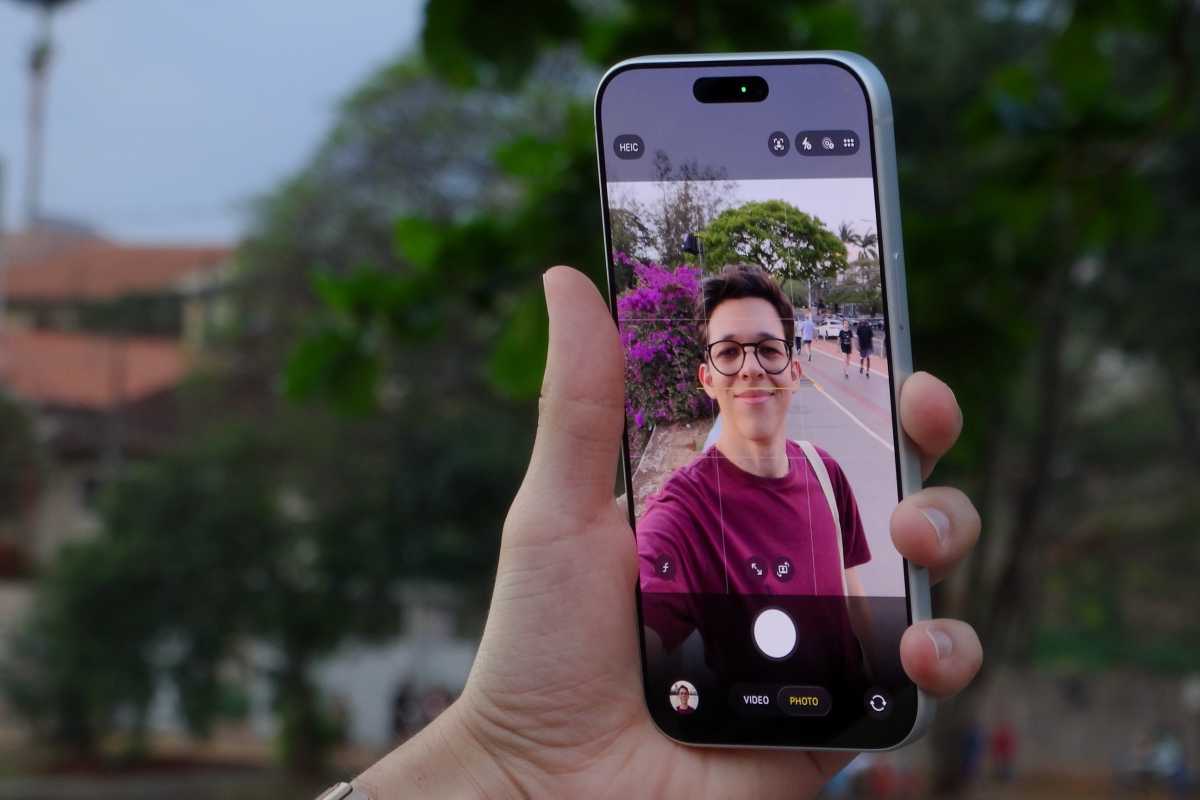
The front camera on all the iPhones, aside from the iPhone 17e, is 18MP (the iPhone 17e retains the 12MP camera of its predecessor). The greater number of megapixels combined with a larger sensor results in more detailed images. The sensor isn’t only larger, it’s now square, which means that it is no longer necessary to turn the iPhone orientation to take portrait or landscape selfies, the image can be cropped for either orientation and can adjust on the fly to give a better framing, for example to include more people in a group shot.
This is also beneficial for FaceTime, because the Centre Stage feature can make sure that subjects are kept centred during a call.
Another feature for the late 2025 iPhones is the ability to record from the rear and front cameras at the same time, so you can capture your reaction.
Also read: Which iPhone has the best camera?
| iPhone | Cameras | Video | Photo & video features |
|---|---|---|---|
| iPhone 17 Pro and Pro Max | Three rear cameras: 48MP Main (ƒ/1.78 aperture), 48MP Ultra Wide (ƒ/2.2 aperture) and 48MP Telephoto (ƒ/2.8 aperture), second-generation sensor-shift optical image stabilization, 8x, 4x, 1x, 2x, 0.5x optical zoom, Adaptive True Tone flash Front camera: TrueDepth front camera, 18 MP (ƒ/1.9 aperture) | Video: ProRes video recording up to 4K at up to 120 fps (with external recording), 4K video recording at up to 120 fps; 1080p HD video recording at up to 120 fps; HDR video recording with Dolby Vision up to 4K at 120 fps; Sensor-shift optical image stabilization for video; Spatial video up to 1080p at 30 fps | LOG video recording, Academy Color Encoding System, Photonic Engine, Night mode portraits, Night mode, new Photographic Styles, Macro photos, ProRaw, Smart HDR 5 Cinematic mode, Macro video recording, Action Mode, Audio zoom, wind noise reduction |
| iPhone 17 | Two rear cameras: 48MP Main (ƒ/1.6 aperture), 48MP Ultra Wide (ƒ/2.2 aperture), sensor-shift optical image stabilization, 2x, 1x, 0.5x zoom, True Tone flash Front camera: TrueDepth front camera, 18MP (ƒ/1.9 aperture) | Video: 4K video recording at 24 fps, 25 fps, 30 fps or 60 fps; 1080p HD video recording at 25 fps, 30 fps or 60 fps; HDR video recording with Dolby Vision up to 4K at 30 fps; Sensor-shift optical image stabilization for video, Spatial video up to 1080p at 30 fps | Photonic Engine, Action Mode, Night mode, new Photographic Styles, Smart HDR 5 Cinematic mode, Audio zoom, wind noise reduction |
| iPhone Air | One rear cameras: 48MP Main (ƒ/1.6 aperture), optical image stabilization, 1x, 2x, zoom, True Tone flash Front camera: TrueDepth front camera, 18MP (ƒ/1.9 aperture) | Video: 4K video recording at 24 fps, 25 fps, 30 fps or 60 fps; 1080p HD video recording at 25 fps, 30 fps or 60 fps; HDR video recording with Dolby Vision up to 4K at 30 fps;Sensor-shift optical image stabilization for video, Spatial video up to 1080p at 30 fps | Photonic Engine, Action Mode, Night mode, new Photographic Styles, Smart HDR 5 Cinematic mode, Audio zoom, wind noise reduction |
| iPhone 16 and 16 Plus | Two rear cameras: 48MP Main (ƒ/1.6 aperture), 12MP Ultra Wide (ƒ/2.2 aperture), sensor-shift optical image stabilization, 2x, 1x, 0.5x zoom, True Tone flash Front camera: TrueDepth front camera, 12MP (ƒ/1.9 aperture) | Video: 4K video recording at 24 fps, 25 fps, 30 fps or 60 fps, 1080p HD video recording at 25 fps, 30 fps or 60 fps; HDR video recording with Dolby Vision up to 4K at 60 fps; Sensor-shift optical image stabilization for video, Spatial video up to 1080p at 30 fps | Photonic Engine, Action Mode, Night mode, new Photographic Styles, Smart HDR 5 Cinematic mode, Audio zoom, wind noise reduction |
| iPhone 17e | One rear cameras: 48MP Fusion camera (26mm, ƒ/1.6 aperture), optical image stabilization, 2x optical-quality Telephoto, digital zoom up to 10x, True Tone flash. Front camera: TrueDepth front camera, 12MP (ƒ/1.9 aperture) | Video: 4K Dolby Vision video recording at 24 fps, 25 fps, 30 fps or 60 fps; 1080p Dolby Vision video recording at 25 fps, 30 fps or 60 fps; 720p Dolby Vision at 30 fps; optical image stabilization for video | Photonic Engine, Night mode, Photographic Styles, Smart HDR 5, Audio zoom, wind noise reduction |
Apple introduced some safety features with the iPhone 14 series in 2022 and these are available on all iPhones since. These features include a Crash Detection feature and Satellite Connectivity for emergency phone calls.
Crash detection uses the gyroscope and accelerometer in the iPhones to recognize if the vehicle you are in has crashed. If the iPhone thinks you’ve been involved in a crash, it will call emergency services and notify your preferred contacts (unless you tell it not to).
All phones offer the ability to send an Emergency SOS, and the iPhone 14 and later can do so via satellite, which would be useful if you were in an area with no signal. You just need to be able to establish a clear view of the sky, and be in a country that supports the feature (many do now). Thanks to the feature your iPhone can alert the emergency services to your location in an emergency, the iPhone will also contact your emergency contact.
New for the 2025 iPhones are expanded emergency features, including the ability to text your location to emergency services via satellite.