The highly anticipated Maine Senate contest is shaping up to be a pivotal moment in the midterms, with Democrats vying to unseat five-term Senator Susan Collins (R-Maine). Maine's reputation as a bellwether state for national politics has led to increased scrutiny of the election, with many expecting it to dictate the outcome of the Senate.
However, Democrats are facing significant challenges in the Pine Tree State. The party was initially optimistic about the candidacy of waterman Graham Platner, who ran on a platform that included progressive policies. But the party has since dropped Platner, citing concerns over his vetting process and past controversies, including Nazi-themed tattoos and problematic text messages.
The Democratic Party's internal divisions are expected to play a significant role in the election, with some members pushing for more progressive policies and others advocating for a more moderate approach. The recent release of the Democratic Socialists of America's long-term platform has highlighted these divisions, with some members calling for the elimination of the Senate and the expansion of the House of Representatives.
One of the most contentious issues within the party is the role of Democratic Socialists, who are pushing for policies such as a 32-hour workweek without changes to pay or benefits, Medicare for all, and guaranteed minimum wages. Some Democrats are concerned that these policies will alienate moderate voters and harm the party's chances in the general election.
Senator John Fetterman (D-Pa.) has been a vocal critic of Platner and the Democratic Socialists, calling for a more inclusive and moderate approach. He has also called out Senator Bernie Sanders (I-Vt.) for his role in promoting Platner's candidacy, saying that Sanders needs to apologize to the voters of Maine.
The party's struggles in Maine are being closely watched by Democrats across the country, who are worried about the implications of a progressive-led agenda. The recent primary victories of Democratic House nominees in New York and Colorado have raised concerns about the party's ability to appeal to independents and moderate voters.
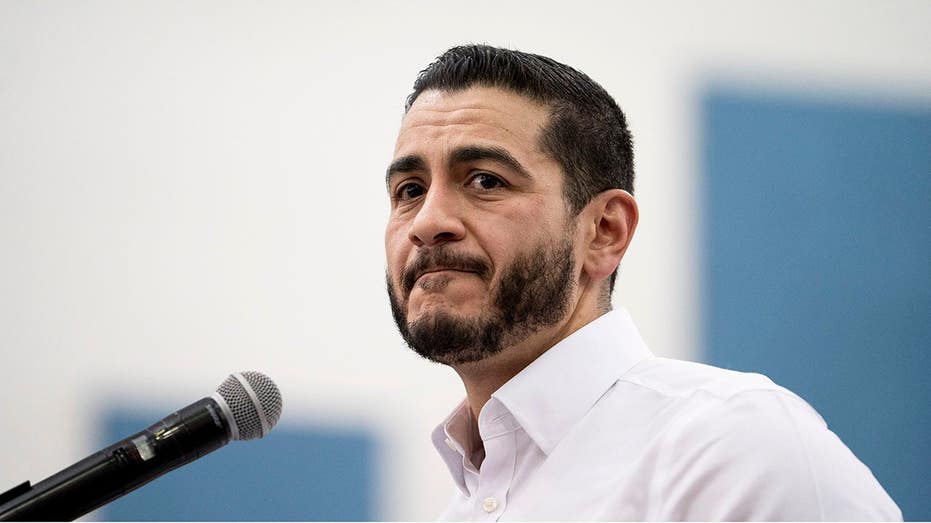
One of the key test cases for Democrats will be the Senate election in Michigan, where Abdul El-Sayed is seeking the Democratic nomination against Rep. Haley Stevens (D-Mich.). El-Sayed has been endorsed by the Democratic Socialists and has called for the abolition of ICE and the expansion of reparations. Stevens, on the other hand, has focused on kitchen table issues and has been trying to appeal to moderate voters.
The Democratic Party's internal divisions are expected to play a significant role in the election, with some members pushing for more progressive policies and others advocating for a more moderate approach. The party must navigate these divisions while also trying to appeal to independents and moderate voters in key battleground states such as Ohio, Iowa, and Georgia.
Republicans, meanwhile, are confident that the Democratic Party's internal divisions will ultimately work in their favor. Senator John Kennedy (R-La.) has said that the party's struggles are a result of its own worst enemy, with many Democrats speaking out against the party's progressive agenda.
As the election season heats up, Democrats must confront the reality of their party's internal divisions and the implications of a progressive-led agenda. The outcome of the Maine Senate contest will be closely watched, but the real challenge for Democrats will be to navigate the complex web of alliances and rivalries within their own party.