They also resolved to review policies for early years learning to create alignment with other levels of education in a bid to ensure coordinated teaching and enable progressive mastery of subjects taught across the curriculum. These arise from the recognition that the way foundational learning is currently organised in the continent creates disconnect between pre-school and lower primary, undermining seamless transition across the levels.
According to Unesco, foundational learning encompasses literacy, numeracy and social-emotional skills. Research shows that learners who acquire these skills in early years have higher chances of progressing well through to secondary and higher education, entering lucrative professions and succeeding in life.
Effective foundational learning requires a smooth progression from one stage to another, ensuring continuous acquisition of knowledge and skills, setting a strong base for better achievements at higher levels of the education system.
In most African countries, pre-school programmes are managed by local authorities or county governments while primary and other levels of education are under the national government. Consequently, resource allocation, infrastructure provision and teacher deployment are managed differently across the levels, creating disparities that undermine effective and harmonised pedagogical approaches.
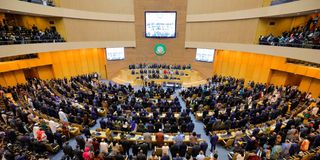
These were the highlights of the third African Foundational Learning Exchange (Flex) conference held recently in Malawi that brought together education ministers, top government officials, development agencies, researchers and civil society. It was convened by Malawi, Association for Development of Education in Africa and supported by agencies such as the World Bank, Unicef, Gates Foundation, Mastercard Foundation and Hempel Foundation.
The conference underscored the need for increased domestic investment in foundational learning, noting that any additional cash on early education transforms lives of millions of children.
Whereas governments allocate a large percentage of their national budgets to education, allotments for foundational learning is minimal, undermining provision of adequate quality classroom materials.
For example, East African governments allocate 8-16 percent of their national budgets to education, which is quite substantial compared to other sectors. However, the bulk of that budget, about 70 percent, pays teachers’ salaries while the rest funds primary, secondary and higher education sectors, leaving insignificant allocations for foundational learning.
Recently, the financing challenge has deepened as external funding continues to decline with donor countries increasingly looking inwards while other development agencies shift priorities towards areas such as climate change, security, and humanitarian response, leaving fewer resources for education and other social sectors.
Gates Foundation’s senior education programmes officer, Clio Dintilhac, provided context, stating that every dollar spent on a child during the early years learning translates into $30 in returns in adulthood. Likewise, any additional investment of approximately $5 per child per year in structured pedagogy, teacher coaching, and learning materials leads to transformative learning outcomes.
The conference discussed the central role of national assessments in fostering quality learning in the early years, enabling teachers to determine whether or not learners have mastered the requisite knowledge and skills for their level and consequently, ready for transition to higher grades.
Evidence from surveys across the region by research organisations such as Usawa Agenda show that in Kenya, for example, more than half learners in Grade Six are unable to read and master English text meant for Grade Three pupils. The upshot is that without proper mechanism for testing learning outcomes, learners transit to higher grades without acquiring appropriate knowledge and skills at lower levels, a trend that affects their ultimate performance at the end of primary or secondary education cycles. Subsequently, such learners are disadvantaged as they are unable to pursue higher education and get into professional careers to better their lives.
Central to foundational learning is proper teacher training and adoption of child-friendly teaching methods such as play-based approaches that stimulate all the senses and improves comprehension and concentration. However, there were concerns that effective training of early learning teachers remained minimal, constraining their capability to deliver effectively. Alongside this, the conference stressed the need for strong school leadership to guide curriculum implementation and strengthen accountability.
Instructively, the conference also delved into the language question with emphasis on multilingual teaching, including use of local languages to give young learners better grasp of concepts at their levels and progressively usher them into other languages.
Studies by Unesco and Unicef demonstrate that learners develop cognitive and social skills much faster when they are taught in a language they are well conversant with and enables faster acquisition of second and third languages.
In addition, the conference highlighted the significance of data for tracking learners’ performance, informing policy and decision-making as well as proper targeting and utilisation of resources.
Conference participants called for strong political commitment to promote foundational education by increasing resources, developing appropriate policies and creating conducive learning environment.
While recognising the pivotal role development partners play in supporting foundational learning, the conference emphasised the need for better coordination to eliminate fragmentation and duplication of programmes and maximising resource allocation.
Several funding initiatives were announced during the conference to support foundational learning, giving a substantial boost to early grade education at a time of dwindling donor funding.
The Foundational Learning Initiative for Government-led Transformation was launched with a kitty of $35 million to provide a catalytic funding to support early learning reforms. This funding initiative is supported by philanthropic organisations such as Gates Foundation, Roger Federer Foundation, Echidna Giving, Hempel Foundation, Prevail Fund and Baobab Institute for Health and Development.
The other was $37 million from the Global Partnership for Education to strengthen foundational learning. The World Bank also affirmed continued support of $1.5 billion to cater for the continent’s end learning poverty campaign.
Commenting on the financial commitments, ADEA Executive Secretary Albert Nsengiyumva rooted for accountability to ensure that the resources benefit Africa’s children struggling to acquire quality early learning education.
The third Flex conference was a landmark in Africa’s drive to strengthen foundational learning, but its lasting impact will be determined by the level of political commitment from governments, adequate financial investment, accountable leadership and practical implementation of the key recommendations. Only then can the continent fulfil its promise that no child is left behind in the quest for quality education.
David Aduda is a Consulting Editor and Education Specialist