Commercial buildings are quietly embracing the Internet of Things (IoT) revolution, with access management at the forefront of this transformation. Gone are the days of a simple lock, key, and logbook at reception. Today, a connected layer of technology supports safety, convenience, and smarter operations across an entire building.
For facilities managers and building owners, the shift is not just about replacing hardware. It's about rethinking how people move through a space and how data can make everyday operations easier for everyone involved. This includes tenants, security teams, and visitors who pass through each day.
A connected access system links doors, credentials, and monitoring software into a single network, rather than treating each entry point as an isolated piece of hardware. This means a building can respond to real-time information instead of relying on manual checks or end-of-day reports.
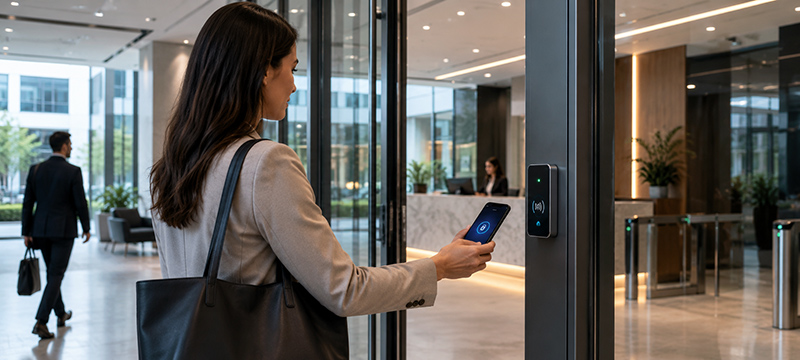
The most visible benefit of connected access is convenience. Staff and visitors can move through a building using a phone or a badge, without fumbling for keys or waiting for someone to buzz them in. This smooths out the daily experience for everyone who passes through, particularly in larger office complexes or mixed-use developments.
There is also a genuine safety benefit. Connected systems can automatically lock down specific zones during an emergency, alert security teams to unusual activity, and give staff peace of mind that entry points are being monitored consistently.
Beyond the entrance, connected access data feeds into broader building management decisions. Occupancy patterns drawn from access logs can inform cleaning schedules, energy use, and even how a building's layout is used over time. This kind of operational visibility helps facilities teams work proactively rather than reactively.
Not every commercial building needs the same level of connected access. A single-tenant office has very different requirements from a multi-tenant building with shared amenities, and the right system should reflect that. Key questions worth asking include how the system integrates with existing security infrastructure, how credentials are issued and revoked, and how the system performs during a network outage.
A successful rollout usually starts with a pilot in one section of a building before expanding further. This allows facilities teams to fine-tune settings, train staff, and gather feedback from the people who use the system every day. Communication matters as much as the technology itself.
Connected access is rarely deployed on its own. It usually sits alongside other smart building systems, from lighting to climate control, all sharing data to make a building run more efficiently. Commercial buildings that integrate connected technologies across multiple systems see measurable gains in both efficiency and occupant satisfaction.
As commercial buildings continue to modernise, access is increasingly seen as a foundation rather than an afterthought. It is the layer that most directly touches the people using the building every day, which makes getting it right particularly valuable.
Connected access systems are reshaping commercial buildings by making entry smarter, safer, and more convenient for everyone who uses them. Rather than being about restricting movement, the technology is fundamentally about supporting people, from staff and visitors to the wider community the building serves.


