France’s mission to the United Nations in Geneva issued a sharp rebuke of the United States after a vote to reappoint U.N. High Commissioner for Human Rights Volker Türk for a second four‑year term. The statement accused Washington of abandoning its role as a global human rights leader.
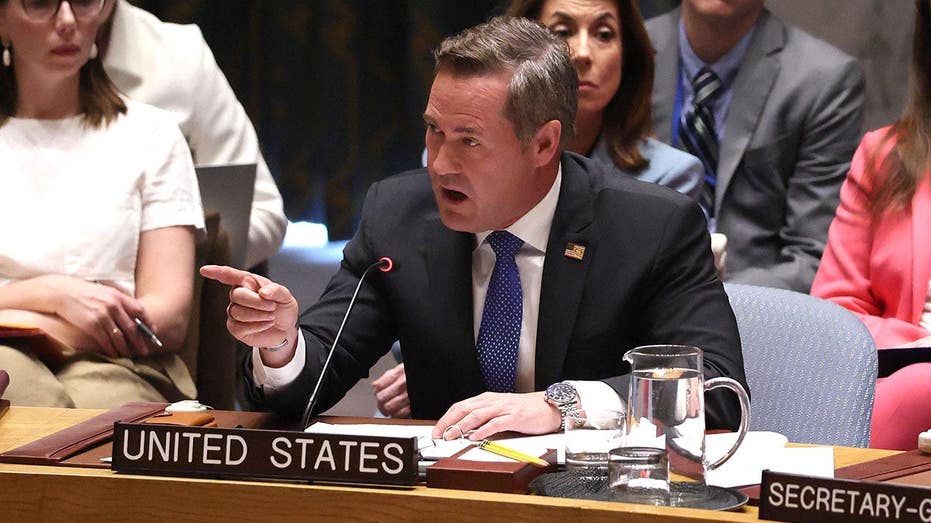
The U.S. ambassador to the U.N. responded by criticizing France’s attack as a distraction from its own support for Türk, citing the country’s vote for a figure who has been outspoken against democracies while allegedly tolerating abuses by authoritarian regimes.
During the vote, the U.S. representative for U.N. management and reform highlighted concerns that the human rights system had lost credibility and that Türk’s approach had harmed its effectiveness. The representative argued that reappointing Türk would accelerate the system’s decline.
Critics of Türk noted that he has repeatedly condemned the United States, Britain, France, Australia, Italy, and Israel, while remaining silent for days after reports of violence against Iranian citizens and quickly condemning U.S. military action against Iran.
The U.N. mission also pointed to Türk’s calls for the removal of sanctions on Cuba and the maintenance of a database that critics say targets American companies, labeling it part of an “anti-Israel” apparatus.
In contrast, France’s U.N. ambassador described Türk as a voice of conscience who confronted states with their responsibilities and demonstrated rigor and impartiality during his first term.
The General Assembly approved Türk’s reappointment with a vote of 144 to 10, with 13 abstentions, extending his tenure from October 12, 2026, through October 11, 2030. A Russian proposal to limit the term to the end of 2026 was rejected.
The expedited vote, which occurred before Türk’s current term expired, surprised several delegations. The United States had sought to postpone the decision to allow for additional consultations, but the request was denied.
A Geneva-based watchdog released an analysis of public statements by Türk’s office from October 2022 to October 2024, concluding that his criticisms of the United States were more frequent than those of China, North Korea, Cuba, Saudi Arabia, and Qatar combined.
The same study noted an absence of self‑initiated criticism regarding abuses in Cuba, North Korea, Algeria, Eritrea, Mauritania, Lebanon, and Qatar during the period examined.
The watchdog’s methodology excluded mandatory reports and broad updates, meaning the findings do not cover every country reference or action by Türk’s office.
Supporters of Türk argue that his willingness to criticize powerful democracies is part of his duty to apply human rights standards universally.
France and the European Union maintain that Türk has performed his duties objectively and that the Secretary‑General’s decision to allow a second term complied with established rules.
Türk’s reappointment marks the first time a U.N. human rights chief will serve two full four‑year terms since the position was created in 1993.
The debate underscores ongoing tensions over how the U.N. human rights mechanism should balance accountability with political considerations.