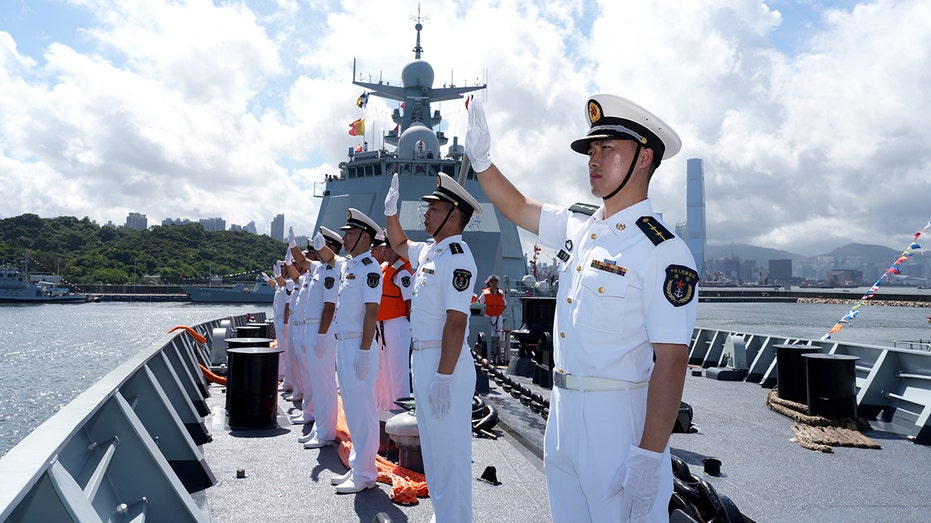
The United States ambassador to the United Kingdom warned that China is systematically turning ports, ships, and supply chains into tools of political coercion, using maritime power to extend strategic influence worldwide.
In a statement to the International Maritime Organization, the ambassador emphasized that Beijing’s aggressive acquisition of port concessions is driven not merely by commercial interests but by a desire to weaponize access against sovereign nations.
The United States, he noted, is a cornerstone of the global maritime economy, with its transportation system underpinning $5.4 trillion in annual economic activity and supporting nearly 30 million jobs.
Simultaneously, the President reiterated a strategic interest in Greenland, arguing that the island’s position between the Arctic and North Atlantic makes it vital to U.S. security amid growing Chinese and Russian naval presence.
He asserted that control of Greenland should rest with the United States rather than Denmark, suggesting that American stewardship would better counter external threats in the region.
Restoring American maritime leadership has become a national priority, with officials highlighting China’s dominance in shipbuilding, ship‑to‑shore cranes, and container production, accounting for more than half of global output.
A recent legal ruling in Panama, which declared Chinese‑linked port concessions unconstitutional, prompted swift retaliatory measures against Panama‑flagged vessels, illustrating Beijing’s willingness to punish perceived challenges to its interests.
The ambassador warned that allowing foreign, especially state‑linked, entities to control critical port infrastructure creates a vulnerability that extends beyond commercial arrangements to undermine national sovereignty.
He called on IMO member states to demand transparency, uphold the rule of law, and ensure genuine sovereignty in port agreements, asserting that these principles are essential foundations for commerce.
U.S. policy will continue to focus on maritime security, enforcement of sanctions, protection of flag‑state rights, freedom of navigation, and the development of updated standards for polar operations, autonomous vessels, and cyber risk management, reinforcing the need to defend a free and open ocean.


