Tehran is preparing for the July 9 burial of Supreme Leader Ali Khamenei, more than four months after his death, with authorities mobilizing the Basij militia and mounting a massive security operation ahead of what is expected to be a large turnout. The lengthy delay to the funeral has raised questions about how Khamenei's remains have been preserved. Islamic tradition generally calls for prompt burial and discourages chemical embalming. However, experts say that refrigerated cold storage is a possible method of preservation, which is allowed in exceptional cases under Shia law.
The mechanism of preservation is likely to be refrigerated cold storage, rather than embalming, as Islam bars chemical embalming. This method is already used in Iran's forensic morgues, where bodies are held for months. The delay in burial has sparked speculation about the condition of Khamenei's body, with some suggesting that there may not be much of a body to present due to the nature of his death. A regime holding an intact body would not need to repeatedly shift the burial site or confirm that he can be buried only days in advance.
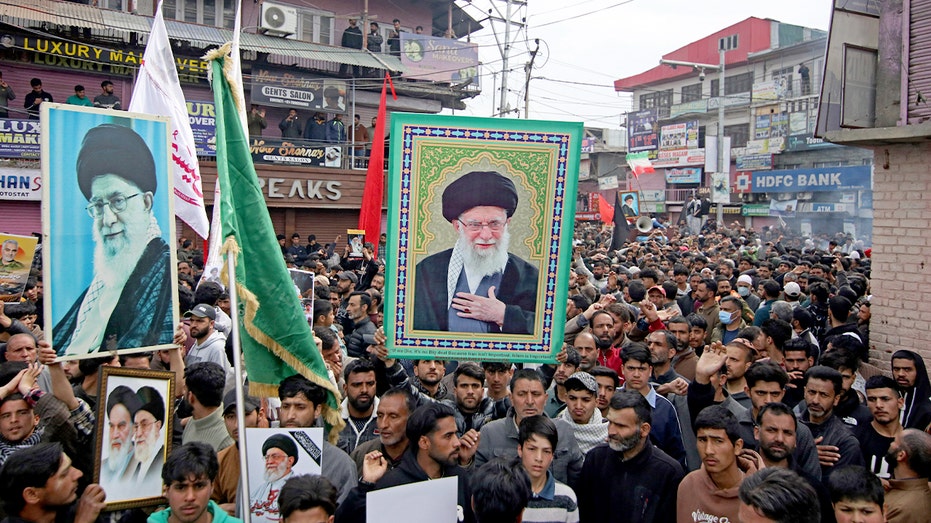
Iranian authorities are portraying the funeral as both a farewell to the leader and a show of strength under the slogan "We Must Avenge." The ceremony is expected to be conducted with full grandeur, with a turnout of 1 million people predicted to make the event "a historical occasion" and "a national epic in the memory of the Islamic Republic of Iran." The schedule starts with public viewings on Saturday and Sunday in Tehran, followed by a funeral procession on July 6, where local authorities estimate 15 million to 20 million people could attend.
The numbers of expected mourners are not just logistics, but a message from the regime to project continuity and strength. Tehran is spending significant resources to demonstrate its power and influence, following a period of uncertainty and instability. The Basij militia and the Revolutionary Guard are coordinating the logistics and crowd control, respectively, in a mobilization that is dressed as a funeral. This same apparatus has been used to put down protests and deny funerals to the families of those killed in the past.
While senior officials from some countries will attend the funeral, representation from major powers will be limited. Indian Prime Minister Narendra Modi will not attend, despite a personal invitation from Iranian President Masoud Pezeshkian, and instead will send a lower-level delegation. The lack of top-level representation from major powers is seen as a sign of Tehran's isolation, despite its claims to lead a regional front. For Washington, the funeral provides a useful insight into the current state of Tehran's influence and alliances.
The funeral is expected to be a significant event, with a large turnout and extensive media coverage. However, the true meaning and significance of the event go beyond the ceremony itself, and reflect the underlying dynamics of power and influence in the region. The fact that no major power is sending its top leader to the funeral is a notable aspect, and one that highlights the limitations of Tehran's reach and influence. The war has left Tehran's axis smaller and more regional than the regime advertises, and the funeral provides a glimpse into this new reality.