USB-C cables have revolutionized the way we charge and transfer data, but they have also led to a tangled mess of confusion in our bags and drawers. With so many cables to choose from, it's difficult to know which ones are safe, fast, and effective.
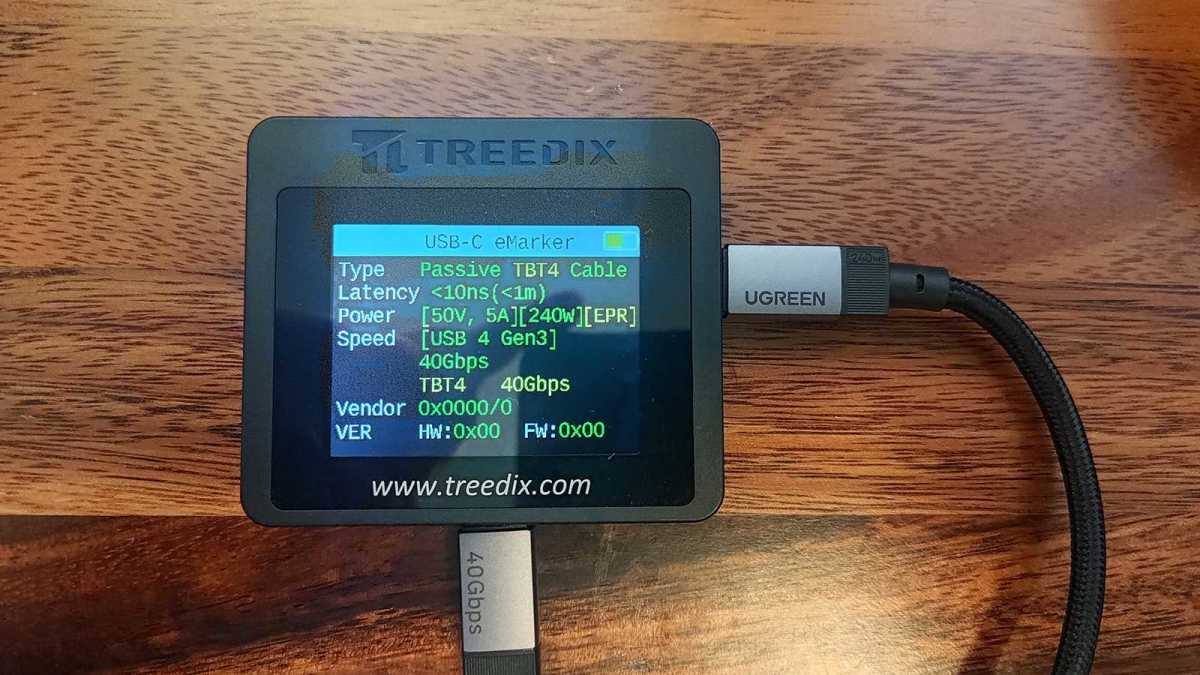
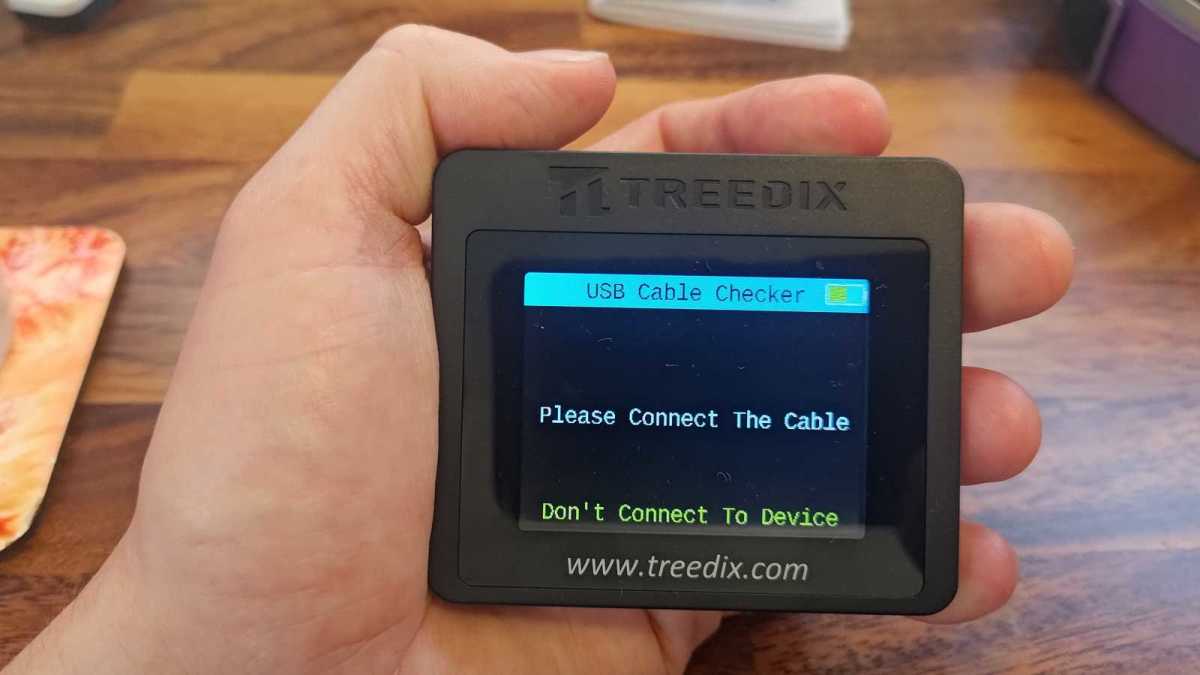
One solution to this problem is a USB cable tester. I recently purchased the Treedix USB Cable Tester to sort through my collection of USB-C cables and determine which ones are worth keeping. The tester is a small device with a 2.4-inch display that can test USB-C eMarkers, charging speeds, data transfer rates, and various USB types, including Type-A, Type-C, Type-B, Mini USB, Micro USB, and Apple's Lightning connection.
The Treedix tester is powered via USB-C, but it also comes with a AAA battery included. Once powered on, it gives you several display modes for testing different aspects of cables. Each screen makes it clear what you're looking at, and the device is bright, functional, and easy to use.
I began my audit with a couple of brand-new cables direct from Amazon: an Amazon Basics USB-C Cable and a Ugreen USB-C Cable, both promising 8K and 240W support. The results were impressive, with both cables recognized as passive Thunderbolt 4 cables, capable of up to 240W of charging capacity and 40Gbps of data transfer over USB4.
I then tested a variety of other cables, including an unbranded white USB-C cable that turned out to be a basic power transmission cable with no USB-C eMarker chip or data transmission capabilities. Another unbranded white cable I tested had basic USB 2.0 data transmission and power transmission, but its power delivery was limited to under 65W.
I also tested a red cable that I assumed came with my Samsung T7 portable SSD, but it turned out to be a basic USB 2.0 and power transmission cable with no high-speed data capabilities. I found several other cables that were either basic power transmission cables or USB 2.0 cables with limited capabilities.
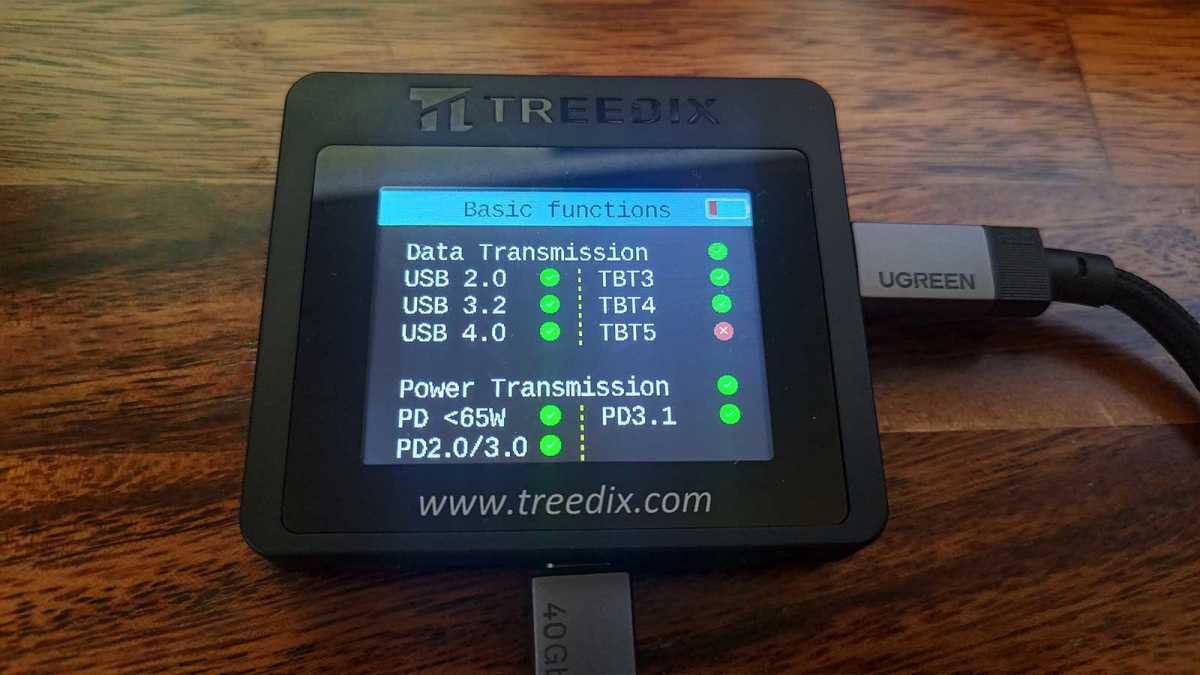
However, I also found some cables that were capable of faster data transfer and higher charging speeds. A 100W retractable cable from Ugreen had a USB-C eMarker chip and true 100W charging capacity, and a tri-pronged USB-A cable from a third-party manufacturer had basic data transmission, sub-65W charging on USB-C, and basic power transmission on Lightning and Micro-USB.
Testing my cables wasn't the most glamorous way to spend a hot summer afternoon, but it was worth it in the end. I now have a clearer understanding of which cables are safe, fast, and effective, and I can confidently choose the right cable for the job. The Treedix USB Cable Tester has given me peace of mind, less clutter, and convenience, all for a few dollars and a few seconds per cable.
The value of testing my cables is clear: I can be my usual hoardy self and keep all the cables just in case, but now and again give them a proper audit to make sure the ones I'm hanging on to are actually useful. The rest can head off to the e-waste pile for recycling.