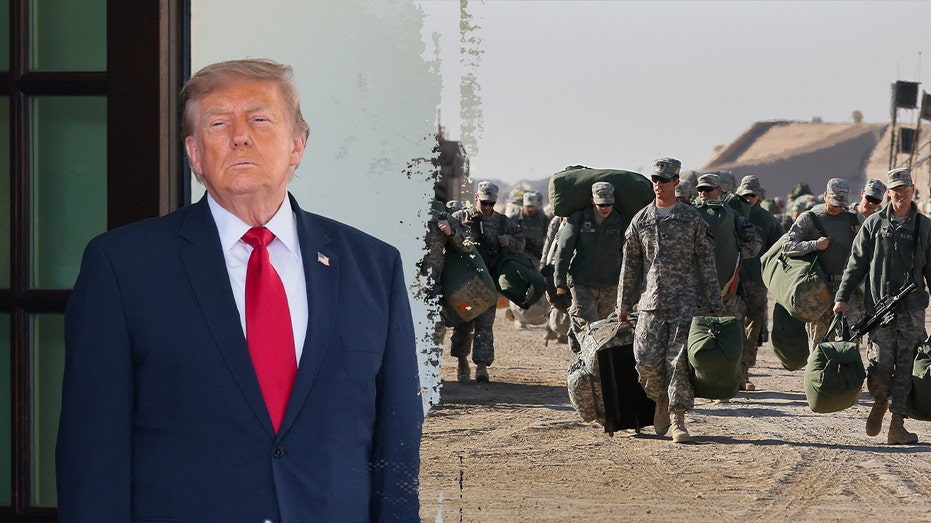
President Trump has announced that the United States no longer believes it needs a military presence in Iraq, citing Iran's weakened state as the reason behind this decision. The statement comes as the U.S.-led coalition mission is set to conclude on September 30.
Iraqi Prime Minister Ali al-Zaidi echoed this vision, stating that armed factions operating outside state control would have "no justification" once the coalition mission concludes. He also insisted that Iraq's security forces would be capable of protecting the country on their own, adding that limiting weapons to the state was "a decision, not an option."
Trump emphasized that the U.S. partnership with Iraq would shift away from military cooperation toward investment and energy development. He claimed that the U.S. would help Iraq by investing billions of dollars in planned U.S. energy projects, citing this as evidence that American companies are willing to do business in the region.
Iran's influence in Iraq has long been a concern for the U.S. government, with many militias operating within the Popular Mobilization Forces. The U.S. has pressed Baghdad to bring those groups fully under state control, and a 2024 agreement is set to end the American-led coalition's military mission in Iraq starting in September 2025.
About 2,500 U.S. troops remain in Iraq, down from a peak of 170,000 during 2007 at the height of the Iraq war. The U.S. has drawn down from several bases, but American troops have remained in the country in an advisory role and to support counter-ISIS operations tied to neighboring Syria.
Prime Minister al-Zaidi, a businessman and political newcomer, took office this year after emerging as a consensus candidate following months of political deadlock. Trump publicly backed his candidacy and opposed the return of former Prime Minister Nouri al-Maliki, whom the administration viewed as too closely aligned with Iran.
During Tuesday's Oval Office meeting, Trump repeatedly praised al-Zaidi, calling him "a great leader" and predicting his influence would extend "all throughout the Middle East." Trump also claimed he had "played a role" in al-Zaidi's rise to power and said his endorsement helped propel the Iraqi leader to victory.