Limited access to finance and electricity are the top constraints to doing business in the Democratic Republic of Congo, with political instability ranking lowly in a country in war, a survey by the World Bank shows.
Two in five businesses cited access to finance as the most severe obstacle to their operation while 20 percent reckon electricity is their greatest challenge.
This is in comparison to less than one percent – 0.8 percent – who cited political instability as the main concern despite war on the eastern side of the vast country.
Political turmoil has for long been viewed as a major hindrance to investors putting up in the mineral rich nation which has persistently recorded negative net foreign direct investment reflecting persistent capital withdrawals and profit repatriation.
The World Bank contends that investors are willing to set up in DRC’s and exploit its potential if the right policies are taken and infrastructure put in place.
The challenges cited by investors link directly to governance, which is complicated by the country’s vast territory and highly fragmented political environment. “Persistently high public debt and macroeconomic volatility have constrained the government’s capacity to invest in infrastructure and services, crowding out private investment,” reads a report by World Bank titled “Country Private Sector Diagnostic.” “Limited access to finance and electricity are among the top constraints to conducting business identified by firms.”
Only two in a hundred firms in DRC access bank credit to buy fixed assets compared to 12 percent in other lower and middle-income countries underscoring the challenge of financial access in the country.
According to the 2024World Bank Enterprise Survey, only 15 percent of small enterprises and 41 percent of medium enterprises have access to loans from formal financial institutions.
Electricity access rate in the country is 51 percent. Electricity tariffs have not been reviewed in the last three decades offering little motivation for investors to put money in the sector.
The country recently issued its inaugural Eurobond raising $1.25 billion whose proceeds will be deployed in infrastructural development. The government is trying to bridge the infrastructure gap through its flagship National Strategy Development Plan.
The success of the debut Eurobond, with investors offering the government more than four times the target, underscores the low weight placed by investors on the ongoing war in the country.
Peace pacts with the Rwandan-backed M23 rebels, mediated separately by the US and Qatar, have not been fully been implemented by the parties.
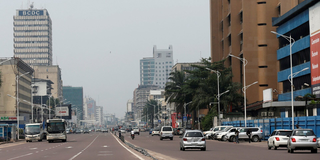
However, the conflict has remained contained in the eastern side of the nation, with the rest of the country, including the capital Kinshasa, enjoying relative peace.
Other concerns raised by investors include crime, theft and disorder -- at 7.8 percent -- tax administration 5.9 percent, and corruption 5.7 percent.
Corruption is significantly worse than the regional average, with the country scoring just 17 out of 100 in 2023 on the Control of Corruption index, compared to 32.5 for Sub-Saharan Africa.
Felix Tshisekedi’s ruling coalition established a designated Economic and Financial Criminal Court in March this year with a mandate to fight economic crimes such as corruption or embezzlement of public funds.
Despite the administrative challenges facing DRC, the country has witnessed increased investor confidence backed by positive credit ratings.
Credit rating agency Moody’s recently revised its outlook on the DRC to positive from stable. S&P Global retained a positive outlook of the country in its rating released this week despite the ongoing military conflict in the east and the recent outbreak of the Ebola virus.
The positive outlook is pegged on the rise in global prices of minerals produced in the country accompanied by increased production. Minerals have also been the lure of most investors into the country looking for a piece of the wealth. “The data reflects a continued interest despite persistent security and governance risks indicating investors view the country as a strategically unavoidable market, particularly given its central role in supplying critical minerals essential to global energy transition supply chains,” reads part of an investor confidence report.
The country is endowed with critical minerals such as cobalt, copper, gold, diamond and lithium.
Land governance was also cited as a challenge to investors due to confusion created by the coexistence of customary norms and legal framework limiting investors’ confidence.
The World Bank has urged DRC to also package some of the other sectors of its economy to investors to cut back its overreliance on minerals. Some of the sectors the World Bank advised investors to check include agriculture and logistics.