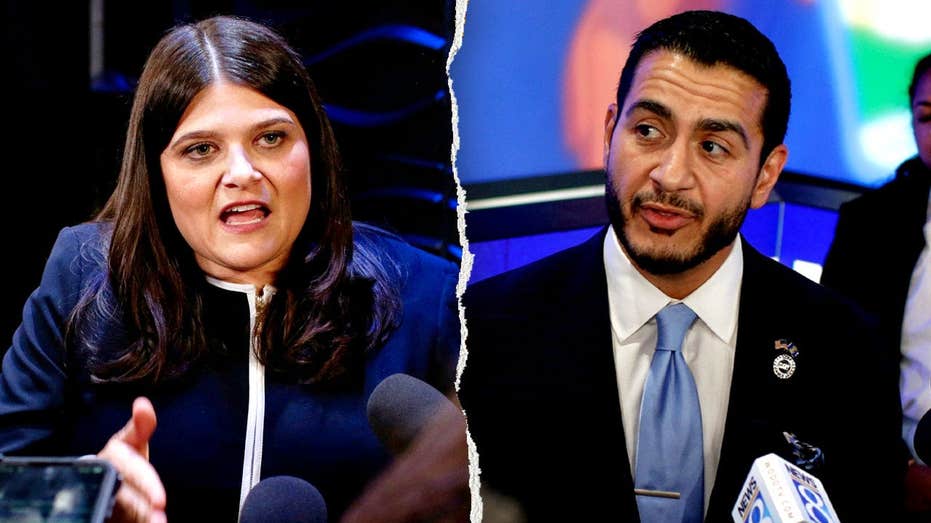
During Monday’s Democratic debate for the Michigan Senate seat, Representative Haley Stevens repeatedly labeled Abdul El‑Sayed as a “celebrity” candidate, contrasting his podcasting and book work with her congressional record.
The contest has become a microcosm of the broader debate over the Democratic Party’s direction, pitting Stevens, backed by party establishment figures, against El‑Sayed, who draws support from a socialist‑leaning base that advocates for the abolition of ICE and criticizes U.S. policy toward Israel.
In her opening remarks, Stevens highlighted her experience flipping the seat in 2018, her recognition as Michigan’s most effective Democratic lawmaker in 2025, and her endorsement from the state governor, framing her as the party’s best chance to win the race.
She criticized El‑Sayed’s celebrity status, noting that Republican support for his campaign was bolstered by a recent phone conversation with a GOP candidate who said the race would be easier if El‑Sayed became the nominee.
Stevens emphasized a focus on Michigan’s interests, stating she would confront “Trump’s abuses of power” without relying on loud, flashy tactics, in contrast to El‑Sayed’s public persona.
She pointed to El‑Sayed’s three books and his podcast, arguing that the electorate does not need a celebrity candidate and that substantive work matters more than media attention.
Stevens underscored her six years in the House, describing her work as “hard, unglamorous” and suggesting it would withstand the chaos she predicts in the Senate.
She framed El‑Sayed’s Senate bid as another rung on a ladder, citing his failed 2018 gubernatorial run, his subsequent podcast, book releases, and the purchase of a presidential website as evidence of a career trajectory rather than a genuine policy platform.
El‑Sayed rebuffed the criticism, labeling Stevens’ past votes to increase ICE funding as “cowardice” and pledging to use his platform to advocate for the agency’s abolition without fear of backlash.
He also challenged Stevens’ focus on her public‑health podcast, insisting that voters are more concerned with everyday costs such as fuel and groceries, and that his message should address those priorities.
The race has attracted substantial outside spending, with most funds directed toward Stevens’ campaign, reflecting the national interest in the outcome.
El‑Sayed brings experience from his tenure as Wayne County director of Health and Human Services, while Stevens enjoys strong ties to the Democratic establishment.
Republican strategists view Michigan as a key pickup opportunity, underscoring the high stakes of the contest for Senate control.
Both candidates have used the debate to articulate contrasting visions for Michigan’s future, with the electorate poised to decide who will shape the state’s representation in Washington.