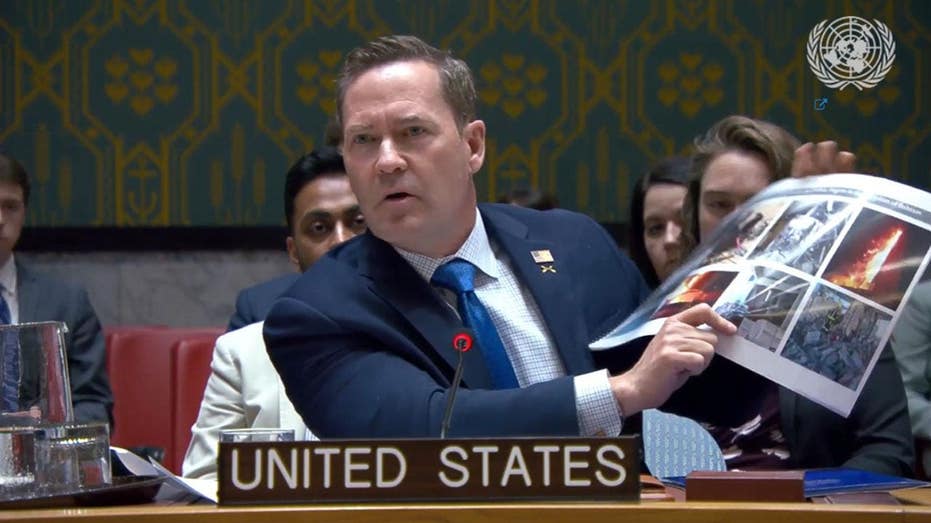
The United States Ambassador to the United Nations scolded Iran during a recent UN Security Council meeting, stating that Tehran "will not silence" the body. The ambassador's remarks came in response to claims by Iran's representative that council members were spreading falsehoods about its recent attack targeting neighboring Gulf states. The ambassador emphasized the importance of the council's role, reminding Iran's diplomat that they were in the United Nations Security Council and would not be silenced. The exchange took place during an emergency meeting of the council in response to drone and missile attacks targeting Bahrain and Kuwait.
Iran's diplomat argued that the council should not have met, accusing the US, Bahrain, and other members of lying about the recent attacks. The diplomat rejected the "unfounded accusations" made by certain Western members of the Council and the representative of Bahrain, stating that they had ignored the root cause of the crisis and sought to shift blame onto the victim. The diplomat also criticized the double standards and hypocritical behavior of certain council members, stating that it had deprived them of any credibility to lecture others. The ambassador held up images of the aftermath of the Iranian attacks, including destroyed homes and targeted buildings, asking if the victims of the attack were lying.
The ambassador's remarks were echoed by Bahrain's minister of foreign affairs, who stated that the island nation has been subjected to a total of 808 attacks since February 28. The minister reported that the attacks deliberately targeted civilian facilities, critical infrastructure, and residential areas, resulting in the deaths of three innocent civilians and injuries to 465 others. The minister disputed Tehran's claim that its aggression is directed solely against military objectives, highlighting the human cost of the conflict. The exchange of fire between the US and Iran began when an Iranian drone struck a merchant vessel off Oman, prompting a US military retaliation.
The conflict has been marked by repeated accusations of ceasefire violations between Washington and Tehran. The US has struck Iranian missile and drone storage locations, and coastal radar sites, in response to Iran's alleged violations of the deal. The situation has been further escalated by statements from high-ranking officials, including a warning that the Islamic Republic of Iran may no longer exist if it continues to provoke military action. The crisis has raised concerns about the stability of the region and the potential for further escalation.
The UN Security Council meeting highlighted the deep divisions between the US and Iran, with each side accusing the other of aggression and hypocrisy. The council's role in addressing the crisis has been called into question, with some members criticizing the body's inability to prevent the escalation of violence. The situation remains volatile, with the potential for further conflict and instability in the region. The international community is watching the situation closely, urging restraint and a return to diplomatic efforts to resolve the crisis.