The sheer volume of market data available to retail traders has never been higher, but their decision-making accuracy hasn't necessarily improved with it.
The contrast between today's traders and those from the mid-1970s couldn't be starker. In the past, a professional trader's day started with a newspaper, a phone, and a price sheet, with limited information to guide their decisions. Today, the same trader opens a session to live news feeds, social media alerts, AI-generated summaries, economic calendars, analyst commentary, and four screens refreshing simultaneously.
Researchers at the Federal Reserve and the Milenio MIPP Institute studied the relationship between information volume and investor performance, finding that higher information overload is associated with lower trading volume and deteriorating decision accuracy.
A separate study on cognitive load and financial markets found that a one-standard-deviation increase in information complexity reduces the speed at which traders incorporate new data by 18%, while the duration of mispricing increases by 23%.
The researchers identified three mechanisms behind this: selective attention failure, processing errors, and strategic complexity.
Herbert Simon, economist and Nobel laureate, once wrote that "a wealth of information creates a poverty of attention." This observation has aged into something close to prophecy, as the trading environment in 2026 is embedded in the attention economy.
Platforms compete for traders' eyes, with social media algorithms surfacing the loudest signals, not the most useful ones. AI commentary tools generate summaries of summaries, adding another layer of interpreted noise on top of already noisy data.
The volume of signals has increased sharply, but the quality of each signal has not kept pace. A trader now needs to distinguish between information that's genuinely useful to their strategy and information that's simply available.
Attention economics confirms that human cognitive capacity has a ceiling. When input exceeds that ceiling, accuracy declines, confidence erodes, and response times slow.
The execution problem nobody talks about is information overload, which does not show up on a trade log as "cognitive failure." It shows up as a missed entry, an early exit, or a position held too long because three conflicting analysts said three different things and none felt conclusively wrong.
The decision-making process for beginners processing 12 or more indicators at once slows down by 3–8 seconds per trade. That window, brief as it sounds, is where conviction dissolves.
Reactive trading is the most direct product of this dynamic. Instead of acting on a prepared strategy, the trader acts on the latest input. A headline moves them out of a position they planned to hold, or a social media post makes them doubt a setup they had spent two days researching.
The traders who perform consistently in high-noise environments tend to share a specific approach. They define their signals before the session opens, not during it. They decide in advance which data points are relevant to their strategy and which are not.
Experts in high-stakes, time-compressed decision environments reduce cognitive load through pattern recognition and not information accumulation.
A trader with two reliable signals and the discipline to act on them will outperform a trader with twenty signals and the hesitation that comes with them.
Execution quality and platform stability can't be seen as secondary concerns. When a trader has filtered the noise and is ready to act, slippage, latency, or a requote adds friction at the worst possible moment.
A strong trading environment cannot create conviction for the trader, but it can reduce unnecessary friction once that conviction exists.
For CFD traders facing this environment, a platform that prioritizes execution quality and stability can be invaluable. Exness offers the most precise execution in the market, alongside over three times less slippage, resulting in precise execution during high-impact news.
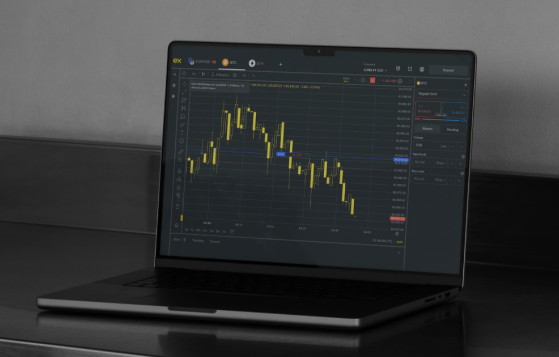
Exness Terminal also supports discipline, bringing charting, trading, position management, and account controls into one web and mobile environment.
Risk controls also matter when markets move faster than a trader can process. Exness' 0% stop out level allows positions to remain open until stop out at 0% margin, while Negative Balance Protection helps ensure CFD traders do not lose more than their account balance.
Operational reliability is also part of that environment. At Exness, over 98% of withdrawal requests are processed automatically, although processing times may vary depending on the chosen payment method.
The edge that comes from less is a measurable advantage. The traders who will perform consistently going forward are the most focused, and not the most informed.
Information discipline, the deliberate narrowing of inputs to what is signal and the conscious rejection of what is noise, is a skill. It's trainable, and in 2026, it's arguably more valuable than any individual strategy.
A good strategy poorly executed under cognitive pressure produces the same result as a bad strategy.
The attention economy wants more consumption. Better performance, for most traders, requires less of it.