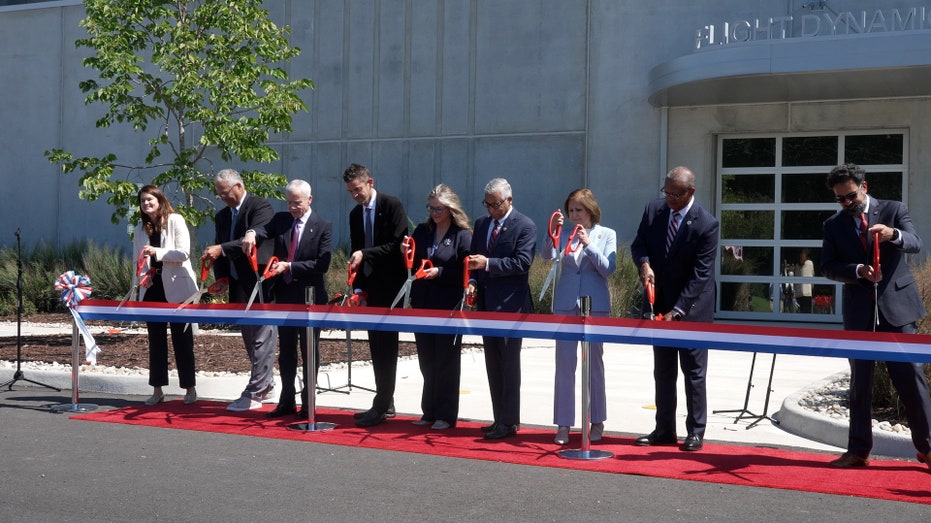
NASA marked a significant milestone in the field of aviation and space-exploration research with the opening of its first major new wind tunnel in over 40 years.
The Flight Dynamics Research Facility, located at the agency's Langley Research Center in Hampton, Virginia, will serve as a testing ground for future aircraft and space missions.
The facility represents a significant advancement for the nation, according to Dr. Trina Dyal, the agency's Langley center director.
The new facility was built through a partnership with the US General Services Administration and replaces two facilities that had operated for more than 80 years.
The project is part of NASA's broader effort to modernize its infrastructure and reduce the cost of maintaining aging facilities.
The 25,000-square-foot facility contains a vertical test section measuring 20 feet in diameter and 24 feet tall, and can generate wind speeds of up to 117 mph.
The temperature-controlled tunnel is powered by four 750-horsepower motors, with each motor paired with a 14-foot-diameter, eight-bladed fan.
The lightweight carbon-fiber blades allow engineers to adjust airflow quickly during free-flight testing and simulate flight at higher altitudes.
The wind tunnel will be used to test technology for future exploration of Venus and Titan, Saturn's largest moon, as well as missions to Earth's moon and Mars.
The facility will provide NASA and its partners with a critical resource for testing the safety and performance of future generations of aircraft, rockets, space-exploration vehicles, X-planes, drones, and autonomous flight vehicles.