South Africa has witnessed a surge of protests demanding the removal of illegal immigrants, with more than 160,000 individuals reported to have fled the country after citizens marched in large numbers to pressure authorities.
Claims that up to 30 million undocumented migrants reside in a nation of 63 million citizens have fueled accusations that these individuals contribute to crime, job competition, and strain on public services such as hospitals and schools.
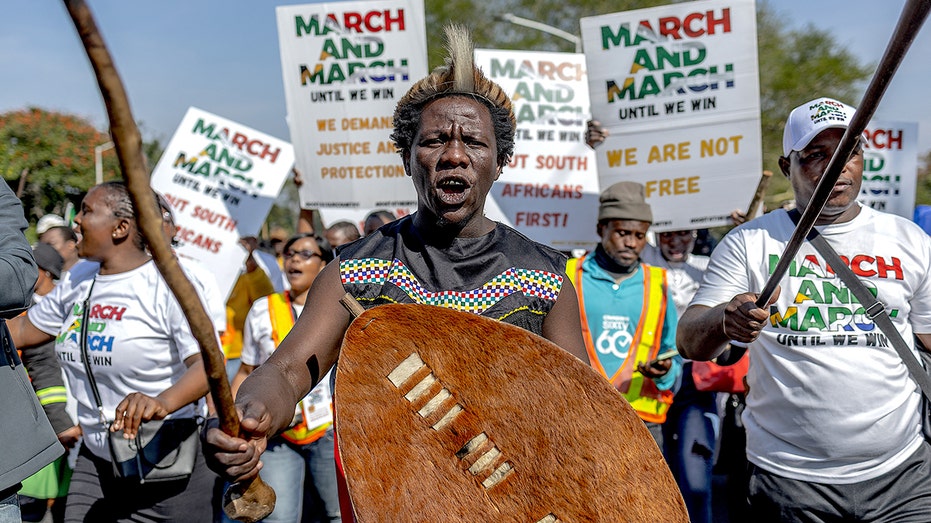
In some communities, groups have conducted house‑to‑house visits, issuing deadlines for immigrants to depart. A nationwide protest earlier this month resulted in 900 arrests, with police dispersing violent crowds and one fatality reported near Johannesburg.
Border authorities noted that on a June flight to Ghana, 321 of 332 passengers were identified as undocumented, prompting questions about the effectiveness of current immigration checks.
Five immigrants have reportedly been killed by protesters this year, while the March and March movement, which publicly denounces violence, has organized marches that often feature traditional sticks and slogans encouraging foreigners to leave.
The movement’s founder, Jacinta Ngobese‑Zuma, estimates the number of illegal residents between 15 and 30 million, contrasting it with the official figure of up to three million from a 2022 census that some argue undercounts the population.
Statistics South Africa admits that verification of residency is limited, often relying on self‑reporting when documents are not presented, a practice that may overlook many undocumented individuals.
With an unemployment rate of 32.7%, the country’s president acknowledged that some employers hire undocumented workers for wages below the minimum, citing this as a factor in the high demand for labor.
Hospital staff report that patients, including a fatal case at Helen Joseph Hospital, wait up to 36 hours for emergency care due to the influx of foreign patients, highlighting concerns about the strain on public health services.
Reports indicate that weak border controls, bribery, and corruption at entry points allow large numbers of migrants to enter, sometimes by crossing low rivers, with officials admitting that enforcement is inconsistent.
In response to public pressure, the government has processed 53,449 foreign nationals for deportation and repatriation, a figure that represents less than 0.2% of the estimated undocumented population according to activist groups.
Politicians such as Herman Mashaba criticize the government’s approach as inadequate, calling for stronger enforcement and mass deportations to address what they describe as a long‑standing failure to secure borders.
Recent polls rank immigration as the second most pressing issue for South Africans, after unemployment, with a significant portion of the population viewing it as a major concern.
Activists argue that the government should proactively manage immigration to protect local communities, emphasizing that the current situation leads to perceived threats to employment, crime rates, and public resources.
Attempts to obtain official statements on the issue have not yet yielded a response from the government, leaving the debate over immigration policy unresolved.