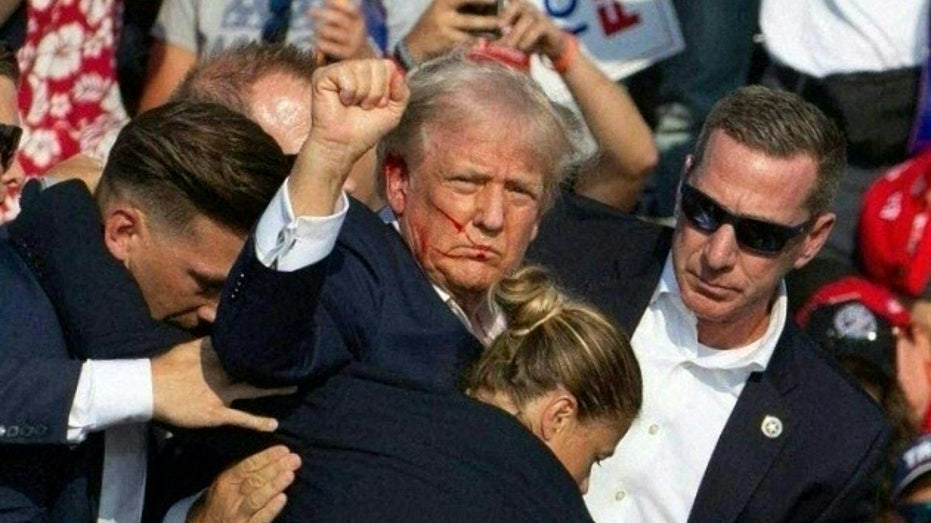
The U.S. Secret Service has been criticized for its handling of a July 2024 assassination attempt on Donald Trump during a campaign rally in Pennsylvania.
A 64-page report from the Department of Homeland Security Office of Inspector General found that the Secret Service "missed multiple opportunities" to prevent or disrupt the attack.
The report detailed several lapses in security that allowed Thomas Matthew Crooks to get a line of sight of Trump as he stood on stage in Butler, Pennsylvania.
Among the findings was a failure to warn Trump's protective detail that Crooks had a range finder and a long gun and had climbed onto the roof of a nearby building due to a lack of communication between the Secret Service and local law enforcement.
Instead, the Secret Service operated out of separate locations 257 yards apart with intermittent and highly limited radio connectivity between them, resulting in missed opportunities to detect the threat.
The report stated that the Secret Service communications room only received a handful of phone calls and texts, leading agents to fail to recognize the urgency of the threat and never warn Trump's protective detail to delay the speech or remove him from the stage.
The Secret Service also failed to detect Crooks' drone flight that he used to view the campaign event stage less than three hours before the rally, due to an under-trained operator and an equipment malfunction.
Crooks flew the drone undetected for almost nine minutes and flew 471 yards from the event stage at an altitude of 102 feet.
The agency also failed to share intelligence about a long-distance threat to Trump with the Pittsburgh field office and agents on site, and did not secure the area outside the security perimeter.
The report offered several recommendations to improve the Secret Service's processes for securing events, including mandatory threat communication, enhanced counter-drone training, and a process to formally document the identification and blocking of line-of-sight vulnerabilities.
An investigation into the incident found that the Secret Service had identified the American Glass Research International building as a line-of-sight vulnerability during advanced walkthroughs, but failed to ensure the view to the stage was obstructed.
According to the investigation, officials originally proposed using trucks to block the view from the AGR complex, but Trump's campaign staff rejected the idea due to concerns about interfering with press photographs.
The failure to address the line-of-sight vulnerability ultimately allowed Crooks to fire eight shots, grazed Trump in the ear, and killed Corey Comperatore, who was attending the rally.
In addition to the recommendations, the investigation emphasized the need for better advance planning, more officers, and more agents to secure events.