A recent conversation with Erick, a Democrat from Denver, highlighted the growing concern among moderate Democrats about the rise of socialist candidates within the party. Erick, who leans slightly to the Republican side, expressed his discomfort with the socialist ideology, citing concerns about AI and data centers. His views reflect those of many Democrats who are reevaluating their affiliation with the party amidst the growing influence of Marxism.
The surprise victory of socialist congressional candidate Melat Kiros in the Democratic primary has raised eyebrows, with many voters, including Erick, admitting they had never heard of her until just before the election. This pattern of unknown socialist candidates emerging at the last minute to win primaries has been repeated across the country, with candidates like Darializa Chevalier and Claire Valdez achieving similar successes.
This phenomenon can be attributed to a three-step strategy employed by socialist candidates. First, they build a strong, year-round organizing machine that harnesses votes for the socialist party. Second, they utilize non-traditional media to introduce themselves to activist groups. Finally, they make a mainstream introduction just before the election, leaving little time for voters to scrutinize their policies. This approach has proven effective in congressional races but may not be as successful in Senate contests, which require candidates to maintain a high profile for an extended period.
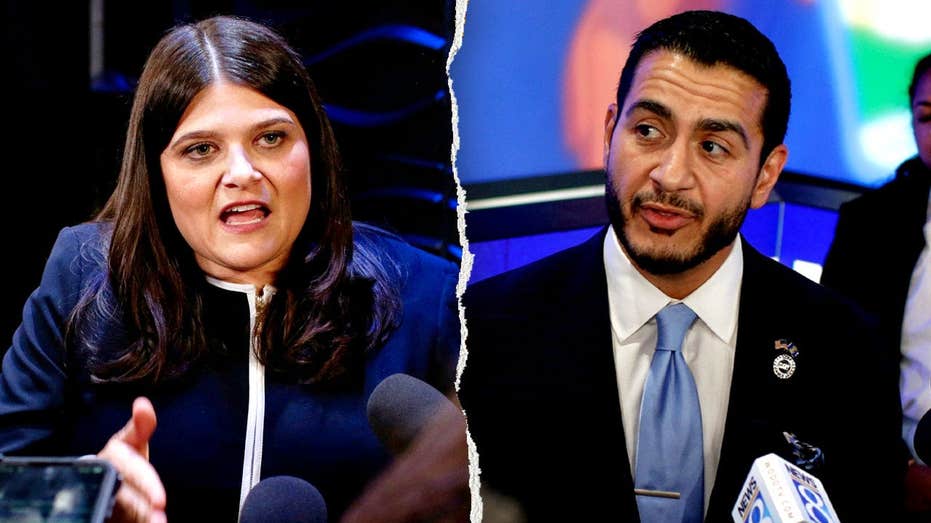
The Senate race in Michigan, where Abdul El-Sayed is running, illustrates the challenges socialist candidates face in longer campaigns. El-Sayed's past comments have come under scrutiny, and his opponent, Rep. Haley Stevens, is capitalizing on these controversies in her ads. The theme of these ads is that El-Sayed is not a traditional Democrat but a radical, and Stevens is trying to make this charge stick with just two weeks left before the election.
The question arises whether socialist candidates like El-Sayed are genuinely attempting to win over moderate Democrats or simply trying to catch them off guard. While the surprise approach has worked for socialists in congressional races, it may not be effective in statewide or national elections, where winning over a broader range of voters is crucial. The outcome of the Michigan Senate race will be closely watched, as it may provide insight into the viability of the socialist strategy in larger elections.
The contrast between Erick's experience in Colorado, where he was caught off guard by Melat Kiros's sudden rise, and the situation in Michigan, where voters have had more time to examine El-Sayed's candidacy, highlights the importance of voter awareness and scrutiny in the electoral process. As the political landscape continues to evolve, it remains to be seen whether socialist candidates can adapt their strategy to win over a broader range of voters and achieve success in larger elections.