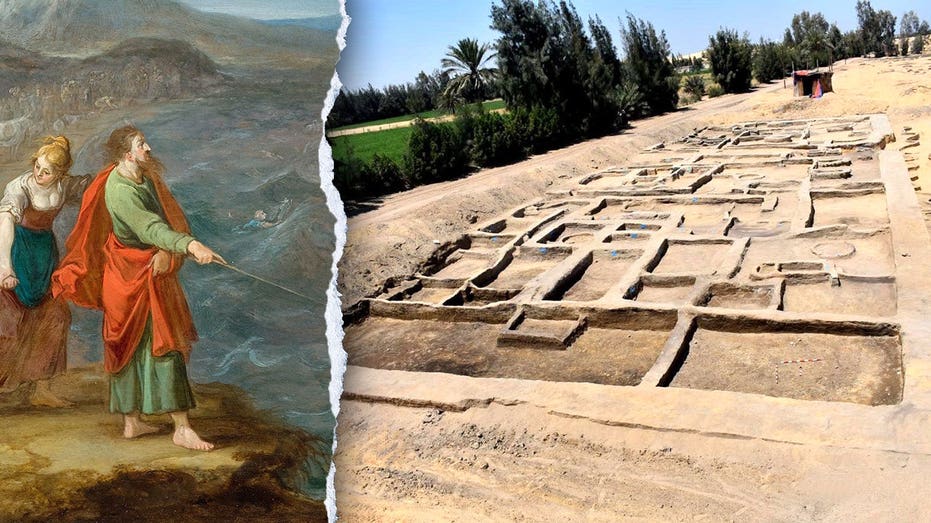
A team of archaeologists has uncovered an ancient settlement at Tell el-Koua in the Wadi Tumilat corridor, linking the eastern Nile Delta to Egypt’s eastern frontier. The site dates to the Second Intermediate Period, a time that has long fueled scholarly debates over the historical context of the biblical Exodus.
Excavations revealed tombs associated with the 15th Dynasty and evidence that the settlement remained occupied into the 18th Dynasty, covering the transition from Hyksos rule to the New Kingdom. The Hyksos, who governed northern Egypt around 3,600 years ago, were later expelled by native Egyptian forces.
Researchers uncovered ten mudbrick tombs, remnants of homes, production ovens, grain storage silos, and a walled neighborhood. A sizable residential complex measuring roughly 98 by 197 feet contains large halls, rooms, kilns, and additional storage facilities located just east of the settlement.
The site yielded a variety of artifacts, including scarab amulets, bronze tools, pottery, alabaster cosmetic containers, human remains, and animal bones that likely relate to daily meals and funeral offerings.
For the first time at this location, burials outside the mudbrick tombs were found, some in a crouched position—a burial practice that differs from the norm and warrants further investigation.
Analysis of the pottery assemblage indicates intensive daily use, with tableware dominating the collection followed by cooking vessels, suggesting a bustling community life.
Officials suggest the settlement functioned as an integrated community, combining residential areas, storage facilities, production zones, and burial grounds into a cohesive whole.
The discovery follows another significant find from Egypt’s Second Intermediate Period in 2025, adding to the growing body of evidence from this era.
In addition, a rare 3,600‑year‑old pharaoh’s tomb was uncovered near Abydos, buried 23 feet beneath the desert, highlighting the region’s rich archaeological heritage.